December 31st 1915

Christmas for our gallant old boys, stationed in numerous theatres of war, has varied considerably.

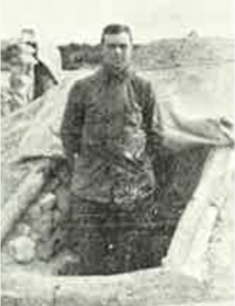
Capt. Geoffrey Carpenter (Uganda Medical Service) is currently somewhere in the vicinity of Kabale in Uganda:

“Xmas Day passed without any excitement and our mess managed to put up quite a decent dinner. Tinned tomato soup, herrings and jugged hare, a guinea-fowl (shot with a rifle) to take turkey’s place – they are as good eating as any bird I know.”

Capt. Charlie Childe (Gloucestershire Regiment), in a billet near Richebourg St. Vaast, on the other hand, has had no relief from the day-to-day realities of the war:

Charlie Childe“From 5 p.m. on Christmas Eve till 5 p.m. on Christmas Day all our batteries had more or less carte blanche and all started blazing away at midnight.

I went in on Christmas Day after tea and there was a great deal of whizz-banging and salvoes of shrapnel all night. I was quite pleased when I got back to my dug-out, as it was rather a poor game wandering about over the open in the pitch dark, and wet, with all this hatred breaking out from time to time.”

Lieut. Jack Smyth (15th Ludhiana Sikhs) is now in Egypt, defending Alexandria from attack by the German-supported Sennussi tribe. No Christmas spirit to be found there either:

Jack Smyth“I spent the most exciting Christmas Day and the coldest Christmas night I have ever spent in my life; the whole day was spent in an attack on the Sennussi position. I was doing Adjutant duties and as I had only a few days before come out of hospital in Alexandria, I was almost dead, not counting the additional ‘almosts’ from bullets…

I should love to have been able to get back to Oxford for Xmas, but must not think of such things till the war is over…”

2nd Lieut. Maurice Jacks (King’s Royal Rifle Corps), whose location is given simply as “this dreary corner of North France” has ascertained that the Boche may be suffering somewhat worse than our troops:
“A deserter came in the other day and to his amazement the men gave him cigarettes and tea, and Headquarters a dinner; he was feted all round, but we could not let him off without displaying a little ‘frightfulness’ and the whole battalion having just had a Xmas dinner of goose and plum pudding, we asked him, ‘I suppose you had goose and plum pudding on Xmas Day. We all did!’

He threw up his hands in amazement and was green with envy; he apparently had not even had a sausage!”

Lastly, my daughter, Kit Marshall (St. Leonard’s School YMCA hut, Camp 18, Harfleur Valley, near Havre) has been helping entertain those Tommies behind the lines, who were able to celebrate in some style:

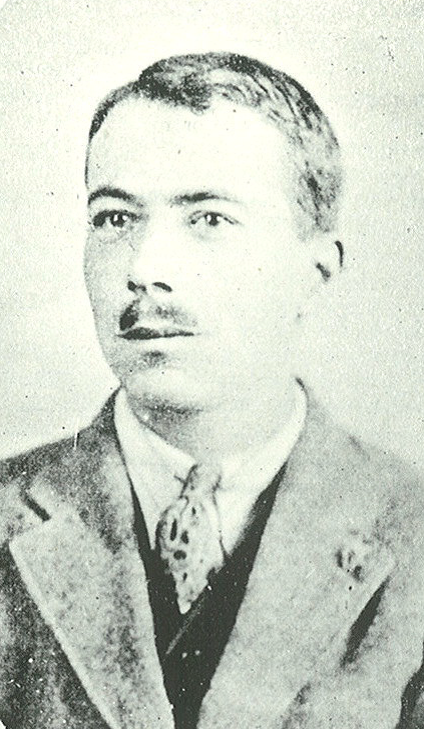
KIt Lynam portrait“This morning we were all taken to the Irishmen’s and RFA dining halls to see their Christmas dinner and the decorations. They had turkey, geese, plum puddings, some given by the Ulster women, and beer.

Then at 3 p.m. we went to their concert. The men from both dining halls crammed into one… and they all joined in the choruses – ‘The little Grey Home’, ‘The Sunshine of Your Smile’, ‘Ragtime Cowboy Joe’ etc.

The pianist was splendid, played anything in any key; the voices were somewhat husky, the result of a huge dinner and a very smoky atmosphere. They had been given churchwarden pipes, too, by the Ulster women and the scene was most picturesque – all these men standing and sitting under the elaborate wreaths of different coloured paper and evergreens, all singing lustily.

Now I am sitting in the pay-box, having a slack time, as most of the men are down dancing in the lower Hut. All those under 5 ft. 6 ins. are decorated with ribbons, which shows that they are ladies…”

For these men, Kit’s old school (after the OPS of course!), St Leonard’s, provided Christmas presents:

…The men came up to the platform, each in turn, and dipped into a huge bran-pie for a present… 1,465 presents were given away and still some did not get any. They were awfully pleased with the things they got: wallets, handkerchiefs, socks, pocket-books, knives, pipes, purses, cigarette cases, cases for matchboxes etc etc. The School and Seniors gave the money, about £68, and Miss Grant chose and sent all the presents.”



December 5th 1915

Raymond Venis

2nd Lieut. Raymond Venis (IARO., 48th Pioneers)

The death of Raymond Venis was announced in the Times of December 3rd.

When war broke out, Raymond joined the Indian Army Reserve of Officers and was attached to the 48th Pioneers. He went to Mesopotamia with the expeditionary force in February and was killed in the battle at Ctesiphon on November 22nd.

He showed courage and endurance under the heaviest of fire, earning the respect of his fellow officers. While lying mortally wounded on the battlefield, he continued to cheer his men on.

Raymond left the OPS in 1902 to go to Repton. From there he went to RMC Sandhurst and was duly commissioned in the South Staffs. Regiment. However, he resigned from the army in 1907 to join a Calcutta firm. His varied career took him into the Postal Department in Burma, indigo planting in Behar and he was with the Burma Para Rubber Company prior to the war.


November 6th 1915

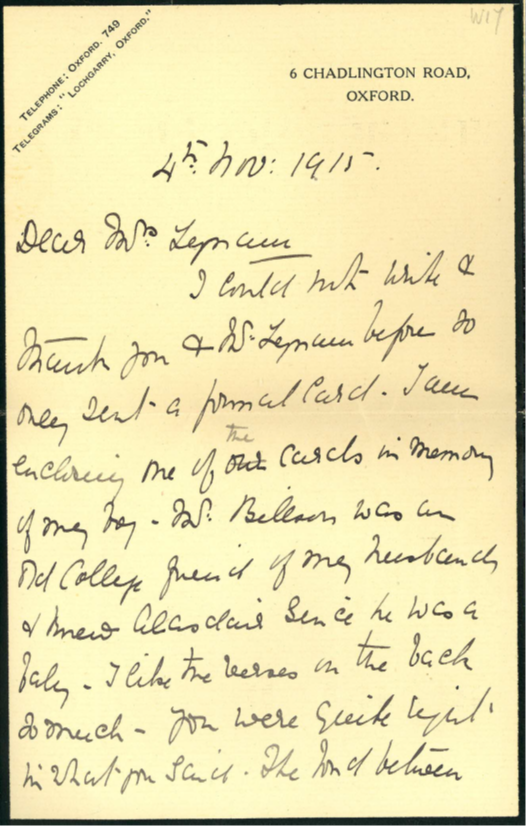
Yesterday, Mrs Hum (Lynam) received this touching letter from Alasdair Macdonell‘s mother:

6 Chad letter 1


Dear Mrs Lynam,

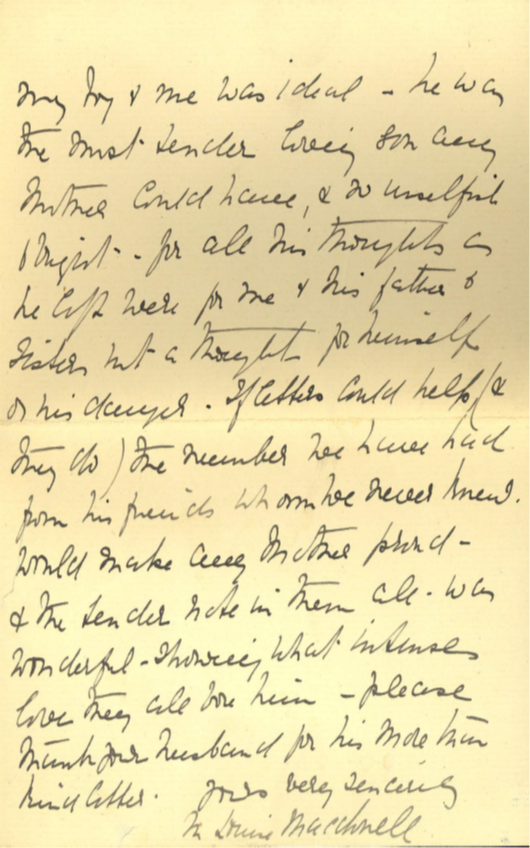
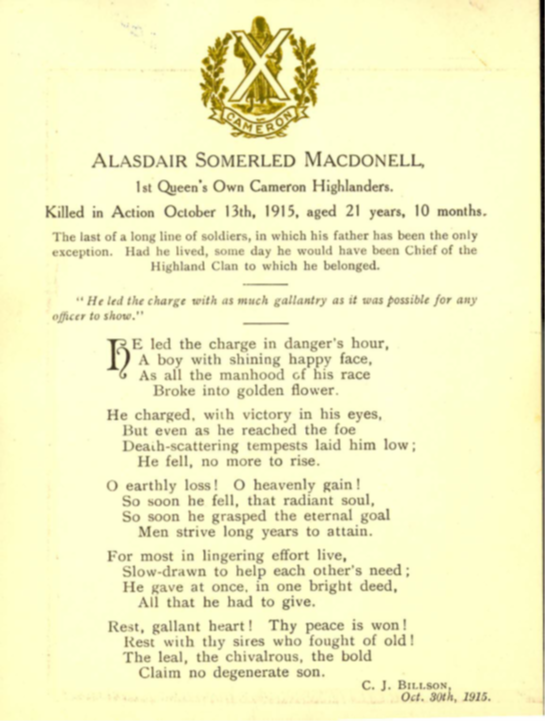
I could not write and thank you and Mr Lynam before, so only sent a formal card. I am enclosing one of the cards in memory of my boy – Mr Billson was an old college friend of my husband’s and knew Alasdair since he was a baby. I like the verses on the back so much. You were quite right in what you said. The bond between


6 Chad letter 2my boy and me was ideal – he was the most tender loving son any mother could have, and so unselfish and bright – for all his thoughts as he left were for me and his father and sisters but not a thought for himself or his danger. If letters could help (and they do) the number we have had from his friends whom we never knew would make any mother proud – and the tender note in them all was wonderful –  showing what intense love they all bore him – please thank your husband for his more than kind letter.

Yours very sincerely,

M. Louise Macdonell


Macdonell card 1

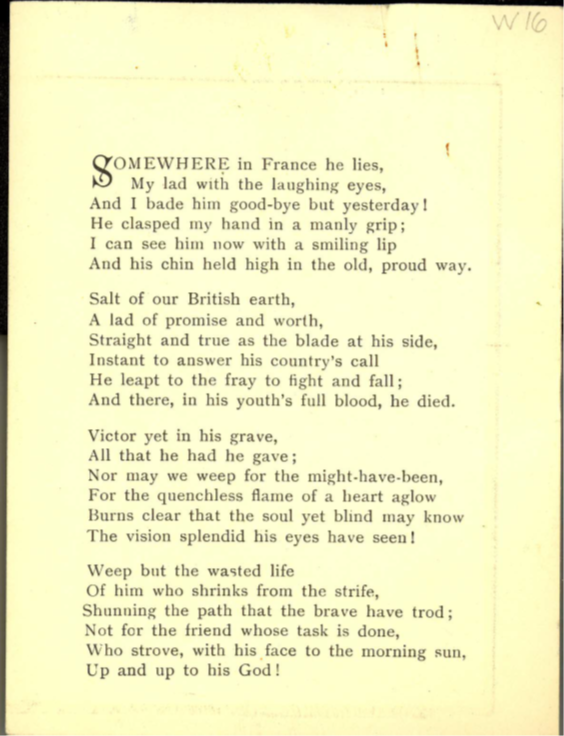
Macdonell card 2

October 16th 1915

Alasdair Macdonell

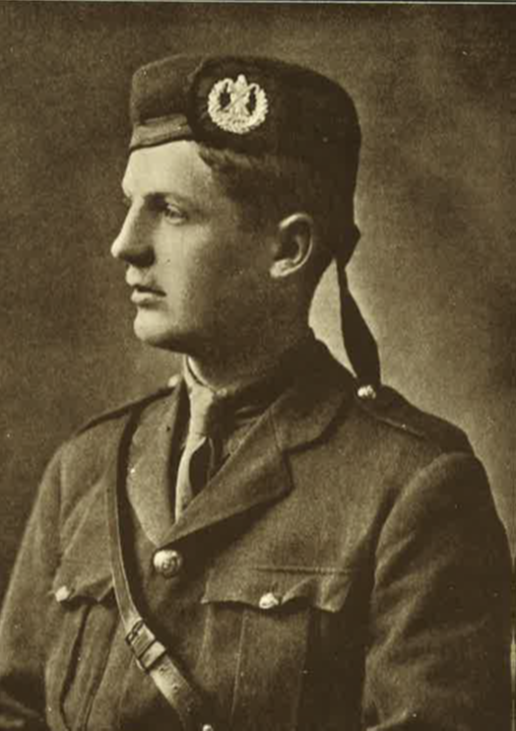
2nd Lieut. Alasdair Macdonell (Queen’s Own Cameron Highlanders)

News of Alasdair’s death has come as the greatest of shocks to our community. Living next door – at 6 Chadlington Road – Professor & Mrs Macdonell are well known to us all. Alasdair we have known all his life. He was at the Front for a mere ten days before he was killed, in the renewal of the offensive at Loos three days ago.

The family have received this account of his death (on October 13th) from the Colonel of his Regiment:

“We only know that he was acting most gallantly with an advanced party of bombers down a trench leading into the German line. The actual portion of the trench where he was, was unfortunately regained by the Germans, and is still in their hands; hence nobody can say what actually happened to him…”

The Adjutant has provided some further detail:

“He was seen to fall wounded and a great many bombs, both ours and German, afterwards landed in the trench close to where your son fell, and we fear that he must have been killed by one of these.”

Another officer adds:

“We were unable to recover his body, as we had to build obstacles after he fell to prevent the enemy getting into our trenches.”


Alasdair, as a boy at the OPS, displayed many talents, performing in three of our Shakespeare plays, for example – but he was too shy and reserved to come into the front rank of our actors.

I think of Alasdair as one of the finest performers (if not the finest) in athletic sports we have had at the school. His record long jump of 17 ft 1 in marked him out as an athlete of promise. Indeed, when up at Balliol College, he won his Blue (and he was also captain of the Oxford ice-hockey team that played against Cambridge).

Yet another Old Dragon for whom one would have hoped for great things in life…


October 4th 1915

We can now reveal that Noel Sergent is part of the 51e Batterie, 10e Artillerie, E.N.E. Secteur 194, Armee d’Orient and not far from where Pat Duff is stationed. Recently Noel was inspected by Sir Ian Hamilton, the Commander in Chief of our forces in Gallipoli:

Noel Sergent

Sous-Lieut JNB Sergent

“Sir Ian Hamilton came round the guns and spoke to me and said he had played golf at Valescure (Saint-Raphael, in France) and that the links were very bad, and then, just as he was going off, he turned round and asked me how long I thought the war was going to last. I wasn’t going to make an idiot of myself by making a wild guess, so I said we have had so many surprises that I couldn’t possibly tell. So he told me that in his opinion the war would last about another year, and that the Germans weren’t counting on having to go through another winter campaign, and that next spring something decisive would happen, and that decisive something would come from this side.

Pat Duff came and saw me the other day; he is very thin owing to a touch of dysentery, so I gave him the pomegranate skin which had just reached me. He brought me over papers – Sphere, Tatler etc and I was delighted to see him.

27/9/15. Yesterday I had the pleasantest morning I have had yet. I returned Pat Duff’s visit and, after about half-hour’s tramp, I came to a farm where I found some of my R.E. friends, who had been here but had moved up. I gave them some lemons I had brought in my pocket and then went Duff-wards.

I went up this ravine (from Gully Beach) for about ten minutes and came to a notice-board: 460 Battery Winter Quarters. I asked for Duff and was shown to the top of Gurkha Bluff. There I found him in his dug-out. He is so situated as to be able to see Imbros and Samothrace and the sea through the ravine; lucky devil! … The gun is a quite nice 4.2. I photoed it with Duff and friend standing by.”                         


September 12th 1915

There are a number of our Old Boys serving in the French Army, including Sous Lieut. Noel Sergent (French Artillery), who was also involved in the fighting in Gallipoli last month.

August. “Do you want to know my exact address? Well, I am in the ****** battery of the ****** regiment d’artillerie in the ****** French Army somewhere in Turkey. So like that you are ‘fixed,’ as the Americans say. So am I. In a devilish tight fix between the Devil (surnamed Achi Baba) and the deep sea, alias the Hellespont – most appropriately named.

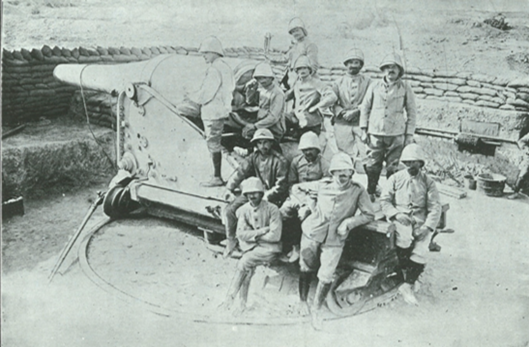
We have two 9½ inch coast guns, and we had a job hauling them up in three parts each, the piece itself causing the greatest difficulty owing to its weight (16 tons). We put 100 men on either side and hauled away; then, when we got them up, 25 of us had to put them in place. We were at work for four nights from 6 p.m. to 5 a.m., with just a cup of caffeine at eleven.

Our guns were ready for firing yesterday, so we started today. We topped our drive, put our second shot over the green, on the green in 3…

On August 6th we assisted at an attack. It was a tremendous business and the best way I can describe it is by comparing it to a terrific thunderstorm when the thunder and lightning came before the rain, and directly the rain comes the thunder and lightning stop. The thunder and lightning are the flash and bang of multitudinous guns, and the patter of the rain is the rifle and machine gun fire. What a fearful noise they make once they are started! I believe we took two trenches – hardly seemed worth the ammunition.”

N Sergent + gun

Noel Sergent with his gun crew.

Noel is the youngest of the three Sergent brothers, all of whom attended the OPS. They have an English mother and a French father who did not like the Napoleonic nature of the French education system.

In 1911, the Sergent brothers, then all living in France, made considerable names for themselves as Association Football players. Victor (full-back and captain), Dick (inside-left) and Noel (right-half) were joined by their Old Dragon friend and brother-in-law ‘Pug’ Wallace (centre-half) playing for Stad Raphaelois, and they won the French Championship.

Whilst his older brothers have joined the British Army, Noel elected to join the French Army.

September 4th 1915

Charlie Childe was reading Medicine at Pembroke College, Cambridge, when the war broke out. Having got a commission in the 8th Gloucestershire Regiment as a 2nd Lieutenant, he has achieved rapid promotion, from a full Lieutenant now to the rank of Captain.

His life on the Western Front, as described below, is distinctly preferable to that described recently by our Old Dragons in Gallipoli.

Charlie Childe

Capt. CM Childe

6/8/15. “I can’t plead the excuse of being at war for not having written before…  for my part, I live, eat, sleep and feed in perfect comfort and feel no more uncivilised than at a garden party at home.

One day Jack Smyth turned up to lunch here. His regiment was then in the trenches quite near. However, the trenches are on the reverse slope of a hill, so once out you can get on a horse or motor-bike, or your flat feet and go wherever you like. He chose the motor-bike, lunch here, and an afternoon’s shopping in a town quite handy; then in the evening he went back and took on the role of cannon-fodder for a bit during the evening ‘hate’ period.

Another rum thing: the trenches are close together and so each evening the various regimental transports on either side come along with supplies, and the only available roads are well known to both sides. Consequently neither side shells the opposing transport coming up, because it’s a case of both or neither being knocked out, and ‘live and let live’ is more satisfactory when possible.

Then there is long corn between the trenches, and so you can get out and sit about, if you feel inclined, quite happily. Apparently it has been done, but Jack wasn’t for it himself.

Tomorrow the Padre and I are lunching in the town. A pal of his in command of a motor-ambulance is calling for us and bringing me back in time for an afternoon’s parade.

We bathe in the river before breakfast – the whole section, 65 strong – and again after lunch, and generally go for a ride in the evening.

The bathing has apparently offended some august swell’s senses, as an Army Order now insists on pants. The Padre is a very good sort and has a pair of very shrunken and minute ones which he uses for diving in. He keeps them on the bank to put on when he gets out again, and so the order is complied with.”

By a strange coincidence, we have been informed that by the wish of the Curators of the Parks (here in Oxford) all those who bathe in the river after 8 a.m. will, for the future, be required to wear bathing costumes.

July 14th 1915

What a great day of celebration yesterday was!

Jack Smyth, having been invested with the Victoria Cross by His Majesty, travelled straight to Oxford and his old school.

JS in School photo 1915

Young Cyril Harvey, who made the short speech referred to below, has written up the events of the day for the magazine:

At nine o’clock on Tuesday 13th July, the school photograph was taken, and Jack Smyth was photographed with us. When the business was over we went into the Hall and sang a hymn. It was then the embarrassing duty of one of the boys to make a short (extremely short) speech, and he felt much more comfortable after it was finished.

Jack Smyth was then requested to tell us exactly how he won the VC. He climbed on to the platform to the accompaniment of thunderous cheers, and drew a map and explained all about it. In conclusion he said, “Needless to say, this is the first and last time I am ever going to say anything about this, and I would not have done so today unless I had been bullied into it by G.C.” *   At this we nearly took the roof off with shouting.

Jack Smyth got down from his perch, and standing between the parallel bars produced his Victoria Cross, while the whole school filed by, one by one, to examine it. 

JS VC

Jack Smyth’s VC, dated 18 May 1915

He wound up by asking the Skipper for a whole holiday. After more cheering, Jack Smyth stepped boldly from the school buildings to face an enormous body of photographers. This latter ordeal ended the morning’s proceedings. In the afternoon we played a most exciting cricket match against Jack Smyth’s team.  

Dragon Cricket Club Innings:

C. Owen b. HM Smyth                          19

H. Gaskell b. Mrs Wallace                      7

C. Harvey lbw b. Mrs Wallace              57

R. Potts c. Childe b. Skipper                   7

J. Lynam c. JG Smyth b. Childe            14

F. Hudson b. HM Smyth                         8

B. Mallalieu b. Mrs Wallace                    0

H. Hall run out                                         7

A. Owen not out                                      2

Extras                                               21

                                                               147

 Jack Smyth XII’s Innings:

Lt. FG Drew lbw b. Harvey                    30

Capt. C. Childe st. Lynam b. Potts         0

Skipper b. H. Hall                                    8

Hum b. Potts                                           1

2nd Lt. G Rowell b. Harvey                    0

HM Smyth b. Harvey                            54

Mrs. Wallace run out                             0

Miss Fisher not out                                1

Dick Wallace c. Prichard b. Harvey       0

Maj. Proudfoot b. Owen                      11

G. Nugent run out                                  0

Lt. JG Smyth VC retired                        51

Extras                                               7

                                                      126

It is doubtful which was the most enjoyed, his innings, or winning the match, or the subsequent bathe with him (his first since he swam the stream with his bombs) and several members of his eleven.”

It should be noted that seven of Jack’s team are Old Dragons: my brother Hum, Greville Drew, Charlie Childe, G Rowell, Harry Smyth, Mrs Wallace and of course Jack himself). * “G.C” is of course my colleague and editor of the ‘Draconian,’ Mr G.C. Vassall, known to all as ‘Cheese.’

June 29th 1915

The London Gazette – June 29th 1915

Jack Smyth

We read that His Majesty the King has been graciously pleased to approve of the grant of the Victoria Cross to Jack Smyth!

“Lieutenant John George Smyth, 15th Ludhiana Sikhs, Indian Army.

For most conspicuous bravery near Richebourg L’Avoue on 18th May, 1915.

With a bombing party of 10 men, who voluntarily undertook this duty, he conveyed a supply of 96 bombs to within 20 yards of the enemy’s position over exceptionally dangerous ground, after the attempts of two other parties had failed.

Lieutenant Smyth succeeded in taking the bombs to the desired position with the aid of two of his men (the other eight having been killed or wounded), and to effect his purpose he had to swim a stream, being exposed the whole time to howitzer, shrapnel, machine gun and rifle fire.”

Little of this could we deduce from Jack’s last letter (see May 25th). We will await further details regarding this splendid achievement over the coming days…

June 3rd 1915

Lieut. Treffry Thompson (RAMC), having been looking after the wounded in the Ypres ‘horseshoe’ with the 18th Hussars, has now himself been wounded, although thankfully not seriously. The circumstances of his injury are most distressing however, and he was extremely lucky not to have been killed.

24/5/15. “At 2 .30 a.m. we were awakened by one of the subalterns who was blue and coughing madly, dashing into Teffrey Thompsonthe cellar shouting ‘Gas! Gas!’ We nipped up and shoved on our respirators and put on our kit. The captain of one of the squadrons came down with his respirator on, looking very bad and said the men were retiring. The colonel immediately sent a telephone message along the trenches to say that they were not to retire, with what result I do not know.

We all went outside and immediately got our first impressions of gas; even through the respirator there was a sense of fearful choking suffocation…

The gas was awful and gave one a feeling of absolute terror and helplessness. We went outside the chateau ruins and, just as I got beyond the wall, there was a loud crash just in front of me and I thought my arm had gone and had to look down to see that it was still there.

The whole place was a hell of shrapnel and rifle and machine-gun fire. I got in a blue funk and bolted, still however holding on to my mackintosh with my left hand. I fell into various ditches and lines of trenches, got tied up in the wire, fell again into the trenches where the Territorials were and was promptly kicked out on the farther side.

Beyond this was a long open slope, swept by shrapnel fire and thick with gas. I fell into a shallow ditch and fainted. Somebody came and pulled me out by my wounded arm, which brought me to my senses. I made for the dug-outs down by the stream; there some men tied up my arm and I became less of a raving lunatic.

When the shelling quietened down a bit, four of them put me on a stretcher and carried me down to the Menin Road, where we failed to find the dressing station; so they carried me along the road towards Halte. Just before we got there, some reinforcements were coming up and the Germans, spotting these, began to make Halte a hell of shell-fire. I made the men put me down and we took shelter in the ditch under the embankment on the south side of the road. The road itself, just over our heads, soon became plastered with ‘fizz-bangs.’  

The reinforcements went up the ditch safely where we were and about 30 or 40 wounded collected there. We stayed there for about two hours. K______, the new machine-gun officer, was lying beside me dying from gas. He was a ghastly sight, turning from white to blue and back again. He had been caught asleep in his dug-out by the gas without a respirator on.

The Germans started to shell the south side, so we cleared off into the GHQ line of trenches, which were already packed with reserves. There, some brilliant fellow gave me a drop of water and, after recovering my breath for about half-an-hour, I looked at my watch expecting it to be p.m. and found it was 8 a.m.

We then heard that the infantry on the left of the Menin road were all retiring and, as it looked as though the GHQ line was going to become the fighting-line, I thought this was no place for me and made off towards west of Ypres. Avoiding the railway cutting, which was buzzing with shells, I crossed the Zillebeke road and, taking a separate course through the corn-fields, got on to the railway south of Ypres.

There I found a battery and asked for a drink. While drinking some red wine, which made me sicker than I ever hope to be again, a ‘crump’ fell beside one of the guns and killed two men. I again thought it was no place for me and went along the railway towards the Lille gate. I was staggering along when a subaltern in charge of a working party saw my condition and helped me along to his medical officer, who made me lie down and finally packed me off in a motor ambulance to the dressing-station.”