May 15th 1915

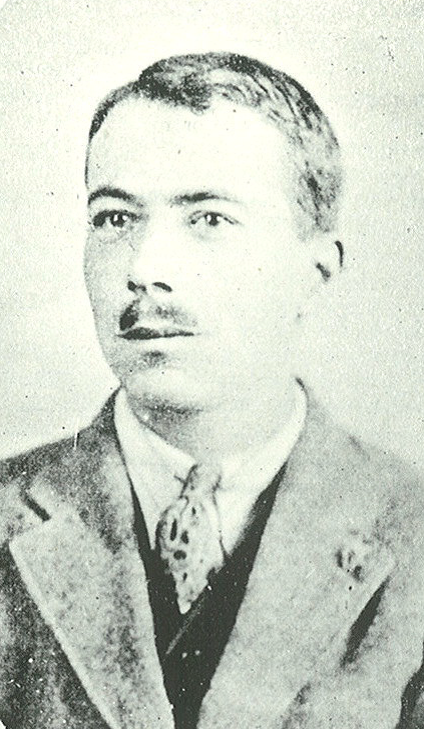
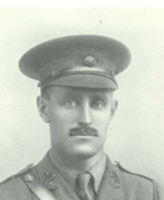
Lieut. Treffry Thompson (RAMC) is currently attached to the 18th Hussars as their Medical Officer and can vouch for all the horrors currently being Teffrey Thompsonendured by our troops at Ypres.
May 13th 1915. “Marched in evening north of Ypres across Canal to Bryke, then guided by guides who didn’t know the way, through much barbed wire to Wieltje.

We stopped on road near trenches. Enemy’s flares very active. Somebody told us it would be just as well to get into the ditch as a machine gun covered the road. We did so and the machine gun started at once.

When it had finished, we took over trenches on each side of the road. We were disgusted at the rotten condition of the trenches, but we discovered the reason next day: it was very wet and mushy and we started to repair trenches, but found remains of Frenchmen in the mud, and couldn’t go any deeper. We got one dug-out built before dawn and the trenches repaired a bit. Started to go to sleep at dawn, but inferno of shell-fire started and lasted from 3.45 a.m. to 5 p.m.

At the very beginning the telephone dug-out was blown in, removing our luncheon basket and my box of cigars. Three very frightened telephonists suddenly tried to get into our dug-out.

The shelling was appalling. For hours on end the whole place rocked, and afterwards we heard that the trenches had been invisible owing to dust and smoke. Dozens of wounded began to come in to our part of the trench where ‘C’ squadron were. The Major went along to ‘A’ squadron and there was wounded and then killed.

‘A’ squadron retired, with their trenches blown in, across the open to some alleged trenches further back. These they could not find and had to advance again across the open to their blown-in trenches. There was a complete gap of 40 yards blown in and covered by a machine gun on the right of ‘C’ squadron, which made it impossible to get along to see anybody.

I had the dug-out and a portion of protected trench filled with wounded and when they got so thick that we couldn’t turn round, told them they had better take their chance and go. I pointed out the position where there was less shell-fire in the direction of Bryke and at the end of day heard that 100 had got through all right.

After about four hours, the German fire occasionally slackened and we expected an attack, but could only see a few Germans looking over their trenches. The shelling, chiefly groups of 4-6 exploding ‘crumps,’ continued to blow in our trenches, and about mid-day the Captain decided that we should move to the left where there was less shelling. He did not go, but some of us moved across the road to a support trench filled with East Lancs…

Starting down a communication trench I suddenly found myself on my hands at the other end, as a ‘crump’ seems to have gone off just behind me. I got across the road, but the man behind was caught by the machine gun through the chest, but we carried him down to the support trench, where I did him up and it took two grains of morphia to quieten him…

During all this shelling we could actually see the ‘crumps’ before they hit the ground. They looked just like pointed cricket balls, and really stand about 2.9 high and are 8.2 in diameter.

Towards evening, the shelling died down and I tried to find our dressing-station. Couldn’t find any trace, but heard that the Cavalry had been wiped out. Wandered back to chateau west of Ypres, got some more dressings, heard that remnant of the regiment had gone up again under one of the Captains, so bolted after them on a bike. Raining hard; wandered half the night trying to find them. Went back to chateau and slept. Three officers, practically untouched through this awful day, as a result of the nervous strain of the shelling, had the jumps so badly that they had to be sent sick.”
 

May 14th 1915

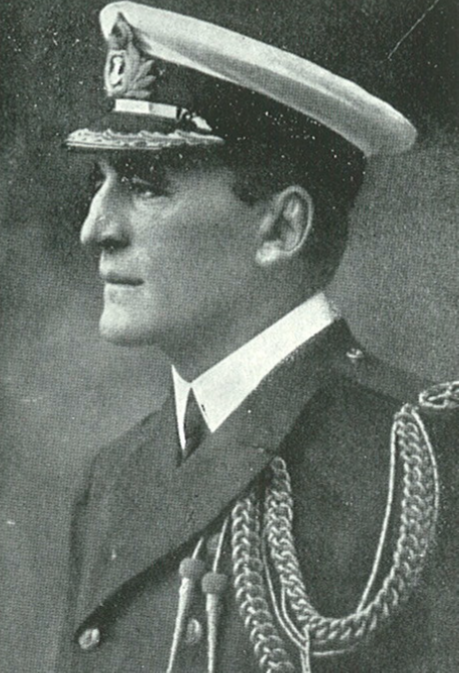
Tyrwhitt

An investiture was held today at Buckingham Palace at which Commodore Reginald Tyrwhitt RN had the honour of being received by his Majesty the King and was invested with the Insignia of a Companion of the Most Honourable Order of the Bath (Military Division).

Reginald reports that he had a twenty minute talk with the King in which “he was perfectly charming and at the end he gave me my C.B. without any formality, which pleased me enormously.”

This award was made to Reginald in recognition of his role in devising and leading the attack on the German forces off Heligoland Bight on August 28th 1914.

May 8th 1915


Ronnie Poulton

Lieut. Ronald Poulton Palmer (Royal Berks Regiment)

We have received further details from Jack Conybeare of dear Ronnie’s death, which occurred on the night of May 4th/5th.

Jack Conybeare

5/5/15. “I have just heard that poor Ronald is dead. He was shot through the heart, in the early hours of this morning, and was killed instantaneously. This is the first real shock I have had since we have been out here. There always are a certain number of bullets flying about, but they never seem to hit anyone one knows, and in consequence, I, at any rate, had half forgotten that a friend might at any moment be killed. This is rather a rude awakening.

I last saw Ronald about ten days ago, when he came to see me in the trenches, as his company were taking over from us. It seems, indeed, hard lines, that a stray bullet should light on one who had both the power and the inclination to do so much good in the world…

I was talking to one of the Berks’ officers this morning. He told me that Ronald was far and away the most popular officer in the battalion, both among officers and men.

Apparently he was standing on top of the parapet last night, directing a working party, when he was hit. Of course, by day, anyone who shows his head above the parapet is courting disaster; in fact if one is caught doing so one is threatened with court-martial. At night, on the other hand, we perpetually have working parties of one kind or another out, either wiring, repairing the parapet, or doing something which involves coming from under cover, and one simply takes the risk of stray bullets.”

Captain Jack Conybeare (Oxford & Bucks Light Infantry) was at both the OPS and Rugby with Ronnie.

May 4th 1915

A number of Old Dragons are involved in the battle that has been going on in the Ypres area since April 22nd. Donald Innes enlisted immediately at the start of the war as a despatch rider in the Motor Cycle Corps:

Donald Innes

Sgt. D. Innes

May 1st 1915. “On one of my rides I came across Treffry Thompson OD at Hazebrouk; he seemed very fit. Since Ypres is at present the centre of interest, perhaps a short account of it would not be amiss… 

One’s first view of the Cathedral reminds one of Magdalen tower; and the cloisters attached are very like those there also. The town has been smashed up more or less in zones, just short of and just beyond the Cathedral: where the shells fell short or overshot it. I was there the night before the attack on Hill 60, and then the Cloth Hall did not seem so very badly damaged, but of course I don’t know what this other bombardment has done.

The inhabitants seem to take things very philosophically, and one got a limited but quite excellent dinner there in a more or less patched up café. Where the shops are absolutely smashed, the owners sell their goods in the street outside.

With regard to the actual fighting, one sees very little of it and it is just a matter of chance if one happens to be there at the time, the trenches acting as a kind of touch-line inside which we play; so I will leave the description of that to ODs who are in the thick of it. 

I saw a little of Neuve Chapelle, and for an infantry man a modern attack can only be described as ‘Hell let loose.’ I thanked God I was a Despatch Rider. Our troubles are rather neatly put by one of the D.Rs in what he called the D.R’s prayer:-

From holes, shells, and motor ‘bus

Good Lord deliver us.”

 * * * * * * *

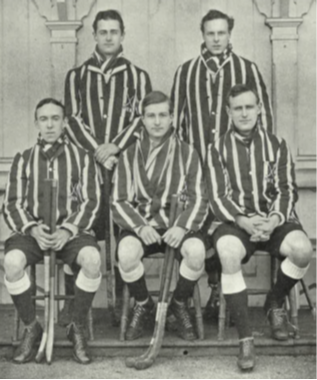
Donald Innes was one of the five Old Dragons to win Oxford hockey blues in 1911. All five of them are now in the Army.

1911 Hockey Blues

Standing: Donald Innes (Sgt. Motor Cycle Corps) and Patrick Duff (2nd Lieut. RFA in Gallipoli)

Sitting: John Brooks (2nd Lieut. Indian Army), Sholto Marcon (2nd Lieut. OBLI), Ronnie Poulton (Lieut. Royal Berks).


April 30th 1915

We have further news from Ronnie Poulton. No sooner are troops out of the trenches than they are put to hard work. It does seem right to call it “Rest.”

Saturday 24th April. “We came out after four days in last night, and immediately went off digging, after ¼ hour’s RWPP profilerest.

The whole thing as a war is an absolute farce. This is honest fact. We went up to part of the line near here, which has a gap of 200 yards in it. Here Territorial Engineers are building a magnificent breastwork and parados and Territorials supply working parties. The joke is we are 120 yards from the German trench and about 80 from the German working parties. And we make a hell of a row, laugh, talk, light pipes etc and sing and nobody fires a shot, except one old sniper who seems to fire high on purpose; and yet when the flares go up, we stand stock-still so as not to be seen!!”

The period of so-called rest being over, Ronnie Poulton returned to do another spell in the trenches on April 27th, but he was only there for a day before going back into reserve for three days.

Having told us that snipers were not a thing to worry about at night, I cannot help but feel they should not be underestimated. Snipers are an ever present threat, clearly:

Thursday 29th April. “It is quite absurd to see the quite immovable landscape, with no movement of any kind on it and yet to hear the most accurate shots on our parapet, shots which have killed two men dead in the last two days, who foolishly put their heads up carelessly in a low part of the parapet to look back. Don’t worry about me in this respect.”

This is easier said than done. Parents, family, schoolmasters on the touch line of any rugger match – we  are always more nervous than the players, who are wrapped up in the game.

* * * * * *

Readers of the Times yesterday will have seen the letter written by our neighbour Dr. JS Haldane to Lord Kitchener, in which he confirms that the gas used by the Germans on our troops at Ypres last week was almost certainly chlorine or bromine.

Having witnessed a post mortem at a Casualty Clearing Station at the Front, he has returned with one of the man’s lungs for further examination in his laboratory at his home, ‘Cherwell.’ He is now involved in experiments to find an effective respirator for the troops. Apparently, so his daughter Naomi tells us, the ideas given in the press for various home-made appliances are totally ineffective.

As for Dr Haldane’s son Jack, who was the first of my boys to win the top scholarship to Eton, he is now Lieut. JBS Haldane of the Black Watch, improvising bombs to lob into enemy lines, so I am told.

April 24th 1915

Ronnie Poulton has completed his recent spell in the front line and we can share another entry from his journal.

During this past tour of duty Ronnie was in charge of all repairs and improvements to the section of trenches for which his company was responsible. Platoon Commanders had to report to him by 3 p.m. daily with their suggestions. His day was then spent planning the next night’s work.

RWPP profileWednesday 21st April: “The work is the most important thing, as I am in charge of it, and my time is filled up with it – by day getting the work organised for the night. This has got better and better, and now I have a good system. Of course it is nearly all done at night. It is curious, at ‘stand to’, at about 8 p.m. to hear the sniping dying down, and then suddenly the ‘tap tap’ of the German party starting. Then we know we are safe, as there is a kind of mutual agreement not to fire on each other’s working and ration parties. So out we go and hardly a shot is fired.

The men betray the usual good humour at it all and are in perfect spirits, only betraying annoyance at the absence of biscuits, and the presence of biscuits (not Huntley and Palmers’!)

They have grown quite callous and you hear them whistling and shouting while working on the parapet, in the full moonlight. We did a good deal of work in our four days. My plan was to superintend till 12.00 or 12.30, then at times I was on duty at 4.00 a.m. or 8.00 a.m., so sleep was a bit short at the end. The sniper was active and we haven’t got him yet…”

There is a continual risk of being hit by a sniper’s bullet and much time and effort goes into trying to locate the position of German snipers.

“Sniping is all that goes on and in this at present they have an absolute superiority. We have constructed steel-plate loopholes but cannot find the brutes. When we do, we shall have them, as we have some wonderful shots. They got one of our men in the throat last night, but it is not a bad wound. The trouble is to locate the snipers. We reconnoitred to where we thought he was last night, but he wasn’t there…”

We trust that Ronnie will keep his head down.

April 20th 1915

Following his rugger match for the South Midland Division against the 4th Division on April 14th, Ronnie Poulton has returned to a tour of duty in the trenches:

Sunday 18th April. “About midday was warned to go up to our new trenches, at present held by the 4th Oxfords,  RWPP profileas we were taking them over tomorrow. I was to go up to see round them. You can enter these by day, so I went up in the afternoon and got a guide from the Oxford headquarters. A short walk along the edge of the wood brought us to the communication trench, and so into the trench well to the right of our line. Moved down this and got to our trench. This is a top-hole one, strong in front, apparently good wire, good parados in parts, not bad dug-outs and apparently never shelled by the enemy…”

And may this continue to be the case!

* * * * * *

BP Price

Lieut-Col BG Price DSO Ist Battalion Royal Fusiliers

Having been ‘Mentioned in Despatches’  (17/2/15), Bartholomew Price has now been ‘Promoted for Service in the Field’ and is transferring to take command of the 7th Battalion Warwickshire Regiment.

Bartholomew joined the Royal Fusiliers in 1892 and served in the Boer War, taking part in the Relief of Mafeking. He was awarded the DSO in 1901.

Bartholomew joined the OPS in its second year (1878). He is the son of the late Professor Bartholomew Price, Master of Pembroke College, one of the group of Oxford Resident Fellows who founded our school.

Professor Price is remembered as a teacher of Lewis Carroll (CL Dodgson) when he was an undergraduate studying Mathematics at Christ Church.

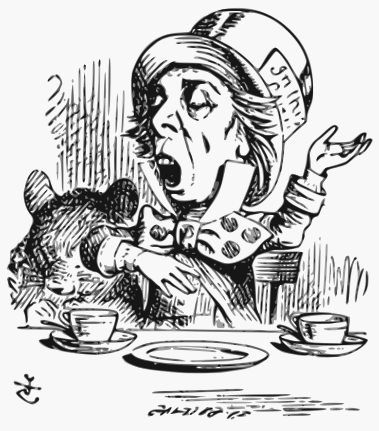
379px-MadlHatterByTenniel_svgCarroll referred to his teacher as ‘The Bat’ (‘Twinkle, twinkle Little Bat, How I wonder what you’re at’ as the Mad Hatter sang in ‘Alice’s Adventures in Wonderland’).


April 15th 1915

Ronnie Poulton’s first spell in the trenches has ended.

It may seem strange to read of it so Armentieres-North_Sea,_winter_1914-1915close to the enemy, but he has been playing rugger at Nieppe, near to where his battalion is at rest – a far cry from the new ground at Twickenham, which Ronnie graced when the first international was held there against Wales in 1910! (Even Twickenham – once a cabbage patch, incidentally – is part of the war effort, as I understand it is now being used for grazing for livestock).

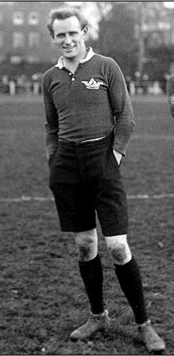
Wednesday 14th April. “I played Rugger for the South Midland Division (48th) against the 4th Division. It was an amusing game; we had opposite us players like WJ Tyrell (Ireland), HJS Morton (Cambridge & England), JG Keppell (Ireland Trials), WP Hinton (Ireland) and were refereed by Basil Maclear (Ireland). I had a goodish side, chiefly 5th Gloucesters and we won 14-0, but they stuck it well considering their condition. Several of the Liverpool Scottish came over from Ypres, including ‘Dum’ Cunningham and Dick Lloyd. It was splendid to see so many Rugger players about.

I changed in the room of the Captain of the 4th Divisional Staff. They live in great style, quite unnecessarily so I thought. In fact they rather bored me. They ought to do a turn in the trenches with us all.”

How extraordinary that Ronnie, England’s captain last season, should meet up with Dick Lloyd, his opposing captain for Ireland!

England & Ireland captains 1914

Ronnie Poulton with Dick Lloyd. Captains of the England & Ireland teams of 1914, taken in March 1914

* * * * * *

This cannot but bring back memories for many of us at the OPS of going to see Ronnie in the Varsity Match of 1909. GC Vassall (the editor of our school’s magazine) reported on the match:

RWPP Oxford2“This year’s Inter-Varsity match will always be remembered as Poulton’s match. After much discussion and a vast amount of ‘newspaper’ criticism (which means so little and produces so little effect, if ‘our special correspondents’ would only realise it), Poulton was given his Blue as a wing three-quarter and proceeded to silence his detractors by scoring 5 of the 9 tries in the record score which was piled up against the unhappy Cambridge team….  

Most of Poulton’s fielding was well done; he kept his position splendidly; his trick of holding the ball with both hands at the full extremity of his reach, his swaying for the feint, his masked pace, and his swerve fascinated everybody, and with it all he was rarely tackled.”

What happy times and sweet memories. We fervently hope that Ronnie and all those who contested the match at Nieppe return to give us more pleasure, nay excitement, when the war is over.


April 12th 1915

Training completed, but with still no real experience of being under fire, Ronnie Poulton’s company paraded on Saturday 10th April to take their turn in the trenches, intermingled, we understand, with companies of the Dublin Fusiliers. In his latest post Ronnie describes his first venture into ‘no-man’s-land’.

RWPP profileSaturday 10th April. “I carried a rifle and 15 rounds. We climbed through the wire and went a few yards forward and lay down, in the formation – Corporal and Officer together, and two men in rear, interval ten yards, distance from Officer about ten yards. They watched the rear and flank. I was lying for a quarter of an hour by a very decomposing cow! After listening hard we moved forward and again lay doggo. This went on for about an hour, during which time we were perhaps 100 to 150 yards out. Then we returned, each pair covering the other two.”   

Sunday 11th April. Trenches. “We all stood to arms at dawn, and the Germans started a tremendous fusillade, as is their custom. But soon after, all was quiet and you could see the smoke rising from the fires all down our line, and the German line.

About 11 a.m. our field guns put twelve shells on to the German trenches in front of us. Immediately the German guns opened on us, putting ten high explosive 6 in. shells and ‘White Hope’ shrapnel – their back-blast shrapnel. The result was 8 ft. of parapet blown down, another bit shaken down, one man with a dislocated shoulder of ours, and five men of the Dublins wounded, one seriously. As they were all within three yards of me, I was lucky. The brass head of a shell shot through the parapet, missed a man by an inch and went into a dug-out, where we obtained it.

The shelling is very frightening – the report, the nearing whistle and the burst and then you wonder if you are alive. Crouching under the parapet is all right for the high explosive, but for shrapnel it is no good, so that is why they mix them up. The men – the Dublins – were quite as frightened as we were as a rule, but some didn’t care a damn. Some were praying, some eating breakfast, one was counting his rosary and another next door was smoking a cigarette and cheering up our fellows. After a prolonged pause, we rose from our constrained position, and went on with our occupations; but it unnerved me for a bit.”