August 12th 1919

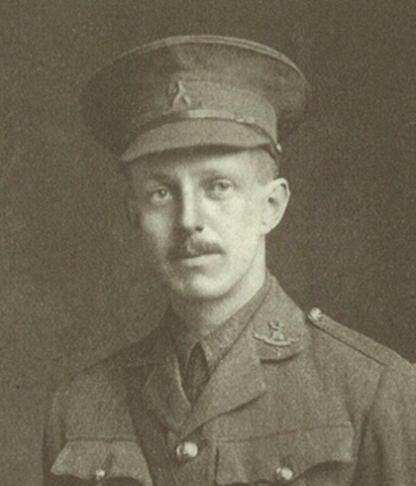
Capt. Edmund Gay (Norfolks)

Edmund went missing in action during the Gallipoli campaign some four years ago and whilst there was the faintest hope that he might have survived in captivity, his name has appeared on our Roll of Honour as Missing.

Today however, the ‘Times’ has him listed as “Killed in Action,” stating that “it is now presumed that he was killed on or since August 12th 1915.”

We will therefore now add his name to those of our dear Old Boys who gave their lives in the War. This brings the number on our Roll of Honour to 83.

John Dowson is still unaccounted for.


August 8th 1919

I n   G e r m a n y   ( 1 9 1 4 – 1 8 )

The last we heard of Cyril King was in September 1914, when he failed to return to Winchester College for the new term. When war broke out, at the end of July 1914, he was on holiday in Germany with his family and was not allowed to return to this country. He remained in captivity there until the end of the war.

We are delighted to hear that he has now returned safe and sound and, despite missing his final year at Winchester, has been accepted at King’s College, Cambridge, to read Economics.

His journal of his time in captivity, which he has kindly provided for inclusion in the next edition of the ‘Draconian’ is of great interest and as it is extensive, will be published here in parts over the coming weeks.

Part 1.

“Schluchsee, Black Forest, Germany. 30/7/14.   Started from Winchester on the morning of the 25th and arrived here this afternoon. Undaunted by rumours of war! We are sure to be sent back to England if there is any trouble. Half-an-hour wait at Strasburg, but saw nothing unusual. Freiburg though was crowded and full of excitement. A troop train left the station while we were there amid tremendous enthusiasm – everyone was talking of war and the rumoured capture and execution of six French spies in the town this morning…

3/8/14. It is glorious here. We (my mother, four sisters and Coote from New College, who is to tutor me) are living in a cottage, six miles from the nearest station, among mountains, by the side of a very dark blue lake. All the hotel guests have already left.

‘Rumour’ is very busy and there are many tearful partings. Did a Greek prose this morning, but hardly a very good one. This afternoon we took out a boat and bathed in the lake…

Baden Baden 7/8/14. Yesterday morning early, three plain clothes detectives arrived at Schluchsee and told us to be ready to leave in half-an-hour. They put us and our luggage into two motors and we drove off. Every mile or so we were stopped by a rough barrier across the road and the detectives had to show papers, but we reached Freiburg Railway Station at midday. The town was so crowded that we could hardly move, and I felt very nervous when we had to make our way across the road to an hotel for lunch, but nothing exciting happened.

At half-past one we were taken back to the station yard, where we lined up with our luggage in a long queue for passes and tickets to here. The queue was composed chiefly of Russian invalids from a neighbouring health resort – a few men, but mostly women and children – and thick crowds stood gaping and talking on each side of it. By 3 o’clock we were in the train, but we didn’t reach our destination till midnight, as we stopped at every station to pick up more foreigners…”

December 27th 1918

Jones’s Wedding and Other Poems

by Hugh Sidgwick

(Edward Arnold, priced 3/6)

It is just over a year since the death of Hugh Sidgwick, and it is a pleasure to note the publication of this tale in rhymed prose, which he began before the War. He worked on it in those grim times that followed, finally finishing it during the period when he was recalled from active service to work on Mr HAL Fisher’s Education Act during the early months of 1917 (during which time he also wrote ‘From a Funk-hole.’)

This review was in the ‘Oxford Magazine’:

“This tale, so playfully, so delicately told, is like an epitaph, at once grave and gay, on an Oxford friendship, or a group of Oxford friends, and young Oxford before the War lives again in these pages. The humours of the Commemoration Ball, the agony and joy of the Eights, have never been more happily translated than in ‘Eileen’ and in ‘Janet,’ but ‘Dorothy’ gains an added poetic virtue from her setting in the mountains and the lakes. Jones ‘goes over the top’ into matrimony; the author, the ‘I’ of the narrative, alas, will never come back to us from France, to determine in a sequel the fates of Robinson, Brown and Smith, and delight us with fresh sallies of his wit and satire, never malicious and never beside the mark, his merry irony, with sometimes almost a sob in its voice.

The versification owes its lift to Browning, but the Education Office must have made Sidgwick something of a cockney, for the letter ‘r’ hardly exists for him, and ‘cards’ as a rhyme to ‘Promenades’ is almost more than we can bear, while ‘Neitsche’ and ‘feature’ as a jingle set our teeth on edge; but could he reply to us, it would be with a smile and a fresh atrocity. And this poem is dated to last year; so far was he ‘au-dessus de la melee’!”

The range of Hugh’s literary interests was evident in the library of books that was returned to the family on his death, along with his kit: a complete Jane Austen, the Oxford India-paper Vergil and Horace, a Tacitus, Mackail’s Greek Anthology, as well as volumes of Stevenson, Belloc and Kipling.

However, the writing of such verse as this must surely have been Hugh’s way of amusing himself and distracting his thoughts from more disturbing images of war.

Hugh’s description of the differences between Oxford and Cambridge men cannot fail but to raise a smile in this festive season:

Brown once wrote a didactic poem,
"The Oxford Man and How to Know Him,"
In which he said the distinctive mark
Was a fatal readiness to embark
(Disregarding the obvious dangers)
On abstract topics with total strangers - 
Art, the Future, the Kingdom of Ends - 
While he reserved for his real friends,
In soul-communion knit together,
His views on clothes and food and the weather.
Per contra, with Cambridge men he found
The order was the other way round.
Brown's statement, of course, is much too sweeping,
But some of the facts do seem in keeping.

December 9th 1918

2nd Lieut. Vincent Alford (RGA) only left the OPS in 1913. In January 1918, having just left Winchester, Lally (as he was universally called) came to our rescue, playing the part of Touchstone in ‘As You Like It,’ when his younger brother Robert fell ill.

In May this year he was gazetted as 2nd Lieut. and now writes from 328 Siege Battery:

“I’m a colossal fraud, as I only saw about a few weeks of the war. The Boche ran so fast towards the end that it was next to impossible for our guns to keep up with him.

A week ago we came back to a large, straggling village called Beauval, just south of Doullens. It hasn’t seen the war except for an occasional shell last March, and it’s blessed to live in houses with a roof.

I had a capital whole-day tip to Mons, a large Belgian town in mining country, with shops and civilians and Boche money and prices (!!) that would knock spots off the Food Controller’s most fantastic efforts.”

Mons? This takes us back to the beginning of the war, when Lieut. Victor Cowley (Royal Irish Rifles) and Lieut. Rupert Lee (Worcs) first wrote with news of the retreat from Mons in September 1914.

How much have we endured since then.

November 6th 1918


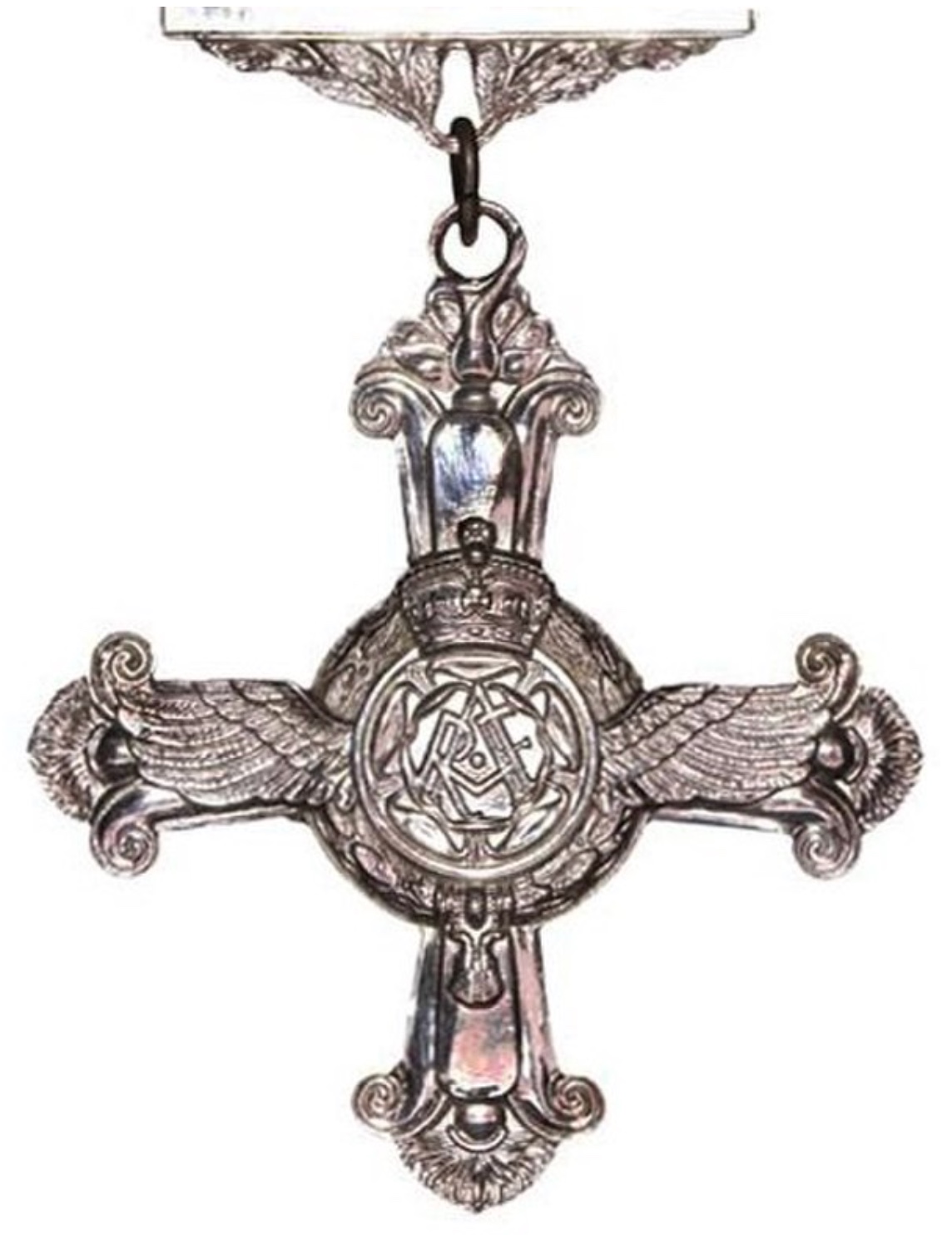
The Distinguished Flying Cross (DFC)

Just two months after his death, the London Gazette of November 2nd has confirmed Capt. Geoffrey Buck (RAF) has been awarded the DFC for a mission into Germany he undertook in his Handley-Page bomber.

“Capt. Buck, with 2nd Lieut. Barter as Observer, was Pilot of one of two machines detailed to bomb an important railway junction. Owing to most unfavourable weather conditions the other machine returned, but Capt. Buck persevered, reached the objective, and made a most successful attack in face of intense anti-aircraft fire with numerous searchlights. On the return journey they were were much hampered by a severe thunderstorm, which lasted for three-quarters of an hour, the machine being out of control owing to the lightning. In this critical situation Capt. Buck remained cool and collected, and, displaying marked skill and judgement, succeeded in landing his machine safely. The success of this raid was largely due to the skill and efficiency displayed by 2nd Lieut. Barter, who most ably co-operated with Capt. Buck. During the past month these officers have carried out sixteen night bombing raids in a manner reflecting the greatest credit on them both.”

Within a week of these heroic deeds, Geoff Buck was killed, when returning home from another night raid into Germany on September 3rd. He is the first of our airmen to win this new award, the DFC.


In addition to the above news, Mr Bell, Geoff’s Winchester housemaster, has most kindly favoured us with a most perceptive appreciation of Geoff’s time there:

“He stood out as something very different from the ordinary boy. In the first place he always knew his mind; he knew where he was moving to and what he wanted. Whether by reading in books, thinking for himself, or talking with his friends, he had formed an idea of what life should mean for him and how he should train himself for it.

He never accepted conventional standards or ideas because they were conventional; yet, unlike many who have tastes and interests of their own, he never shirked the ordinary routine of work or neglected his Latin and Greek for excursions into other fields… None who knew him could be blind to the strong stamp of his individuality…”

I would like to think that his years at the OPS played their part too.


September 12th 1918

Capt. Geoffrey Buck (RAF)

Geoff Buck has been killed returning from a night raid on September 3rd. He was with No. 215 Squadron, flying Handley-Page bombers capable of long flights into Germany. As Flight Commandant he was responsible for five aircraft and crew.

He crashed his plane into a high petrol tank building in the black darkness, and that was the end. He once said that very few people knew how hard it was to keep every nerve strained and the brain working its utmost for five hours on end.

In August 1917 Geoff was awarded a richly deserved Military Cross:

“He has taken part in many offensive patrols and had led seventeen, frequently attacking hostile troops on the ground. He has also successfully attacked and destroyed hostile aircraft on several occasions, setting a fine example of dash and determination.” (London Gazette, August 1917).

He has recently been awarded the DFC, although the citation has yet to be published.

Geoff Buck had joined the Royal Fusiliers in 1914, aged 17, and served in the trenches. In 1916 he transferred to the RFC, writing us some interesting letters about his training and early experiences as a pilot.

He had no fear of death; he wrote from France earlier this year saying that “Life has been so topping that I don’t mind how short life is.”


Geoff was a great reader, mostly of philosophy, psychology, history and good novels (both modern and standard), and had keen artistic perception. In fact, there was no good thing that he came across in his short life which he did not appreciate and enjoy.


August 5th 1918

We have two more Military Crosses to celebrate – both listed in the London Gazette of July 26th.

Capt. PB Frere (KRRC): “He covered 1000 yards of open ground under extremely heavy fire to inform the battalion on the left that we were about to withdraw. Again, next day he personally, under heavy machine-gun fire at close range, took orders for withdrawals to two companies, and was largely responsible for the successful withdrawal of his battalion. He exhibited great courage and cheerfulness under most trying conditions.” 

Although Philip did not mention this incident specifically, it seems likely to fit in with the events of March 24th which he described in his last letter.

Lieut. PJ Campbell (RFA): “For conspicuous gallantry and devotion to duty. He directed the fire of his battery from a most exposed position, inflicting heavy casualties on the advancing enemy. During the whole retirement he occupied most forward positions, exposing himself to great danger, and supplied much valuable information throughout.” 

Pat too was doing his best to hold back the advancing Germans on March 24th.

June 17th 1918

The first few months of this year have seen considerable activity on the Western Front, with a series of attacks made on our positions by the Germans. Three Old Dragons have lost their lives in these battles, together with two more members of the newly formed RAF.

Thankfully, as a school we have had no more losses in May, or indeed so far this month. Nor have we heard much news of our Old Dragons there. This may be due to the fact that, with the considerable movement of the front line and greater confusion (as testified by the extraordinarily long lists of those declared ‘Missing’) there has been less time for our scribes to record the events (Philip Frere being an honourable exception).

* * * * * * *

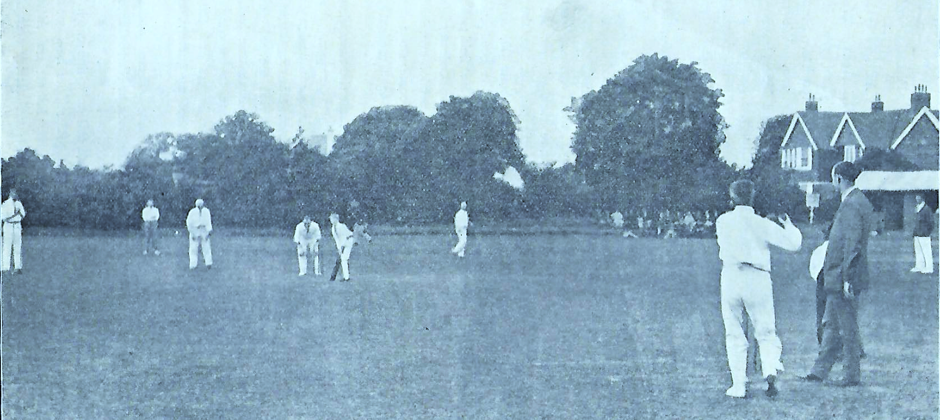
In the meanwhile, warfare of a different nature has been taking place here: the annual Fathers v Sons cricket match. I am grateful to Capt. Fyle for this account:

“I have a distinct recollection that the Fathers won, which in retrospect is unaccountable. It was mainly due, I think, to the staff work and sound cricket of Skipper Mallalieu, and to the steady offensive of a bearded bowler, who was in action continuously without relief. Also the side included more cricketers than was quite fair. One of them wore a cricket cap and batting gloves.

Then there was Mr Wallace*. True the appearance of Richard Wallace justified his inclusion in the side, but I hardly think it was the proper place for the author of the remark that ‘Parents are the sort of people who ought never to have children.’

Also the side included an obvious golfer, who, if I remember rightly, hit six successive full shots for six apiece and nearly caused enough casualties among the spectators to strike a war correspondent dumb…

Nor must I omit to record the stand made by Col. Stenning and Capt. Wylie, which according to the expert commentator would have produced considerably more than three runs, had not the latter been brilliantly caught off a shot which looked like a late cut to square leg, while the former encountered that unconscionable anomaly, a straight long-hop.

But the dissolution of this partnership was probably due to the guile of Skipper, who seeing them getting their eyes a little less out, tripped on the field with a telegram containing news of three Winchester scholarships.

Of the school’s innings, I do not feel qualified to speak. It seemed to me that they all played brilliantly and would certainly have beaten any but a quite first-class team. They were not well supported by their umpires, one of whom gave ‘run out’ against a boy who would certainly have reached the crease in another two or three minutes. Umpires ought to remember which side they are on.”

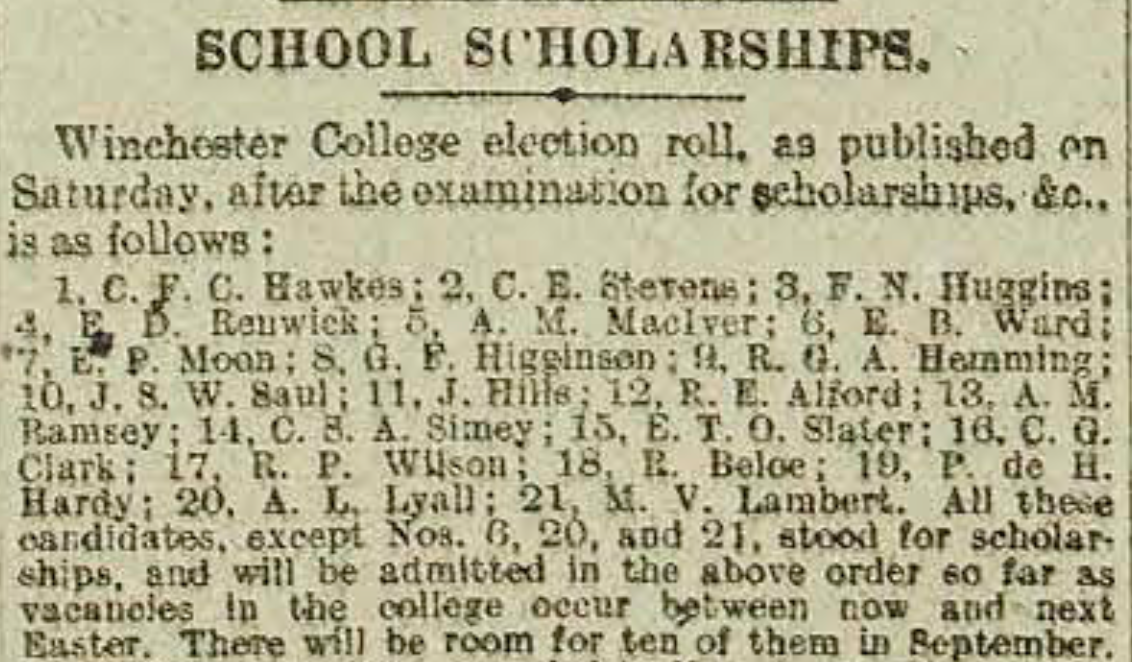
For the record the Fathers totalled 115 and the boys were bowled out for 102. More important were the three scholarships won by F Huggins (3rd), R Alford (12th), E Slater (15th). Well done boys!

Daily Telegraph, June 17th 1918


*This, of course, is our returned soldier cum OPS schoolmaster,’Pug‘ – a sportsman of some note.

June 13th 1918

We are delighted to hear from Capt. Maurice Campbell (RAMC), who has written up his nine day journey (without maps) along the Bagdad – Persian Road (March 23rd – 31st.) for publication in the ‘Draconian.’

“This 200 miles through the hills still remains after thousands of years one of the worst and most difficult main roads in the world.

27/3/18. “We had only come 20 miles of our 120 (not counting of course the 80 I had done by car). Except for army mules for the Lewis guns and ammunition, our transport was entirely Persian mules, which are larger animals, supposed to carry 300 lbs…

The mules were looked after by a weird crew, dressed rather like the pirates in Peter Pan – especially the head man, who wore a bright blue coat and bright yellow trousers and looked the biggest villain I have ever seen…”

To prove the point, the following day, this ‘head man’ demonstrated his capacity for villainy on his own men:

“…it seemed as though they would never get loaded but finally the head man went up to various mules he thought underloaded, beat the driver over the head and tipped the whole load on the ground. The man then loaded again with another 100 lbs.”

Once underway,  even these hardy animals found the going tough:

“We started about six down a narrow lane, which got rougher and rougher. Even the mules could hardly stand and one was overbalanced by its load into a stream at the side. Several loads came off…”

Their resilience, however, is remarkable:

“Their saddles were kept on day and night and during the day even when we stopped for an hour their loads were never touched. But in spite of this they were ready to go on all day, grazing as they went. The one trouble was their speed – about two miles an hour, which made the day’s march a long one, although they never halted when we did.”

Of all the difficulties Maurice encountered on his journey, this is perhaps the strangest:

30/3/18 “In the morning we were greeted by the news that one of the mules had been eaten by a lion. On enquiry, it turned out to be a wretched creature which had been too lame to carry a load at all, so we suspected this was only the first stage in the manufacture of some circumstantial evidence so they might claim compensation.”

The following day, although still not at his final destination, Maurice was at least over the worst of it:

31/3/18. “This was the end of our journey on the Bagdad –  Persian road. From here to the Caspian it is good military road built by the Russians. From Bagdad to Qizil Roht, where I was camped, it passes over absolutely flat plains.”

Meanwhile, Maurice’s youngest brother 2nd Lieut. Pat Campbell (RFA) is serving in France.

We still remember the pain of awaiting news of the middle brother, 2nd Lieut. Percy Campbell, who was the second of our Old Boys to be killed, in October 1914.

The Roll now stands at sixty-six Old Boys, who have given their lives in this struggle against German aggression.

February 8th 1918

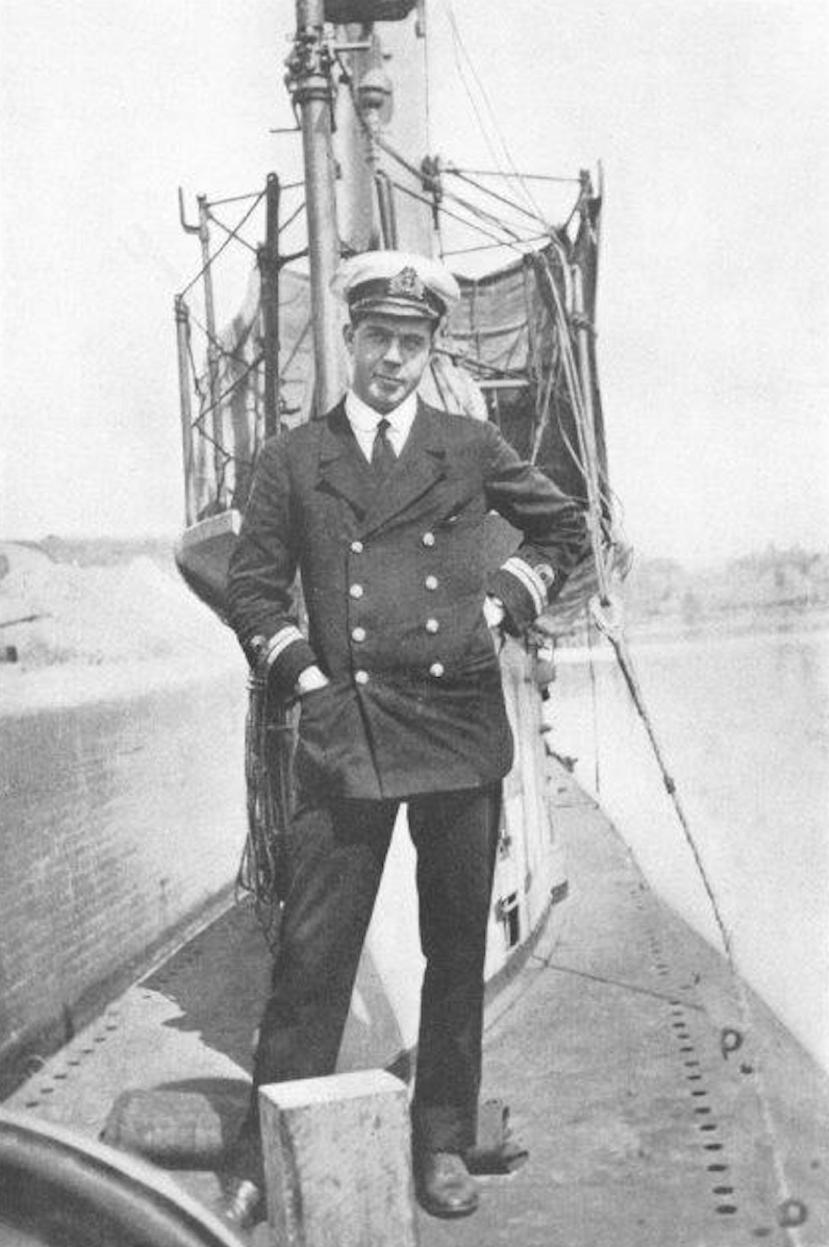
Lieut. Martin Collier (RN)

We now have further news regarding the death of Martin Collier. He received orders to take his submarine, H 10, with a crew of 26, on dangerous secret service. He sailed from Harwich into the North Sea, never to return. It is thought that perhaps the submarine hit a mine.  Martin had left a noble letter to be delivered to his family in case he did not return.

Further tributes have been forthcoming, this from Sidney Herbert, a fellow officer:

“Martin Collier was captain of one of those of our submarines which go out and are no more heard of, and had I any official knowledge of how they were lost I might not reveal it.”

Sidney remembers stories of Martin when they were at RNC Osborne, roaming the island “sometimes within bounds, sometimes with long chases that brought him in contact with authorities in a way which made the less daring among us hold our breath.”

From Osborne Martin went on to Dartmouth, where his sport flourished. Martin was a talented rugby player. He played for the United Services and he was described as “the hardest working forward in perhaps the best club pack in England.”

In 1913/14 he played for the South and could well have gone on to make the England team.  He was also a boxer of note, winning the Navy & Marines’ middle-weight boxing championship of 1910.

I am most grateful to Martin’s father, Lieut.-Col. Collier, for forwarding me the letter he received from the chaplain of HMS Alecto, written immediately after H 10 had failed to return:

“… I knew your son very well indeed and without any hesitation I can say that he was one of the very finest characters it has ever been my privilege to meet. He was a real, clean, upright Christian gentleman. I personally shall miss him more than I can say.

He was a great help to me here, and the example he set of simple manly religion greatly impressed the officers and men, not only of his own crew, but of the whole depot. He always read the lesson at our parade services when he was in harbour, and was a very regular communicant…

He was most sympathetic and understanding and we all loved him. His crew, whom I knew well, were devoted to him. I saw his coxswain’s wife yesterday, and she told me that she tried to persuade her husband to report sick and miss this last trip, as he had a bad cold. But the coxswain said he couldn’t think of letting Mr Collier go without him.

This spirit animated the whole crew, and proves what we who knew him always recognised, that your son was a born leader of men – but he was more than that, he was a very perfect and courageous gentleman…

He has fought the good fight, he has finished his course, he has kept the faith…”

Coincidentally, today’s ‘Roll of Honour’ in the Daily Telegraph not only recorded Martin’s death, but also listed 2nd Lieut. William Sheepshanks (KRRC) as “Previously reported missing, now reported killed.”

We posted as much on December 27th (Bill having been “missing” since July 10th 1917). It has taken until now for the authorities finally to make this official.