March 15th 1918

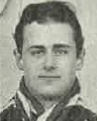
There has been much written on the Battle of Cambrai – a battle that started so well, yet ended in disappointment. It has certainly enhanced the reputation of the Indian troops, amongst whom is Capt. Regie Carr-White (Indian Army). He sent us a capital account of his experiences at Cambrai with Hodson’s Horse, including these remarks on the achievements of other Indian troops who fought there:

“Later, we heard what the other cavalry regiments had done, and nothing beats what the 2nd Lancers (Indian Army) did. They charged German trenches mounted, and got into them with the lance, and some of their troops had to jump the wire. I admit the wire was low and the Germans hadn’t had time to rig up much, but in full marching order it was some feat…

These Lancers had the heaviest casualties, and their casualties amongst the horses were enormous. I believe for days afterwards there were droves of horses wandering about grazing between the German and British lines. One feels sorrier for the horses than for the men, and a badly wounded horse is a beastly sight.

The Guards’ Colonel, I believe, wrote to the Colonel of the other Indian cavalry regiment in our brigade and said ‘The Guards will be proud to fight alongside the Indian cavalry any old day’…”

Some well-deserved recognition has now been recorded in the House of Lords (as reported yesterday in the ‘Daily Telegraph’):

Regie’s admiration for the Indian troops knows no bounds:

“Nobody takes into account the fact that they had just come from the Indian hot weather (120 degrees in the shade in some places) into cold which was unbearable to them. They had no real warm clothing, they had to put up with gas and shells and bombing such as they had never conceived, and every form of beastliness. After all, the majority when they join are very, very simple peasants, some have hardly ever been in a train…

The men that went with Jack Smyth on his VC show, probably the bravest in this war, never flinched or turned back. The more I think of those first Indian Divisions that came to France, the more I am amazed at what they put up with and did.

The Indian cavalry here in France haven’t had any leave for three years, and there is no doubt they are now very home-sick and longing to get back, but still they are as cheery as ever.”

March 11th 1918

Progress is being made on the matter of a War Memorial and the statement below will appear in the April edition of the ‘Draconian.’

A meeting was held on Thursday March 7th.

Present were: Capt. WW Fisher CB MVO RN, Lieut.-Col W Collier RMAC, Capt. WT Collier MC RAMC, Lieut. SSG Leeson RNVR, Rev. LJ Percival, GC Vassall, AE Lynam, CC Lynam.

The other members of the Committee, viz Lieut.-Col SC Taylor DSO, CRL Fletcher, EB Poulton, Capt. GC Drinkwater, Lieut. JCB Gamlen, F Sidgwick, Capt. TO Thompson RAMC and A Beresford Horsley could not attend.

In choosing the Committee an endeavour was made to cover the years since the School came into existence. Mr Horsley, the father of four boys at present in the School, represents ‘the present time.’

Certain definite lines were discussed and approved.

  1. The objects of the War Memorial should be to inform and inspire present and future Dragons.
  2. The proposal of a building, whether Chapel or Hall, is open to objections: (a) it would require a larger sum of money than we could expect to receive, remembering that our boys are not drawn from the wealthy classes, (b) a building, except at enormous expense, could not be put up for several years after the war is ended, (c) though it might be a useful adjunct to the School, it would not fulfil the objects as stated above: it would be taken, in after times, as a natural part of the School buildings.
  3. There should be no possibility of the idea that the fund raised was for the pecuniary benefit of the School as a property – and this consideration rules out bursaries or exhibitions to be held by boys at the School.
  4. The Committee unanimously approved of the proposal that a sculptured Cross should be erected in a prominent place in the School grounds, with a pedestal on which the names of Old Boys and Masters who have given their lives in the cause of duty should be inscribed; and that books and albums should be provided which should give further information about them and their deeds.
  5. Any balance that remained might well go to aid the very useful Leaving Exhibition* fund, but this will be discussed again at a future meeting.
  6. It was hoped that all Old Boys or their parents would subscribe, rather than that a few should give large sums.
  7. As a result of subsequent conversations and correspondence, it was decided that some annual commemoration, in the way of an Encenia** should be held.

It maybe added that Mr C Lynam FRIBA, FSA, the father of the present Headmaster, and the author of many works on Archaeology and an expert student of Old Crosses, has promised to give a design and description of a sculptured Cross. The drawings will be sent to the Old Boys and will appear in the ‘Draconian’. This does not, of course, imply that the particular design will necessarily be accepted.

Any money received is invested in War Bonds, so as to be at the disposal of the Country. The fund currently stands at a sum of  £263.  


* (The Leavers’ Exhibitions date back to 1908, when on being asked what I would like to mark my 50th birthday, I said I would much appreciate subscriptions to a Leavers’ Fund to enable me to give leaving exhibitions to help boys whose parents are not very well off to go to good public schools. The first such award was made to the future V.C. winner, Jack Smyth).

** (For those whose Greek is a little rusty, an Encenia is a festival of renewal).

March 7th 1918

There has been a most welcome lull in the fighting in France, although we are led to believe that the Germans are planning a major offensive for the Spring. However, we have received the news that on January 20th 2nd Lieut. Edmund Fisher (RFA)  was taken ill and was sent to No.8 General Hospital in Rouen. His letter is remarkably cheery, in the circumstances:

“Here I am. Well, to begin with, my old friend indigestion on the march. The American doctor we have, tried valiantly, but eventually had to despatch me in a little ambulance. It was a job to get one that would do anything else but send one on. Eventually, after bumping about most of the day, a Central Clearing Station took me in.

Next day, I was sent to the base and a journey of 12 hours in the train. Fairly crowded beds on the floors and then bang! I was dropped by exhausted bearers on this ward floor. Here all is well. I have been given the cosiest corner. The VADs and sisters are of the best and the other officers a good sample.

No fever now.

Tout va bien

Je suis bien content.”

Although Edmund considered himself “bien content”, the news the family received from the CCS dated January 21st was that he was seriously ill with appendicitis.

Subsequently, Edmund has been transferred to the Lady Inchcapers Military Hospital, 7 Seamore Place in London on February 11th. (It is a small hospital with only 10 beds and is affiliated to Queen Alexandra’s Military Hospital in Millbank).

We hope that he can now make a good recovery.

March 4th 1918

Lieut. Blake Budden (Middlesex), now interned in Holland, has written to us with an account of his time in captivity in Germany.

He was, by chance, in Germany in July 1914 and on trying to leave, was refused a train ticket.

“On the Wednesday before the War, i.e July 29th, I was refused a ticket at the station (Marburg) except to Cologne, and as I considered myself safer from arrest in a quiet little non-military town, I decided to stay where I was. I did this the more as I was sure that we should get the regulation 48 hours to leave the country.

When I was arrested on the Wednesday, I was taken to a punishment cell in the barracks and personally, as you might say, I was well treated except by the Commandant, who told me that I was not fit to be on the pavement, but that the gutter was the proper place for me.  

They gave me a bed in my cell, but when I tried to go to sleep I was kept awake by a peculiar itching which I thought was gnats, but which on striking a match turned out to be bug bites. I had 52 of them, as I counted next morning.

I complained and was removed to a civil prison, where I remained nearly a week, i.e until 11th August 1914. I think that I was then removed to Magdeburg, where I was placed in the civil prison where, with the slight exception that I did not have to work or clean my cell, I was treated exactly like a criminal, no smoking, no books, no company etc., three-quarters of an hour walk a day; up at 5.45 and bed at 7.30. During the day, my bed was folded against the wall and locked so that I could not use it.

After five days of that, I was removed to the fortress and given a room with a Frenchman, who was taken away two days later and then I was kept in solitary confinement until Sept. 4th. 

By this time, my shoes were in holes and my linen in a pitiful state. I had the Bible and four German books, a Dictionary and a pocket Stevenson, and three hours’ walk a day in a small garden surrounded by high walls.

The other prisoners, who were Belgians, were allowed to be together, but I was kept severely apart from them.

This lasted until September 4th, when I went to Torgau, where I met almost all the British Officers who had not been seriously wounded, of whom I now find a very large number here.

In Torgau I was not so hungry but in Magdeburg I was desperately so, and they gave me nothing but beer to drink, which made me ill. 

From Torgau I was sent to Halle, but before I went I had three rumours given me for being sent. Firstly that I was going to be shot, secondly that that I was going to be tried, and thirdly that I was going home. None of them was true.

In Halle the conditions were appalling, especially the dirt and bad sanitary arrangements.

On Oct. 14th we left for Celle and arrived at 8 pm on the 15th after an adventurous journey, in the course of which we got into a wrong camp and were nearly handled as ‘franc-tireurs‘. That would have been pretty ghastly too, I can tell you.

As you know, I remained there until I got to Holland, with the exception of a few days spent at Ruhleben, where we were taken by mistake in Nov. 1915.”


News of other Old Dragons in captivity is scant. Cyril King is also at Ruhleben, we think.

It is believed that both Capt. William Leefe-Robinson (RFC) and Capt. Aubrey de Selincourt (RFC) are in the Holzminden Camp and 2nd Lieut. Peter Warren (RFC) is at Karlesruhe.


February 28th 1918

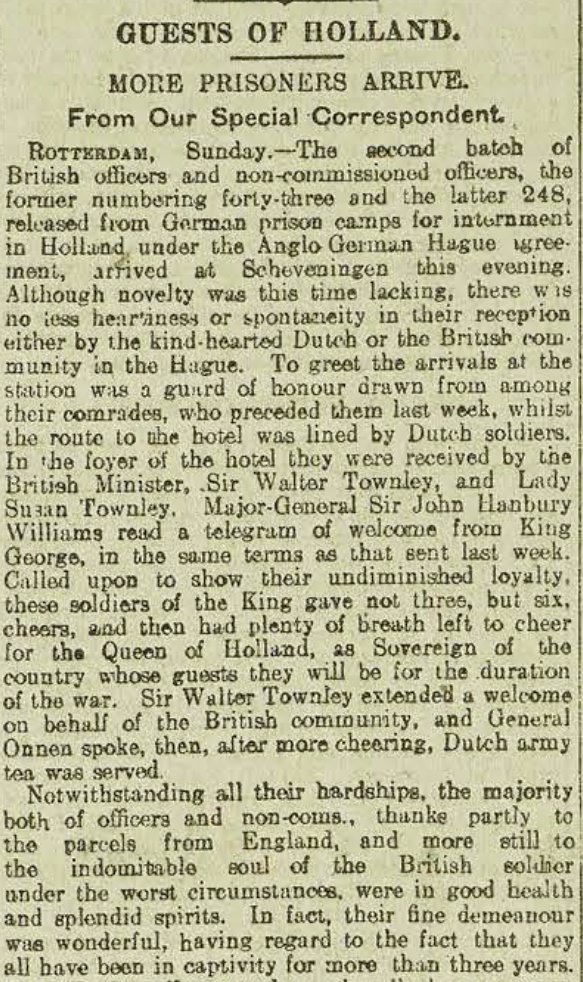
Lieut. Blake Budden (Middlesex), who has been in captivity since the beginning of the war, is now in Holland. It was announced in the newspapers early last month that he was one of the second batch of British prisoners of war to be transferred. He was given quite a reception!

Daily Telegraph 7/1/1918

Blake was commissioned as a 2nd Lieutenant in 1910, after serving in the Officer Training Corps whilst he was at Repton School. At the outbreak of war, he was on an extended stay in Frankfurt and was taken prisoner there in August 1914.

Soon after his capture, his father wrote to the War Office to enquire whether there was any possibility of Blake being included in an exchange of British nationals, suggesting that his knowledge of languages would make him a useful officer if only he could be released. This was to no effect.

In June 1917 however, following talks at The Hague, it was agreed any officers who had spent 2½ years in captivity could spend the remainder of the war in neutral territory.

Blake’s new address is British Interned Prisoner of War, Hotel Royal, Scheveningen, Holland. We have had a letter from him, the contents of which I will share shortly.


February 25th 1918

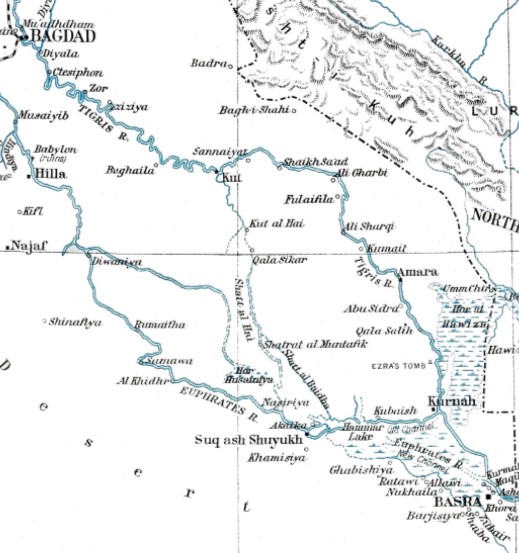
Lieut. Pat Duff (RFA) was collared by GC (Mr Vassall) to write back from Mesopotamia – and he has now obliged. He describes his progress up the Tigris from Busra to Kut before marching on to Bagdad.

8/2/18 “Busra is a place of of quite impressive size with very good looking houses and offices facing the river. The river itself is about 500 yards broad there, and ocean-going steamers go right up against the wharves. There was such a multitude of different craft lying in the stream that I was rather reminded of the Isis by the barges at Eights Week!

At a palace called Kurnah (where the old bed of the Euphrates meets the Tigris) I was shown the Tree of Good and Evil: it was near Temptation Square!

Another object of Biblical interest was Ezra’s tomb, somewhat further up the Tigris: can’t quite make out why he should have come back this way to die because, when last heard of, he was leading an expedition from Babylon to rebuild Jerusalem…

I travelled most of the way up to Kut by river. At Kut I got hitched on to an echelon of about 600 horses and mules with transport, and had to march it to Baghdad. Was about 15 days doing this, as we got stuck in the mud owing to rains and all movement was impossible…

Baghdad, although the guide books would say it ‘presents no special features,’ was worth a guinea a minute to me, because of the miscellaneous crowd that inhabit it…

The bazaars are like an endless series of transformation scenes at Drury Lane: it was in such a place as the coppersmith’s quarter where Aladdin must have got his lamps, and, although I didn’t recognise Ali Barba, I could see the Forty Thieves wherever I liked to look.

From the river, Baghdad looks very handsome: the buildings facing the river on the left bank are good, and there are two boat bridges over the river.

The boats on the river rather fascinated me: some are like gondolas, others like wherries on the Norfolk Broads. But there is no wood in this country, and consequently a lot of river transport is done by coracles made of wickerwork and hides and bitumen. (Incidentally, Herodotus in his book on Mesopotamia says, ‘after the city of Babylon itself, what struck me most was the coracles’!  It is interesting to see them functioning to this day.”

Pat ends his letter by saying, “If any enterprising young Dragon would be a pioneer or a ‘builder of empire,’ he need look no further than Mesopotamia for a country that will pay a thousandfold all the labour that is put into it.

I hope you are all flourishing, and often am thinking of ‘the School House afar on the banks of the Cher.'”

February 19th 1918

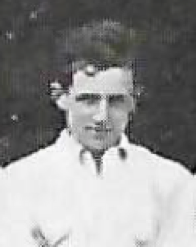
Martin Collier‘s death has weighed on my mind these past days and my thoughts go back to memories I have of him as an OPS schoolboy in the early years of this new and none too happy century.

Martin was to be prepared, not for the usual entrance examination to Public Schools, but for the requirements of the recently founded Royal Naval College at Osborne on the Isle of Wight. (Martin was the first Dragon to enter the Royal Navy by this route).

Despite my dislike for ‘cramming,’ I realised that Martin would need help if he was to be successful.

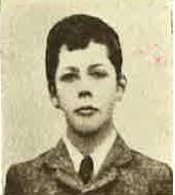
Martin, when a Dragon

When the time was approaching for Martin to compete for a Royal Naval Cadetship at Osborne, we were much exercised by the prospect of the newly established ‘Interview.’ There were all sorts of stories about it, but the great thing seemed to be to give the interviewers a ‘lead’. So, in the Easter holidays, I took Martin with two other boys, Jack Brooks and Ernest Filleul, for a cruise in a small yacht on the south coast…

At the beginning of term I said to Martin, “Draw me a picture of the ‘Enchantress.’” He drew the most remarkable picture, a triangular jib at each end, the mast nearer to the stern than to the bows. I made him copy a picture of the yacht, taught him how to draw it, taught him the rig and the names of the halliards etc. Then I asked him where we had been. He had only the vaguest notion of the map, so he had to spend hours over copying the chart from the Wight to Dartmouth, with the lights, ports, five-fathom line etc.

After the interview he came dashing up to me with a splendid grin, “The Admiral said, ‘I hear you have been doing some yachting. What was the yacht like? How rigged? Her tonnage?’ and then told me to sit down and draw a map of our cruise. I was rather a long time over it, and he came and looked at it and carried it off and showed it to the other interviewers – I was just putting in the five-fathom line – and they seemed very pleased with it!”

Of course, to a boy a cruise is just a holiday with plenty of fun and amusement, but he does not naturally get into his head much about the rig of boats or the intricacies of a chart, and what a terrible loss it would have been if Martin had not been ‘passed’ by the interviewers!

I have no repentance for that bit of ‘cram.’

(Before moving on to Dartmouth, Martin was in the XV, won the middle-weight boxing and was a cadet captain).


February 8th 1918

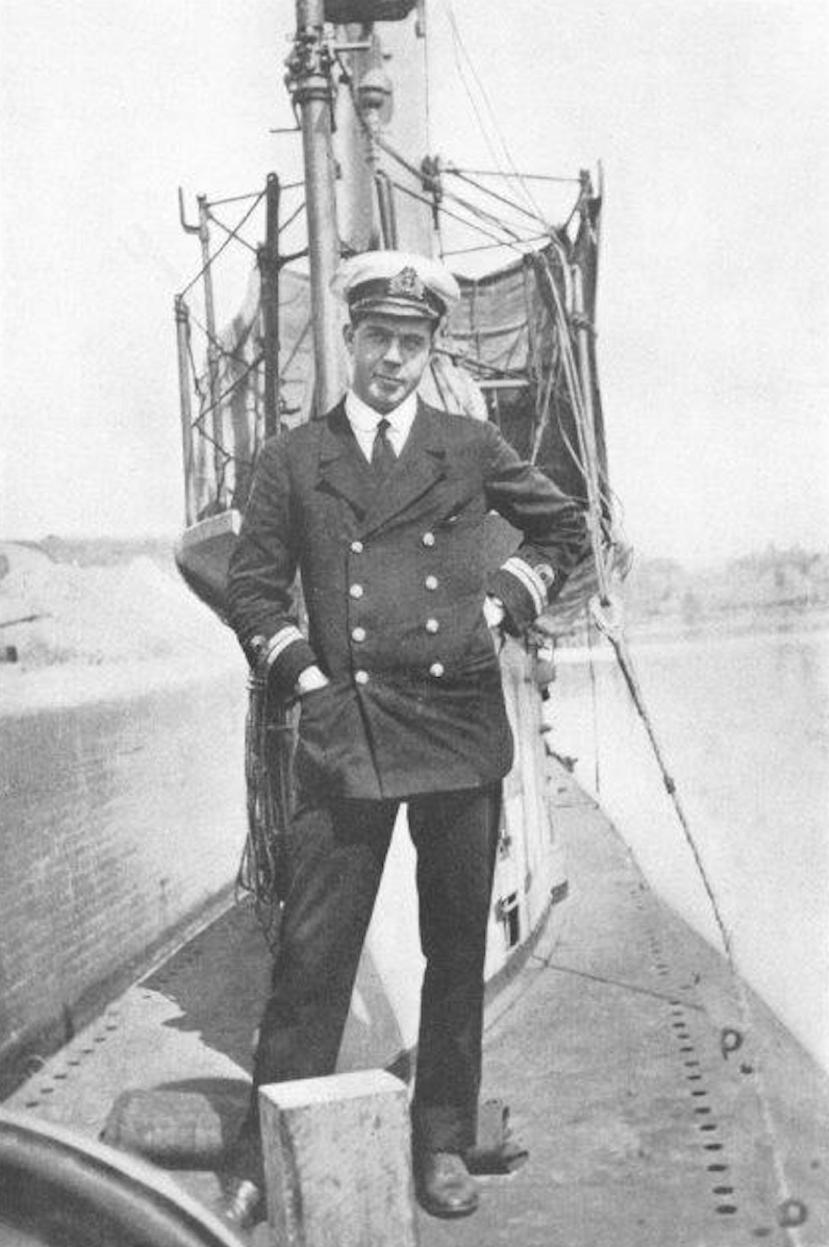
Lieut. Martin Collier (RN)

We now have further news regarding the death of Martin Collier. He received orders to take his submarine, H 10, with a crew of 26, on dangerous secret service. He sailed from Harwich into the North Sea, never to return. It is thought that perhaps the submarine hit a mine.  Martin had left a noble letter to be delivered to his family in case he did not return.

Further tributes have been forthcoming, this from Sidney Herbert, a fellow officer:

“Martin Collier was captain of one of those of our submarines which go out and are no more heard of, and had I any official knowledge of how they were lost I might not reveal it.”

Sidney remembers stories of Martin when they were at RNC Osborne, roaming the island “sometimes within bounds, sometimes with long chases that brought him in contact with authorities in a way which made the less daring among us hold our breath.”

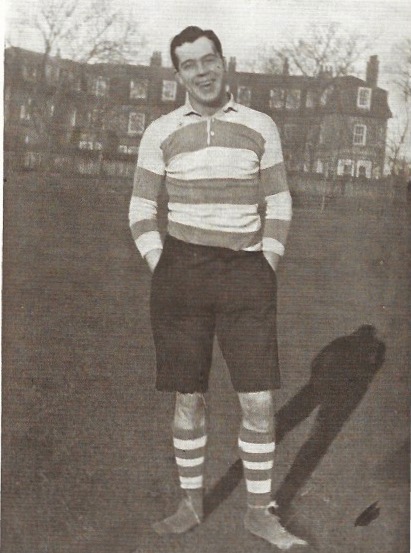
From Osborne Martin went on to Dartmouth, where his sport flourished. Martin was a talented rugby player. He played for the United Services and he was described as “the hardest working forward in perhaps the best club pack in England.”

In 1913/14 he played for the South and could well have gone on to make the England team.  He was also a boxer of note, winning the Navy & Marines’ middle-weight boxing championship of 1910.

I am most grateful to Martin’s father, Lieut.-Col. Collier, for forwarding me the letter he received from the chaplain of HMS Alecto, written immediately after H 10 had failed to return:

“… I knew your son very well indeed and without any hesitation I can say that he was one of the very finest characters it has ever been my privilege to meet. He was a real, clean, upright Christian gentleman. I personally shall miss him more than I can say.

He was a great help to me here, and the example he set of simple manly religion greatly impressed the officers and men, not only of his own crew, but of the whole depot. He always read the lesson at our parade services when he was in harbour, and was a very regular communicant…

He was most sympathetic and understanding and we all loved him. His crew, whom I knew well, were devoted to him. I saw his coxswain’s wife yesterday, and she told me that she tried to persuade her husband to report sick and miss this last trip, as he had a bad cold. But the coxswain said he couldn’t think of letting Mr Collier go without him.

This spirit animated the whole crew, and proves what we who knew him always recognised, that your son was a born leader of men – but he was more than that, he was a very perfect and courageous gentleman…

He has fought the good fight, he has finished his course, he has kept the faith…”

Coincidentally, today’s ‘Roll of Honour’ in the Daily Telegraph not only recorded Martin’s death, but also listed 2nd Lieut. William Sheepshanks (KRRC) as “Previously reported missing, now reported killed.”

We posted as much on December 27th (Bill having been “missing” since July 10th 1917). It has taken until now for the authorities finally to make this official.


February 3rd 1918

I am grateful to Lieut. Spencer Leeson (RNVR) for this appreciation of the life of Martin Collier, who has become the 58th of our old boys to have laid down his life for the country:

Spencer Leeson

“Memories of Martin must be vivid and clear-cut in the minds of all his friends. He was one of those men who, as it were, hit you straight between the eyes the first minute you saw him. You were conscious at once of a personality, and at the mention of his name afterwards many scenes came crowding into memory with the figure of Martin in high relief, saying or doing some characteristic thing.

Many will remember even how he used to arrive at school in the morning – hands in pockets, a battered old cap a little to the back of his head, passing jauntily through the gate leading to the asphalt, and on frosty mornings, rushing to the top of the slide to take his place in the queue.

On the rugger ground, of course, he was in his glory…

Martin Collier outside School House

The ordinary school matches never roused in him the stern ardour with which he entered upon a Dayboy and Boarder match… He always played a great game on these days, as I have particular reason to know, for he generally marked me out of touch. He would speak of these games with great enthusiasm when he was well on the way to his International Cap, and of all the matches he played, I do not believe he enjoyed any more than those at the School for the OD side.

One game particularly will be remembered – surely the greatest the ODs ever played – when GC (Mr Vassall) collected an OD side which Lindsay Wallace took down in December 1913 to meet the Osborne officers and staff. Martin led the pack in tremendous style, and our victory was largely due to his and Lindsay’s play.

Whenever I met him afterwards, Martin would speak rapturously of that game, and declare that when the OD scrum got well together, no side on earth could beat them.”

We did so hope that Martin would have lived to fulfil his ambition to play for England, and his last letters to the school – one on some rather robust rugger tactics and the other in support of a War Memorial, will be treasured.

There was more to Martin than sporting prowess, however, and Spencer is right to remember this:

“He carried his taste for literature with him into the service, and would relate afterwards how hard he found it to get time for reading, and how his Philistine colleagues used to enquire what earthly good there was in Tennyson or Browning.

In one of the last letters I had from him, he told me how he was enjoying a volume of Plutarch, which he could read, he said, in his submarine, during his off-time, ‘not a hundred miles from the coast of Germany.’

His memory will be enshrined among us, as long as any are alive who knew him.”


January 30th 1918

Lieut. Martin Collier (RN)

The war continues to take its toll of our very best and best-loved Old Boys. Just as it seemed we would go through January without loss, we read with the heaviest of hearts today that Martin Collier has been lost at sea.

He was in command of submarine H10, which went out on a mission and has not returned. The obituary in The Times today gives the date of his death as being January 19th and gave these details of his life:

 “He distinguished himself as an athlete. Both at Osborne and Dartmouth he won a reputation in boxing and at Rugby football. Later he played for the Navy, the United Services and the South.

In the spring of 1914, in the last Army and Navy Boxing Championship Meeting at Portsmouth, he won the championship in the officers’ light heavies.

One who knew him well writes: ‘He was a real, clean, Christian gentleman… and the example he set of simple, manly religion greatly impressed the officers and men not only of his own crew, but of the whole depot.’”

He is another of whom I can say that he loved the School as the School loved him. A chasm has swallowed him up leaving us, his friends of a life-time, bereft. There is so much more to be said about Martin, and I am sure that once we have composed ourselves, we will address this.