November 10th 1920

Dr Hubert Burge

The Rt. Rev. The Lord Bishop of Oxford,

(Headmaster of Winchester College, 1901-11)

Any description of The Service of Dedication would be incomplete without recording the contribution made by the Bishop of Oxford more fully.

After the reading out of all the names of those being commemorated and the recitation of Dr Alington’s poem, ‘The Trust’, the Bishop performed the dedication with these words:

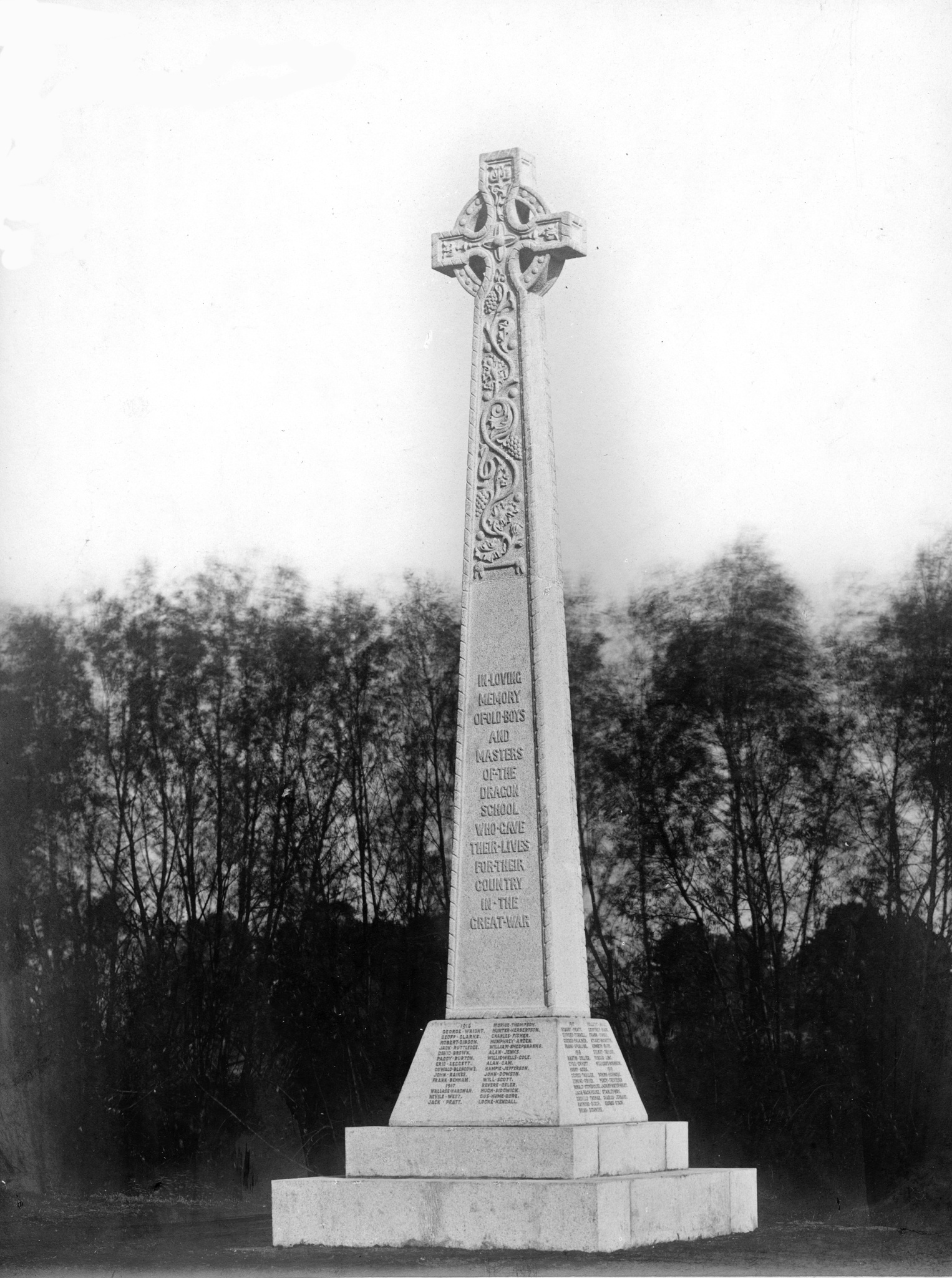
In the name of the Father, and of the Son, and of the Holy Ghost. We dedicate this Cross to the Glory of God, in proud and grateful memory of the Old Boys and the Masters of this School, who gave their lives in the Great War. May their example inspire us to courage in the greater war against all evil: may their memory ever burn brightly in those who remember their deeds, and, strengthened by their fellowship, look forward to reunion with them in the inheritance of the saints in light.”

After further readings and prayers, the Bishop gave the following address:

“The ceremony in which we are taking part means a great deal to everyone present, and may I say it means also much to me personally – perhaps as much as it does to anyone. My heart is full of memories of many of those to whom we are paying tribute this afternoon, of those who came to Winchester full of the promise of all their brilliant gifts. I can see them standing on Lavender Meads as they wait to pass before me at roll-call; I can see them again as they kneel in chapel. All their gifts, all their promise – light-hearted and happy they were, on the threshold of the Golden Age of early manhood – they put on one side in the choice they made at their country’s call. The truest comradeship, undaunted, unflinching courage, and loyal service and self-sacrifice for their country and her cause in the hour of her deep need marked that choice…

They gave without reserve to the cause that claimed them. There was nowhere else they could possibly think of being; there was nothing else in the world they could conceive of themselves as desiring or doing. And a noble tribute they paid…

There is a joy incalculable in facing and doing duty, in self-sacrifice and service: it is in truth the crowning joy of human life. And the secret of that joy is the completeness of the self-surrender, when there are no reserves, no keeping back from what we give to our duty: something to ensure our own comfort and ease: something that will make the effort less difficult: some thought of self. 

That joy, I know, crowned the lives of these our brothers: one of them, Roderick Haigh, was writing to me in a short spell after the days of terrific fighting in the first autumn of the war: these were the last words he ever penned: ‘We have been having a most tremendous time of it these last ten days, but I never enjoyed myself more: you won’t understand me: I never knew what it was to be taken so out of oneself.’

Those whose names are inscribed on the cross differed in their lives and in their temperaments; some had surely been cut out for great things, and some for the quieter life of the student. Yet at the time of great emergency all took their stand for the right. 

May you also be given the same power to take up the challenge when it comes, to accept the high, and, maybe, the seemingly impossible line…”


Of the nine Wykehamist Old Dragons on our Memorial, seven were at Winchester in Dr Burge’s time as headmaster:

Robert Pringle – the first to fall.

Roderick Haigh – killed in the 1st Battle of Ypres

Geoff Clarke – the son of our first headmaster

Robert Gibson – a Somme casualty

William Sheepshanks – the son of the late Bishop of Norwich

Revere Osler – the only son of Oxford’s Regius Professor of Medicine

Geoffrey Buck – a winner of the DFC
 

November 9th 1920

THE DEDICATION OF THE MEMORIAL

TO THOSE WHO FELL IN THE GREAT WAR

November 8th 1920

Yesterday we were delighted to welcome the Rt. Rev. The Lord Bishop of Oxford to oversee the service of Dedication of our Memorial Cross, who set the tone for the occasion with these well chosen words:

“We are met together today as one family, to dedicate a Cross to the Glory of God, and in thankful memory of those who went out from among us during the late war, and have laid down their lives for their country and for mankind. We shall make mention of their names, commit their souls to the mercy of Almighty God, and give Him thanks for their good example…”

Following the reading out of the names of all those who gave their lives, one of the boys, Percival Mallalieu,  read ‘The Trust’ by Dr Alington. The dedication, prayers, a hymn and readings were followed by the Bishop’s address (which we will publish tomorrow).

We are grateful to an Old Dragon (who prefers to remain anonymous) for this account of the day’s events:

“Many parents and relations of the fallen ODs and a fair number of ODs were able to attend the Dedication of the School War Memorial on Monday 8th November. At 8.30 a.m. there was a special Communion Service at which the celebrant was the Rev. LJ Percival (OD) assisted by the Rev. HW Spurling (OD). In addition to these, the following clergy were with the Bishop of Oxford at the Dedication Service in the afternoon: Rev. HH Arkell (OD), Rev. TT Blockley, Rev WM Merry and the Rev. A Karney.

It was fortunate indeed that Dr Burge was able to dedicate the Cross. As Headmaster of Winchester he had, as he reminded us, known, and been the friend, of many of those whose names it bore, and the simple sincerity of his address helped everyone to feel that the occasion was just the intimate, family gathering which the fallen would themselves have wished it to be. The Bishop addressed himself, as was fitting, to the boys, but perfectly expressed the thoughts of everyone. We cannot be too grateful to him for what he said…

All are agreed that the Cross perfectly expresses the intention of those who raised it. It must make the Skipper’s father happy to think that, at 92, he has been able, by this splendid monument, to crown his long work for a School to which he belongs as much as any of us. And now his work stands in the place of all places where it should, that boys may learn, and, having learnt, remember, the meaning of ‘Pietas’.

It is needless to say more. This Cross expresses thoughts which are the better for being unspoken. But it is a very happy thing to know that future generations of Dragons will possess it as part of themselves. We can trust them to keep it worthily, and to remember the Bishop’s words about the Old Dragons who fell for their country watching them from their graves.”

October 11th 1920

Brigadier General Stuart Taylor DSO

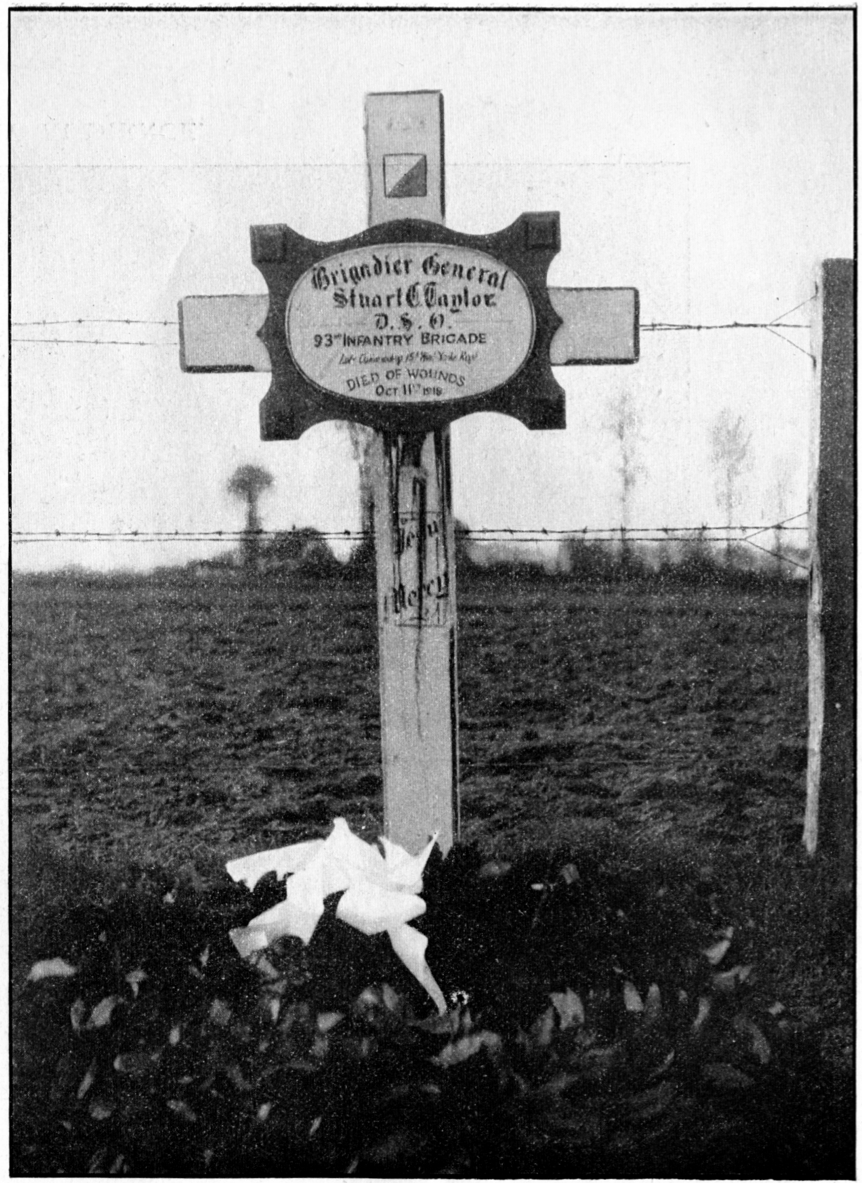
Two years ago today – just a month before the Great War came to an end – we lost our beloved Fluff Taylor, who died from the wounds he received from an exploding shell ten days previously.

We are delighted to have received this photograph of his grave at La Kreule Military Cemetery in Hazebrouck, south-west of Ypres. He was one of 78 generals to have died as the result of enemy action in the War.

Before his promotion to command the 93rd Division, Fluff had been Commanding Officer of the 15th Battalion of the West Yorks (known as the Leeds Pals) and was much loved, as this letter from one of his men testifies:

“The loss of our dearly loved and much respected Brigadier General has come as a great blow, and I am only one out of many hundreds who are so upset with this sad affair.

I was servant to the Brigadier when he was Colonel in the Leeds Pals, and he always loved us boys and saw to everything we desired; respected by every man in the Battalion, he was known as a thorough gentleman soldier, and, like the boys of 1916 whom he lamented, he died well, I’m sure. It gave me a shock when the news came, and I couldn’t have felt it more if it had been my own father, as indeed he was like a father to me all the time I was in France.

I was wounded in the retirement in March, and the Brigadier wrote at once to my mother, whom he frequently wrote to, and told her not to be alarmed…”

It was Fluff who first suggested, back in 1917, the idea of a war memorial and opened our fund with a very generous donation of £50. We look forward next month to welcoming the Bishop of Oxford to preside over a service of dedication of the Memorial Cross, being constructed at the bottom of our field on the banks of the River Cherwell.

September 24th 1920

Mr AE LYNAM (Hum)

The Christmas Term started yesterday with my brother Hum at the helm, following my announcement of semi-retirement at the end of last term.

We now number 192 children with a further 20 in the junior ‘Baby School’ – this compared with under 60 when I took over the running of the School in 1886!

This term sees some changes in the boarding houses. Mr & Mrs Brown have charge of boarders at 10 Charlbury Road. Mr Bye, having been appointed headmaster of Thame Grammar School, Mr Stradling from the Royal Naval College Osborne, has taken on his house for juniors at 12 Bardwell Road. Miss Field is now running a house for ‘Baby School’ boarders and a few sisters – altogether 4 boys and three girls. This meets a serious need. Parents living in India are glad to be able to leave even young children in so homely an atmosphere.

Lastly:

We have decided to revert to the old name of the School, viz, the Dragon School, Oxford, instead of the Oxford Preparatory School. The boys have always been the ‘Dragons,’ but the School has come to be known as ‘Lynams’ or ‘the OPS,’ and we prefer ‘the Dragons.’


September 19th 1920


Today is the fourth anniversary of the death of Leslie Eastwood, who on the outbreak of war in 1914 left the OPS staff to join the army. It seems appropriate therefore to post this picture, sent to us earlier in the year, of his grave in Alexandria, where he died on September 19th 1915.

He had been wounded in Gallipoli and his letters indicated he was making a good recovery from what seemed to be relatively minor wounds. What we didn’t know was that he had been suffering from dysentery for quite some time.

It was a couple of days before the start of the school year in 1915 that the news of his death got to us.

We suffered a double blow, as the  day following Leslie’s death his friend and colleague, Higgy (Thomas Higginson), was also a  casualty of the war. We still miss them both and for many, like Kildare Dobbs, who wrote to us last year, the OPS has struggled to be the same without them.


The new school year, the first with my brother Hum at the helm, starts next week (September 23rd).

August 15th 1920

There are always sad farewells at the end of the Summer Term, not only to the boys, but also the staff. We are very sorry to be losing Mr. Bye.

Capt. Walter Bye

Mr Bye joined the staff in 1914, but on the outbreak of war he joined the University and Public Schools Brigade of the Royal Fusiliers. After his training with them, he took up a commission with the Royal West Surreys. He returned to us at the OPS last year as Capt. Bye DSO MC and he has shown himself to be an excellent schoolmaster and housemaster. He has taken the top mathematical set during the year, and has carried out some systematic science teaching, with most satisfactory results.

General Science lessons have been given on Thursday evenings to the boys in the upper part of the School, and I think this innovative action in the School curriculum has been quite justified, in spite of the fact that some boys have missed a small amount of Classical Prep!

That some form of Scientific teaching is necessary is to my mind a settled fact. It can, at least, cater to some extent for the intense natural curiosity about ‘things of everyday’ with which these boys of 12-14 come into constant and immediate contact. It can also attempt to give them some slight appreciation of the greatness of Science in modern life, and to give them some idea of what the great men of Science have done for everybody’s comfort and health. The pre-existing state of affairs has been that boys are well able to write five lines or so on such historical celebrities as Lambert Simnel, Perkin Warbeck etc, but not one line could they have supplied on such men as Galileo, Faraday, Newton, Kelvin or Crookes

The following are some of the subjects with which Mr Bye has dealt in broad outline: the Atmosphere and Atmospheric Pressure, Water, Combustion, some of the fundamental principles of Electricity and Magnetism, Radio-activity, Liquid Air, X-rays and the Solar System.

Mr Bye has been appointed Headmaster of Thame Grammar School, and we wish him good luck.

August 7th 1920

As the summer edition of the ‘Draconian’ is assembled and I come to the examinations section, I recall that there may be a number of you interested in the the results of the English Literature Paper set by Frank Sidgwick towards the end of term.

He duly furnished us with the marks (out of 100) which ranged from 85-21. The joint winners were JM Huggins & Isabel Fausset-Farquhar (85%) with J Betjemann (75%) third.

For those of you who attempted the paper at home, here are some of the answers:

1 (a) Charles Kingsley (b) Erskine Childers (c) Rudyard Kipling (d) Alfred Lord Tennyson (e) Sir Walter Scott (f) Charles Dickens  (g) William Blake (h) John Masefield (i) Edward Fitzgerald (j) George Chapman.

2 (a) ‘The Pickwick Papers’ – Charles Dickens (b) ‘Kidnapped’ – Robert Louis Stevenson (c) ‘Peter Pan’ – JM Barrie (d) ‘The Pirates of Penzance’ – WS Gilbert (e) ‘Hiawatha’ – HW Longfellow.

6 (a) And never brought to mind,/Should auld acquaintance be forgot/For the sake of Auld Lang Syne? (Robert Burns, ‘Auld Lang Syne‘) (b) ‘All things both great and small,/For the dear God who loveth us,/He made and loveth all’. (S. T. Coleridge, ‘The Rime of the Ancient Mariner’) (c) The captains and the kings depart:/Still stands Thine ancient sacrifice,/An humble and a contrite heart. (Kipling, ‘Recessional) (d) A thing of shreds and patches,/Of ballads, songs and snatches,/And dreamy lullaby (W. S. Gilbert, ‘The Mikado’).

Frank Sidgwick also provided these comments regarding answers to the other more general questions:

“The paper was not so much a test of knowledge of the facts of English Literature as an attempt to probe general literary intelligence and thought: this was particularly the purpose of questions 3, 4, and 5 which gave scope for the display of literary history, and the comparison of ancient and modern literatures…

In question 3 most showed good sense, but this was often nullified by bad expression… Isabel, Betjemann and Vernon did particularly well.

Question 4 was rather a disappointment in the result. Nearly everyone proposed to ask Shakespeare whether he wrote his own plays, and which he thought his best play. Burton suggested asking him what he thought of the OPS performances, and others had original ideas; but on the whole the opportunity was missed. Somebody ought to note that that Elysian Fields do not mean the Champs-Élysées.”

Indeed!

July 29th 1920

Captain George Thuillier (Devon Regiment)

It is over two years since George Thuillier, along with Henry Addis and Alan Haig-Brown, met his death in the German Spring Offensive of 1918. Like so many, his body was not recovered and it was out of the blue that his father received this letter from the authorities, dated July 23rd 1920:

“With reference to previous correspondence, I beg to inform you that in the process of exhumation for the purposes of the concentration of isolated graves into cemeteries, the grave of Lieutenant Acting Captain GF Thuillier, MC, 2nd Battalion, Devonshire Regiment, was located at a point just south of Villers-Carbonnel.

I am to inform you that in accordance with the agreement with the French and Belgian Governments to remove all scattered graves and small cemeteries containing less than forty graves, also certain other cemeteries which were situated in places unsuitable for permanent retention, it has been found necessary to exhume the bodies buried in certain areas. The body of Lieutenant Acting Captain GF Thuillier, MC, has therefore been removed and re-buried in Assevillers Military Cemetery, South West of Peronne.

I am to add that the necessity for the removal is much regretted, but was unavoidable for the reasons given above. You may rest assured that the work of re-burial has been carried out carefully and reverently, special arrangements having been made for the appropriate religious service to be held.”

George’s father, Major General Henry Thuillier, was General Officer Commanding 23rd Division in Italy in 1918 when George was killed, and his mother had to suffer the shock of her son’s death on her own, whilst also worrying about her husband’s safety.


July 25th 1920

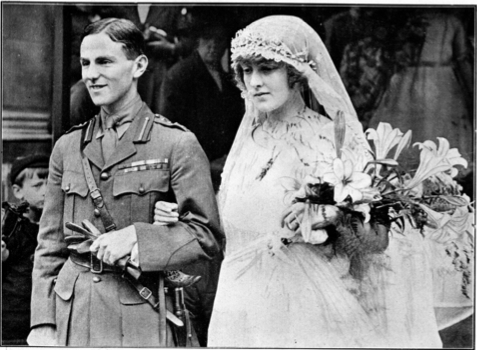
Jack Smyth has rounded off a remarkable week with his marriage to Miss Margaret Dundas on Thursday (July 22nd). We sent off Hum and Mrs Hum, resplendent in wedding garments and looking ‘buxom, blithe and debonair‘ to represent us. One observer commented “Hum’s topper recalled the delicious blends of thirty years ago and his smile overflowed the taxi.”

What a pity to find in the newspaper that Mr & Mrs Hum (and their daughter Audrey) Lynam has been misspelt as Lyman!

July 23rd 1920

July 21st 1920 – Prize-giving Day.

The Prize-giving this year was decidedly the best we have ever had; and it was a great joy to me to be present among the audience (for the reason, see below). If I had realised that Hum was such an orator he would have been turned on on many previous occasions!

We were also delighted to welcome back Jack Smyth, fresh from Buckingham Palace (again) to give away the prizes. He was kept on his feet some time as there were some 182 of them!

The final presentation was that of the Somerville Officers’ Cup. As required, it was awarded to the boy who ‘has the most gentlemanly bearing and best influence on other boys’ as decided on by the vote of the whole school. This year’s winner is Francis Wylie, who sadly leaves us now to go to Rugby.

Jack Smyth and Hum Lynam with Francis Wylie

Our guest then proceeded to make his speech and Old Jack’s soldier-like “few words” were exactly all that was wanted to complete the success of the day, including, as it did, this touching tribute to the school and those we have lost:

I needn’t tell you how much we ODs who are stranded out in India look forward to coming back to the OPS. There is something quite different about the OPS from any other preparatory school I have ever heard of. Someone said at the Old Boys’ Dinner that the remarkable thing about the OPS was that ODs have almost as much affection for it as they have for their public schools. Well, I should like to go one better and say that, as far as my experience goes, ODs have more affection for the OPS than they have for their public school. And to say that is to say a great deal, because I have never known a preparatory school where that has occurred before.

Before I left India I met one or two people who had just returned from leave in England and they gave one rather a depressing account of things at home. They said that the old spirit of unselfishness and cheerfulness which had burnt so brightly during the war, had rather died out, that our sacrifices in the war had been forgotten, and that there was generally rather a spirit of Bolshevism abroad. Now, I’m glad to say I haven’t found that at all. We as a nation are not given to talking sentiment and weeping for sorrows that are past, but I think that the sacrifices England made in the great war have been in no way forgotten because we don’t talk about them, and I know at any rate that the wonderful example set us by that gallant band of ODs who so gladly and ungrudgingly laid down their lives for their country in the great war will be an ever existing memory at the OPS.”

They will indeed not be forgotten. A brass, prepared by Messrs. Mowbray, is already fixed in the School Hall. It gives the names of our lost ones in the order in which they fell.  Hopefully our Memorial Cross will be ready for its installation on the banks of the Cherwell before the end of the year.

Lastly, why was I in the audience this year?

At the age of 62 and after 40 years schoolmastering in Oxford I feel that the School should be run by younger men, so I have got Hum to be Joint Headmaster, and am leaving the greater part of the management of the School to him. He with the stalwarts, GC Vassall and Lindsay Wallace, with the help of Mr Haynes and the younger men (not forgetting the ladies) will, I am certain, maintain the traditions and carry on the success of the School.

I still hope to spend some happy years in the position of (shall I say?) Warden of the School – and do some teaching and supervision and to keep up intimate connection with Old Boys and Girls – but I do not want to interview or correspond with new people; I cannot pretend to know intimately all the boys as I have always done in the past, and I do not mean to interfere with details or with general management. I once heard a splendid little girl of 9 say, when it was suggested that she should carve a ham, “All right, give me plenty of elbow room and NO ADVICE!” meaning of course, “no interfering and unasked-for advice,” and there is much justice in the demand!