August 21st 1916

I read with interest in the Daily Telegraph recently of the sacrifices being suffered by other schools. By the standard of Wellington College, our losses pale into insignificance. It was reported that of the 3,020 Wellingtonians serving, 395 have been killed and 490 wounded. In addition 4 masters have lost their lives.

Wellington is, of course, a much bigger school than the OPS, numbering 526 in 1914. Our numbers only reached 100 in 1905 and at the beginning of the war we had 119 children in the school (not counting our junior department of 20 children aged 5-8 yrs old).

Yet, by December 1914 there were 225 Old Dragons and staff in the armed forces, with a further 10 at Sandhurst, Keyham or Osborne and it may well be that there are over 300 serving now.

Our Roll of Honour currently lists 33 killed (including 2 members of staff) and 59 wounded/missing – 21 of whom since April.

* * * * * * *

My mind, now with some time to think on such things, dwells on the present stir in educational circles. Are we to have a scientific instead of a literary basis for the education of our children, or are the two to be combined in the scholastic edifice?

Preparatory Schools must of course follow the Public Schools and they the Universities. Shall we, after having conquered the Germans, proceed to imitate their methods and systems? Has our Public School education proved itself so much inferior in its product to the ‘scientific’ and ‘methodical’ Prussian system?

At the cost of a few days’ war expenditure a scheme could be carried out for all those young Englanders, whose so called education has hitherto been cut short at the age of 14, that would give every class the English Public School spirit and, in a generation, class antagonism would die down and the whole nation would be strengthened morally, physically and intellectually.

Here at the OPS, we have always tried to foster interest in Nature and her workings and should only be too glad to extend opportunities in such direction; Archer Vassall, Treffry Thompson, Dr. Slater, Professor Poulton and others have helped inspire this interest.

I hope to arrange for a regular series of lectures on the lines of the Ashmolean Society; this should be easy in Oxford. A knowledge of and an interest in ‘the world around us’ – this is of at least equal importance with, even if it does not include, the study of mind and thought; but this is a very different thing from a so-called ‘scientific’ and ‘systematic’ education, which rules out the Humanities and produces the German and his Kultur, as well as the weird English style in which its advocates usually express themselves.

* * * * * * *

My top English form last term did a good deal of essay writing and learning of good English and has somewhat neglected the acquisition of historical and geographical information, but the boys in future years will, I hope, bless me and not blame me for this; and if the pen be really mightier than the sword, they will have an armoury that will stand them in good stead.

August 16th 1916

CDF at sea croppedYou may have seen the Poet Laureate, Mr Robert Bridges has published a piece entitled ‘The Chivalry of the Sea‘ and the more observant amongst you may have noticed that this is dedicated to our own Charles Fisher, who went down with HMS Invincible at Jutland.

The well-known composer, Sir Hubert Parry, is setting the piece to music.

A friend of Charles Fisher’s, Mr George Lyttelton, has written a capital piece in Charles’ memory. Apparently Charles told him that all he wished to do after the war was to go to bed for five years, only getting up for meals – before adding that this was not to be considered incompatible with an earlier wish to end his days in a Worcestershire vicarage, having helped to settle the date of Deuteronomy.

How I do miss Charles.

August 13th 1916

Edmund GayCaptain Edmund Gay (Norfolk Regiment) was declared missing a year ago.

The Daily Telegraph reported about ten days ago that our Government understands that there are only nineteen officers and 359 other ranks known still to be in Turkish hands as Prisoners of War.

With regards the 290 officers (amongst whom Edmund is numbered) and 9,700 other ranks still missing, they feel that there are no longer any grounds for hoping they might be prisoners,

“and therefore it was consequently decided that the missing officers and men not accounted for must be officially accepted as dead. Effect is being given to this decision after due consideration of the circumstances of each individual case.”

There has still been no official confirmation of his death given to the family however, and until such time we will continue to list him as “missing.”

* * * * * * *

Benham, FrankCaptain Frank Benham (RFA) was wounded by a German shell hitting his dug-out on August 5th. At the time he was in charge of a battery at Mametz Wood on the Somme.

On August 8th he was strong enough to be able to write to inform his wife of his situation and the matron on his ward has also written to say she hopes he will be strong enough to return to England shortly.


August 10th 1916

Paddy Burton‘s father, who writes under the pseudonym of ‘Touchstone’ for the Daily Mail, has sent us this poem for the forthcoming edition of the ‘Draconian,’ to be printed alongside the notice of his son’s death.

How well it captures the pain all parents must feel when receiving such heart-breaking news as the death of a beloved son.

Burton P (2b)

Deeply regret to inform you that Capt HPC Burton 1st Bedford Reg’t was killed in action July 27. The Army Council expresses their sympathy.

A SCRAP OF PAPER
A scrap of paper! “Killed in action,” so
Die all the dreams of happier days to be!
And yet, thank God, you were the first to go
When England called for Men to keep her free.
Thank God for that pure, manly heart and true
That kept your face for ever towards the light
That lit the only path you ever knew
And made you victor still in death’s despite.

Not all our sighs, not all our selfish tears,
Can call you back, but you whose clear young eyes
Looked on the promise of the coming years,
You never grudged the final sacrifice.
Is it not written that your latest breath
Bade him who brought you succour not to stay
But to pass onward through that land of death,
To lead your well-loved soldiers in the fray?

A scrap of paper? Nay, a sacred scroll,
A great and glorious treaty, signed and sealed
In your heart’s blood, wherein our England’s soul
For those who shall come after, stands revealed.
So thank we God who in his mercy gave
His own dear son to death upon the tree,
For all who follow him who died to save
And win the deathless crown of victory!
                                       Touchstone

August 5th 1916


Paddy Burton

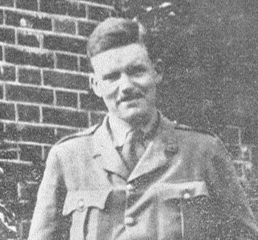
Captain Paddy Burton (4th Bedfordshires)

Alongside the notification of the death of Robert Gibson, The Times yesterday also listed the death of Paddy Burton.

On July 27th, Paddy led an attack on Longueval by the 1st Bedfordshires (to whom he had been attached since May 1915). This was a success, but there were isolated pockets of resistance. He and another officer discussed how they could dislodge the Germans from a house, where a machine-gun was sweeping over the British position. Paddy decided on an attack with hand grenades, during which he fell wounded in the leg.

Company Sgt Major Afford went to his assistance, dressing his wound before attempting to carry him to a place of safety. However, before Afford could move him, Paddy received a second and fatal wound, caused by a bullet having come through the lip of the shell hole and penetrating the lower part of his head.

Afford reported that Paddy “…remained conscious for a few hours, during which time I stayed with him and comforted him. His last words were to me, requesting me to carry on with the task he had so nobly set out to do…

At day-break I supervised his body being laid to rest close by the spot where he met his end.”

The day before he was killed, Paddy Burton had reconnoitred the approaches to the village of Longueval together with another officer, who recalled:

“It was a very trying job, as our guide lost himself and we sent him back. We were under incessant shell-fire and we knew that a great part of the ground was exposed to snipers, and we had to find out absolutely everything for ourselves. I don’t think I could have done it without Paddy… He must have been at least as tired and depressed as I was, but he wouldn’t allow it to show.”

Paddy was one of those boys who make life ceaselessly interesting to a schoolmaster. It may be said that he was a strange compound of liberal and conservative, but what characterized him most was his independence of judgement and his pluck.

He was to have been married during his next leave.

August 3rd 1916


Leggett, Eric

Major Eric Leggett (Royal Artillery)

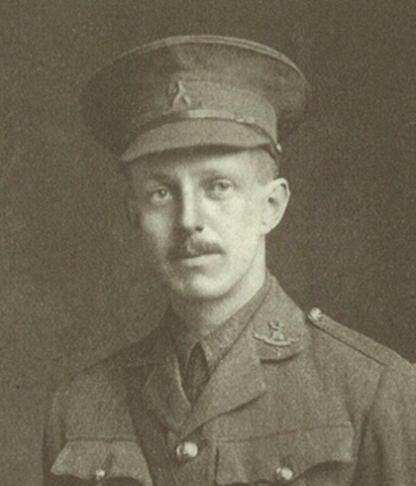
A third Leggett brother has died – barely two weeks after his older brother, Wilfred. Eric perished not in action, but of scarlet fever, whilst serving at the front. He had been taken to the hospital in St. Omer, where he died on July 30th.

No loss has been such a shock to me. Eric was my cabin boy on the ‘Blue Dragon‘ on many an adventurous cruise. After he left the OPS, I visited him when he was at Wellington and Woolwich. It was delightful to be taken round by him. Whilst full of fun, there was always a serious and romantic side to his character.

Eric married in 1911 and his son, Hector, born the following year, is down to join the OPS in September 1921.

Of the four Leggett brothers, only Lieut. Hugh Leggett survives.

July 29th 1916


DW Brown

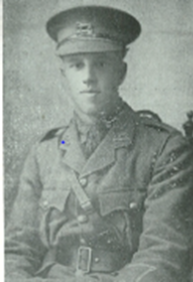
Capt. David Westcott Brown (Leicestershire Regiment)

It has now been confirmed that David was killed in the fighting for Bazentin le Petit on July 14th. Although his body has not been found, a Sergeant reported seeing it.

Like many, David realised in the spring that the summer months ahead would see the launching of a new offensive. Foreseeing the high number of casualties amongst officers, he felt the need to prepare himself – and his family. He wrote to his cousin Lillian in May:

“…. I am writing like this because summer is here, and I don’t think our present peacefulness can go on much longer. People at home are beginning to wonder what they pay us for; and I think Death must come to many of us, if not to most (I am talking of officers now) before very long: and, if it does come to me, I don’t want you to feel it as a shock, and I don’t want you or anyone to grieve.

You know it is rather an honour to die now, to die for all that we hold precious, for our country, to die that we may live, and to die with so many better men.

I don’t want to die. I want to live and tell how I was in the War, how I was a fighter in it, not merely a server; but, if I do get killed, I want you and everyone to know that I knew of the possibility, that I was ready for it, and facing it, and not shirking and dodging the thought of it. It seems to me that for a man who is, if not ready or willing to die, at least aware of the presence of death, and looking it in the face not caring or wondering what lies beyond, Death has lost its power. When you cease to fear Death you have conquered it, and Death has become only a gate, no harder to pass through than the door of a room.

Am I just being morbid? I hope not; because I feel somewhat that should the worst happen it may help Mother and Dad to know that I was not caught by surprise, not realising what I was in for…”

David also wrote a poem around this time, when still behind the lines:

Two Voices
“The roads are all torn” ; “but the sun’s in the sky,”
“The houses are waste” ; “but the day is all fair,”
“There’s death in the air” ; “and the larks are on high,”
“Though we die – ” ; “it is spring-time, what do we care?”
“The gardens are rank” ; “but the grass is still green,”
“The orchards are shot-torn” ; “there’s a bloom on the trees,”
“There’s war all around” ; “yet is nature serene,”
“There’s danger” ; “we’ll bear it, fanned by the breeze.”
“Some are wounded” ; “they rest, and their glory is known,”
“Some are killed” ; “there’s peace for them under the sod,”
“Men’s homes are in peril” ; “their souls are their own,”
“The bullets are near us” ; “not nearer than God.”

David was a cousin of Percy Campbell (one of the first OPS casualties) and the godfather of a current young Dragon, Per Mallalieu.

He won a scholarship to Marlborough and then went to Balliol to read ‘Greats’, when war broke out and he joined up.

July 27th 1916

Whilst we have learnt much from the newspapers about the ‘Big Push’ on the Somme, it is not the same as hearing from someone in the thick of things. Capt. Leslie Grundy (late of York & Lancaster Regiment, now serving with 90th Machine Gun Company) has found the time to provide us with a first-hand account of the events of July 1st.

He was involved in the attack on Montauban at the southern end of the battlefield. (Here the preliminary bombardment was clearly more effective than further north and casualties considerably fewer).
grundy-glo“We had done all the practising for the last fortnight and were now waiting in the assembly trenches. For us, these consisted of a few small trenches cut in a hollow between two woods about 700 yards behind our front line. We had arrived in these trenches late the night before, and had passed a very cold night indeed. Consequently we were all awake when dawn broke.

The guns had been keeping up a pretty heavy bombardment throughout the night, increasing in intensity every minute. The fringe of the wood behind us (curiously enough called ‘Oxford Copse’) was lined with 18-pounders, who were firing over our heads. As they were only 150 yards away, the noise was deafening.

Although we had not been given the time for ‘Zero,’ we judged it was near enough for us to issue the rum, so an issue of two jars among 150 men was made at 5 o’clock. We got word from Brigade Headquarters that Zero was to be at 7.30.

About this time a heavy ground mist appeared and for some time it looked as if the attack would have to be postponed. As it was near to 7.30 the Company Commander and I went over to a small piece of rising ground that was in front of us to watch the first wave go over the top. Over it went at 7.30 exactly, and as far as we could see there was only one casualty and it did not sound as if there was very much hostile rifle fire…

At 8.30 I went forward with my servant, and the two other sections followed 50 yards behind, interval 100 yards, but owing to the weight of our loads we fell behind our appointed place and found ourselves mixed up with some engineers. This ground was made up later on, while waiting for our artillery to lift.

When about 100 yards off our original front line, we saw that the enemy was putting up a barrage in No-man’s-land and a lot of our infantry were knocked out going through. When we got right up to this barrage we made a dash and, as far as I could make out, lost very few men. One of the section officers, however, was wounded rather badly in the back.

We found the Boche wire, when we got up to it, had been blown to pieces by our artillery fire and the trenches themselves had suffered so terribly that it was difficult to tell in what direction they ran. I had my first rest here; it was a hot day, and the packs were beginning to tell on us.

As it looked as if the Boches were shortening their range, we thought it best not to make too long a stay at this spot and therefore pushed on as far as the Glatz Redoubt. In a few minutes No. 2 section came up; so far they had only lost three men.

At this point a party of about 30 Boche prisoners were marched past; all of them apparently in great fear of their lives! They had all, seemingly, been very much shaken by our bombardment, and in the trench we were occupying there were many of them lying badly wounded. After a few minutes we mounted our guns and opened fire on the Boches to the left of Montauban, as the Brigade there did not seem to have attained its objective.

All this time our heavy artillery had been keeping up an intense bombardment on Montauban, and we could see our infantry waiting in the open in long line, ready to go in when the artillery fire lifted. Later there seemed to be some slackening of the fire and our troops immediately went forward. The whole thing was done as if on parade. They went over at a steady walk, keeping their dressing all the time. As far as we could see, there was no hostile rifle fire from Montauban at all and, as yet, no shell fire was falling on them.

I then decided that this would be the time to get our machine-guns into Montauban, so we went forward…

The whole place was literally blown to pieces, and it was with great difficulty we discovered where the roads had been. However, somehow or other, we managed to get both sections to A. Keep, where we found some men already busily consolidating. We had only been there a few minutes when a Boche machine-gun started traversing the village…

Just before dusk there seemed to be a small attack, but it was easily dispersed by rifle and machine-gun fire. All that night we fired at all small parties of Boches who could be plainly seen, and as it grew light we heard the sound of bombs exploding and found the Boches were bombing Montauban Alley from the other end.

About 7 o’clock the bursting bombs seemed to be very close to one another and… about 30 of our men jumped out of the trench and started to retire towards us in Montauban. Immediately on seeing this, the Boches jumped out of their trenches and started firing on them. We turned two machine-guns on the Boches and wiped the party completely out, but not before they had accounted for all our men.

The wounded in our trench were coming into the dug-out at an alarming rate and soon it became evident that the only people holding the keep were the machine gunners, and we had only two men per gun. As the bombing attack seemed to be developing, the Company Commander sent a message back for an artillery barrage. In a short space of time our shells started to come over, bursting in the valley in front of Montauban…

After this, the attack seemed to fizzle out. Several Boche snipers however, had managed to get into position in the diagonal trench leading from Montauban Alley to Montauban. They managed to cover all the exits from C Keep and they got a number of our walking wounded, who were trying to get back.

The shelling was fairly heavy throughout the day, but there were no more infantry attacks…”

That evening Leslie and his men were relieved and here at least undoubted success was achieved.


July 25th 1916

Yesterday’s Daily Telegraph (p.7) told us of another tragic blow to the Leggett family.

Alan Leggett, the youngest of the four Leggett brothers, was killed in action near Armentières in October 1914. Now his eldest brother Wilfred, a Major in the RFA and in command of a siege battery, has also been killed in action.

Although he was not an Old Dragon, the family is one with which we have had the closest of ties. Their brother, Major Eric Leggett, is currently serving with the 188th Brigade Royal Artillery.


July 23rd 1916

Yesterday we came to the end of another school year and, as always, we concluded with our annual Prize Day.

I took the opportunity to pay tribute to the role that our Old Boys have played in the War in my annual speech to the parents:

“I cannot but strike a sad note and yet a very proud one on looking back on the past year; sorrow that in the War we have lost so many very dear Old Boys and Masters; pride in knowing that they have fallen gloriously in the noble field of duty and honour. We are indeed proud of them one and all: 31 killed, 52 wounded, 1 VC, 1 CB, 8 DSO, 14 MC, 3 Special Promotions, 4 Legion of Honour, 1 Croix de Guerre, 1 Order of St George and 34 Old Dragons Mentioned in Despatches.

It seems a terrible grim Fate which has robbed us of these our friends in their youth and manhood, and yet if the veil were lifted we might understand that it is not all sheer waste, that the life and death and memory of each one of them is a stone upon the Altar of holy doing and deserving, which will raise us and all who have known them nearer to a heaven of love and peace.

Let us look to a happy day, in no distant future, when the blast of war’s great organ shall be hushed in peace, and victory shall have crowned our great sacrifice.”

The holidays ahead, in the current circumstances, will I fear continue to bring further unwelcome news for many of us. May our children, at least, endeavour to enjoy them as much as they ever did.


Christmas Term starts September 20th 1916