September 25th 1916

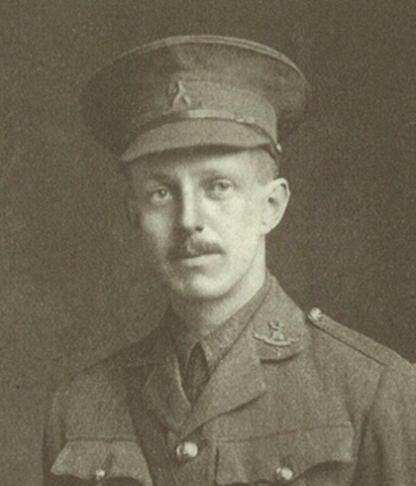
Hugh has finally escaped the clutches of bureaucracy, where he has been the Private Secretary to the Permanent Secretary to the Board of Education. He is now Lieut. Hugh Sidgwick (RGA).

He was commissioned into the Special Reserve of the Royal Garrison Artillery in January and is currently with a siege battery in France.  Having hoped that at the Front he would be free of modern communication systems that demand continual attention and instant reaction, he has been disappointed:

sidgwick-ah-2“The most distressing thing to me personally is the omnipotence and omnipresence of the telephone. It was my curse in civil life and I hated it bitterly and profoundly.

I did think that in military life I should escape it. But no; it is more important than ever; you range the country at the end of a telephone wire, and if it breaks you are an exile and outlaw at once; you come back and sit in your battery surrounded by telephones, all talkative and all meaning work.

The call to arms is a message dictated over the telephone and taken down on a pink form; the call to rest is the mystic word CI… I suppose when peace is declared the message will go round – Pip, Emma, Ack, C, E.

Of what is happening in the war we have not the slightest idea; a five day old Times is generally our latest news. We hear extraordinary rumours – that Roumania has come in, that a German Division has surrendered, that a Great Personage while addressing the Guards said that within 90 hours (now elapsed) something quite remarkable was going to happen. I believe these rumours are made up by Railway Transport Officers, to beguile the tedium of their existence.”

Hugh must have had to learn a lot in his new job rather quickly, but then scholars of Winchester & Balliol Colleges are quick learners. He makes it out to be easy enough:

“… the mathematics of siege gunnery are nothing alarming and many of the beautiful calculations we learnt in England go by the board. One has to know the difference between + and – , right and left, and to be able to add and work a slide rule, and read a map and take bearings, but that is about all.

I would volunteer to make quite an easy and profitable course of instruction in siege gunnery for VIa, and if they would give us a gun and let us practise on North Oxford from Shotover, so much the better for the cause of architecture.

If one of the Old Dragon airmen would come and observe, we could have a charming afternoon.”

I am not convinced as to the wisdom of arming the current VIa, and there might be mild concern amongst the residents of North Oxford as to whether their particular houses pass muster, or would be included in Hugh’s architectural cull.

September 14th 1916

Yesterday Oxford was honoured by a visit from His Majesty the King.

Having driven up from Windsor, the King proceeded to the Parks where he inspected a battalion of Cadets.  Captain Jack Haldane (Black Watch) also got in on the act, as he was at the time giving bombing instruction there. (Such is his fascination with bombs that in certain military circles he is known as ‘Bombo.’)

After departing the Parks, the King went on to the High St. to visit the 3rd Southern General Hospital and the RFC School of Instruction.

* * * * * * *

With Port Meadow becoming a military aerodrome for the training of pilots, maybe we can look forward to seeing some more of our Old Dragon aviators in the future.

Lieut. Geoff Buck (London Regiment and now RFC), who wired us back in July to say that he had returned home to train as a RFC pilot, has been keeping a record of his training (at Retford):

Buck, Geoff2/8/16. “We fly from 5-8 a.m., work in workshops and fly if possible 9.00 a.m – 12.30 p.m., and fly from 5.00 p.m. to dark. They give us three to four hours’ dual, and then we do about eight hours’ solo (including one cross-country). , and then (i.e after about a month, it depends on weather and machine) we go off to another station for higher instruction. Personally I have only had one flight of 35 minutes in a B.E. – but all in good time. Altogether it’s topping fun, but there is a lot of waiting about.”

5/8/16. “This is absolutely the life. I have done one hour’s dual control and can fly the bus by myself, but have never been up alone yet; they won’t send us up alone till we have done three hours dual. I simply love it! Better than skating, rugger, or even ski-ing. I want to be in the air the whole day long, but of course we have to do a lot of technical work too. Engines, motors, signalling, construction, theory, photography – and all is most interesting.”

16/8/16. “I did my first solo tonight in rather bad weather, made a perfect landing, and went to 700 ft. It was too perfect for words.”

On August 23rd Geoff moved to Narborough for further instruction.

23/8/16. I took my ticket thumbs up on the 19th. I flew to Norwich on Sunday, stopped the night, and flew back on Monday. Two machines crashed under me as I was starting to land (it was awfully windy and bumpy), and one pilot was killed, but I landed perfectly. Some game.”

We look forward to hearing more of Geoff’s exploits.

August 13th 1916

Edmund GayCaptain Edmund Gay (Norfolk Regiment) was declared missing a year ago.

The Daily Telegraph reported about ten days ago that our Government understands that there are only nineteen officers and 359 other ranks known still to be in Turkish hands as Prisoners of War.

With regards the 290 officers (amongst whom Edmund is numbered) and 9,700 other ranks still missing, they feel that there are no longer any grounds for hoping they might be prisoners,

“and therefore it was consequently decided that the missing officers and men not accounted for must be officially accepted as dead. Effect is being given to this decision after due consideration of the circumstances of each individual case.”

There has still been no official confirmation of his death given to the family however, and until such time we will continue to list him as “missing.”

* * * * * * *

Benham, FrankCaptain Frank Benham (RFA) was wounded by a German shell hitting his dug-out on August 5th. At the time he was in charge of a battery at Mametz Wood on the Somme.

On August 8th he was strong enough to be able to write to inform his wife of his situation and the matron on his ward has also written to say she hopes he will be strong enough to return to England shortly.


July 18th 1916


Lt Robert Gibson

Lieut. Robert Gibson (South Staffs Regiment attached to 2nd Bedfords)

The letter dear Robert wrote to us at the end of June warned us that the ‘Big Push’ was imminent and that he was going to be part of it.

It was clear from all he wrote that he understood that, not withstanding all the planning and practising for the ‘Push,’  much of what happens in battle is a matter of chance:

“It lies in the lap of the gods.”

He has become the fourth Old Boy to have been killed in the last two weeks.

Lieut. Col. HS Poyntz, the commanding officer of the Bedfordshires, has kindly written to the family with his condolences and to give an account of the attack in which Robert was killed:

“On July 11th at 3.27 a.m. we were ordered to attack Trones Wood where very heavy fighting has been going on. It had been taken by us and re-taken by the Germans, so we were ordered to re-take it again.”

A fellow officer, 2nd Lieut. Primrose-Wells, was close by when Robert and his platoon attacked a position that, as the gods would have it, had not been destroyed by our bombardment:

“We estimate that there were 300 Huns in the wood when we attacked. Your son was on my left and he and his platoon were to enter the wood a little way up on the west side. The Germans had a trench all down the west side of the wood, which we did not know about and just where your son wanted to enter was one of their strong points.

He and his platoon opened fire and he fired several shots himself with his revolver, but the Huns had the advantage from the trenches, besides being excellent shots. Your son was shot and died instantaneously, not making a sound.

I had to advance over the same ground and tried twice to get his body in, but lost men both times, so we left it until we could finally get the whole wood. We were relieved after 48 hours of very hard fighting – hand-to-hand – and very nerve-wracking.

Two days after, when the wood was finally taken by the British, I asked the Colonel if I might go up again and get your son’s body and bury it, but he refused to let me go and our Chaplain with four volunteers went up and found the body and buried him in Maricourt Cemetery.” 


Robert had a very successful school career, winning scholarships to Winchester and New College Oxford. A teacher who knew him at Winchester said that, during an experience lasting over twenty years, he had never come into contact with a mind so naturally gifted for classical scholarship as Robert Gibson’s.

The following tribute has been written by a great friend of his, both at the OPS and afterwards at Winchester.

“… When he came to Oxford, he looked round for some kind of service into which he might throw himself, and so discover something about a stratum of society widely separated from that which he knew. This he found in the boys’ club which had lately been started by New College in St. Ebbe’s; and if he was anything like as successful in winning the confidence of his men as he was with these boys, he must have been one of the most popular officers that ever entered the army.”

His Headmaster at Winchester has written a capital letter to Robert’s father:

“Your one consolation will be that he takes a very white soul to the other world, that he lived a keen, joyous, wholesome, and honourable life, very free from any sort of stain.” 

No tribute could be higher, and it comes from one who loved him, and knew him through and through.


July 11th 1916

AG Clarke

2nd Lieut. Geoffrey Clarke (Rifle Brigade)

It is with particular sadness that I have to give you the news of the death of Geoff Clarke. His brother, Capt. “Bim” Clarke (10th Gurkhas) received the telegram on July 7th and the notice of Geoff’s death is in the Times this morning.

Geoff, who was first thought to have been killed on July 2nd, was in fact a casualty of the initial attacks on July 1st. The Redan Ridge, north of Beaumont Hamel, was the objective of the 4th Division, which included Geoff Clarke’s Rifle Brigade. Although it must have been hoped that the bombardment of which we have read in the newspapers had obliterated the German defences, this does not appear to have been the case in this instance. When their time came to advance, The Rifle Brigade was repulsed with heavy losses.

Geoff was one of the few to reach the second line of German trenches, though twice wounded on the way. A fellow officer has kindly written to the family to explain the circumstances of his death:

“He led his bombers well on to his objective under a heavy fire before he fell, wounded, into a shell hole. One of our bombers dressed his wounds and Geoffrey continued to throw bombs into the enemy trench till he was killed by a Boche bomb.”

Geoff was the son of my predecessor, Rev AE Clarke, the first headmaster of the OPS. Geoff was only aged 3 when his father died and I have known him all his life. He boarded at the OPS, in the house run by his mother. He won scholarships to Winchester and then New College, Oxford.

He spent five years as an assistant master at the Royal Naval College at Osborne and then two years in Bethnal Green, helping to found Boys’ Clubs and studying the social and economic conditions. ‘A Text Book of National Economy’ resulted, for use in schools.

In 1914 he had attempted to enlist, but was rejected on medical grounds. He therefore undertook a course of physical training, first for Home Service and shortly after for General Service in the Royal Fusiliers (Public School Brigade). He obtained promotion to non-commission rank, and later received a commission in the Special Reserve 5th Rifle Brigade.

The last time I saw Geoff was at Tonbridge in 1915. He ‘spotted’ me in the Ford, and we had a pleasant lunch together and a long talk about old times and about the war.


July 1st 1916

Lieut. Robert Gibson (2nd Bedfordshire Regiment) is one of a large number of Old Boys to have visited us this term and we are delighted to receive news from him now. (I wondered where my pencil had gone…)

Lt Robert Gibson29/6/16. “It is many weeks ago since I pinched the Skipper’s pencil to write you this letter in the train from Oxford to Paddington. Unfortunately 7 more candidates for the 6 seats got on at Didcot, and writing became impossible. Perhaps it is for the best, as you would hardly be interested in a description of the ‘Reading flower-beds’ or ‘Trafalgar Square on a wet Friday in war time.’

Leave was a very pleasant interlude and preparation for future efforts; for this front is a very noisy one these days and I think the staff fondly hopes it is to become a mobile one. The gunners are having gala days, and the sins of the batteries are visited on the men in the line by the discriminating Teuton.

The men, however, are quite willing to put up with occasional retaliation, provided they can spend most of the day lounging over the parapet watching Fritz’s hearth and home going up in a cloud of smoke and barbed wire. It was not often they have had the opportunity of watching such a drama from the orchestra stalls, and I think they mean to do a lot of stage-work before long.

Raids have been the order of the day for the last six months, with the object of wearing out the enemy and keeping him awake; our regiment did one a short time ago with complete success; all they need is very careful thinking out, no detail should be left to the imagination.

For instance with regard to place, tell a party to get into German trenches between such and such a place clearly marked on the map, show them the place in the actual trenches, and even so they will lose their way in No Man’s Land on the night of the event. If you want to guarantee success you must dig the German trenches involved (by aeroplane photo) on some ground behind, and practise them by night for several days before, and it is the same with all the other details of the raid.

Our fellows knew their job and did it very well. All of which pleases the Staff, annoys the enemy, and keeps Tommy’s tail up. We have got bigger fish to fry now; and I think from the spirit of our own men and the French on our right, that something will be done.

Still, when we have done our best and the Boche his worst, you come back to the old saying of men who fought with their hands at close quarters, not in lead and steel at 1000 yards and more:

Greek

(Ask someone in VIa to correct accents before publication; my Greek alas is slipping from me. I hope the war will be over before I forget the lot).

Best love and luck to all Dragons, militant and expectant.”


In case your Greek is also a little rusty, the snippet above translates as:

‘It lies in the lap of the Gods.’

Indeed it does.


(The reports in today’s edition of the Daily Telegraph (pages 9 & 10) leads one to think that the big “Push” is imminent).


April 15th 1916

A Balkan Find!

Major Roger Mott has written from “somewhere in Macedonia,” where he has indulged in some archaeological digging alongside his military duties.

“At ******** we have for some time been digging trenches and, being situated in a country of such classical associations, you may imagine that quite a number of interesting ‘finds’ have come to light – for instance, a tour of the trenches would reveal several old stone coffins, which make excellent ammunition or grenade stores; whilst for the storage of water you would, here and there, come across an amphora.

But the particular ‘find’ I refer to is a memorial tablet in white marble, in practically perfect condition and believed to date from the first or second century.

So I bethought me to have a copy made and sent to you. Maybe it will interest the modern Dragon, for I think ingenuity and a ‘Liddell & Scott’** will be able to unravel the hidden meaning thereof.

Alas, the early instruction in those class-rooms in Crick Road has been allowed to rust within my brain, so that my attempts to decipher the thing have not been altogether a success.

I got it reproduced somehow in small Greek characters, then tried to split it up into separate words, then searched a modern Graeco-French dictionary and finally a French-English one, with the result that I gather the city was extremely grateful to the gentlemen who bust up a ring of evil merchants. But you never taught me the last letter of the last line but one, which is annoying!”

Mott find

I am sure readers would like to have the opportunity to exercise of their brains over this Easter holiday to work this out. To help, Hugh Sidgwick has transliterated thus:

Sidgwick transliteration

** This capital text book has a close link with the OPS.  Dragons will know the rhyme:

Liddell and Scott, Liddell and Scott:
Some of it’s riddle, and some of it’s rot.
That which is riddle was written by Liddell,
That which is rot was written by Scott

Whereas Mr Scott (and his rot) has no connection with us, the riddle-some Dean Liddell (of Christ Church) is one of our founders.

(I am tempted, by the way, to add an extra line: “And little or none of it learnt by Mott!”)


January 25th 1916

Tempest E1916


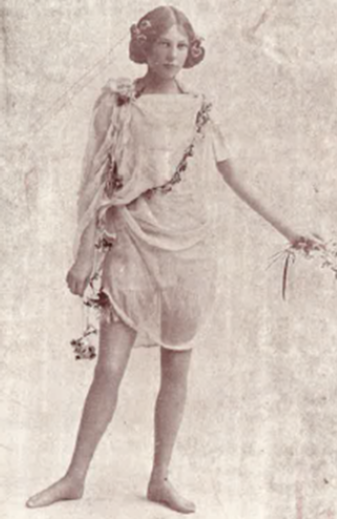
We are now settled into the Easter Term and our school production of ‘The Tempest’ was very well received. We are grateful to Hugh Sidgwick for his review, which gives star billing to Barbara Hilliard’s portrayal of Ariel:

Ariel E1916

Barbara Hilliard as Ariel

“And then, hovering over and around these two and all the rest of the play, leading them at will, beguiling, enchanting, invisible and omni-present, we had the lovely vision of Ariel. It (I use the word advisedly, for this came nearer than any Ariel before to the ideal, sexless spirit of air and fire), it was the most beautiful thing I have ever seen on the stage; presence, gesture, motion and voice alike were exquisite.

Ariel intoxicated our senses so completely that I fear we hardly did justice to her acting; but apart from everything else it was a masterly reading of the character and of the play. Ariel made all the points with clearness and certainty, grasped exactly and revealed to us what was going on and interposed her presence among the deluded mortals always at the right moment and in the right way.

It is difficult to say how much the success of the play owed to her, and in particular to her most delicate and airy singing of the beautiful music of Purcell and Arne (Englishmen both, thank heaven, and much better at Shakespeare than Schubert and Mendelssohn).

* * * * * * *

I believe that an acting knowledge of at least one of Shakespeare’s plays is an important and useful part of an OPS education.

Shakespeare has indeed aided and abetted 2nd Lieut. Maurice Jacks (KRRC), in giving us Maurice’s location in France without falling foul of the censor:

“Being more or less conscientious I cannot tell you exactly where ‘here’ is, but if you remember where Polonius was stabbed, you will be within reasonable distance of the spot.”

Young Dragons will surely work this out – but can you?

January 19th 1916

On January 6th, the London Gazette published Sir Ian Hamilton’s final despatch as Commander in Chief of the Gallipoli expedition before he was replaced by Lieut. General Sir Charles Munro, who in consultation with Field Marshal Lord Kitchener, agreed to the evacuation.

In this report he refers to the 1/5th Norfolks and the events of August 12th 1915:

“… In the course of the fight, creditable in all respects to the 163rd Brigade, there happened a very mysterious thing. The 1/5th Norfolks were on the right of the line and found themselves for a moment less strongly opposed than the rest of the Brigade. Against the yielding forces of the enemy Colonel Sir H Beauchamp, a bold, self-confident officer, eagerly pressed forward, followed by the best part of the Battalion.

The fighting grew hotter and the ground became more wooded and broken. At this stage many men were wounded or grew exhausted with thirst. These found their way back to camp during the night. But the Colonel with 10 officers and 250 men kept pushing on, driving the enemy before him.

Amongst these ardent souls was part of a fine company enlisted from the King’s Sandringham estates. Nothing more was ever seen or heard of any of them. They charged into the forest and were lost to sight and sound. Not one of them ever came back.”                                            

Captain Edmund Gay (Norfolk Regiment) was one of this ‘Lost Legion.’ 

Edmund Gay

Capt. Edmund Gay

Private information has supplied the fact that Edmund was last seen getting over a fence or wall into a farm with a sergeant and another man. The man who last saw him was wounded and lay all night beside the body of another 1/5th Norfolk soldier and managed to crawl into our lines next day.

Until we hear anything certain, however, we must continue to hope that he is in captivity and did not perish in that attack.

The final evacuation of our troops from Gallipoli was completed with the withdrawal from Cape Helles on January 9th. During the campaign, of the 20 old boys of OPS and one member of our staff who served, we know of three who have been killed and two wounded.

It now seems highly likely that all the other Old Dragons are safely off the peninsula, as we understand from the Illustrated London News – hopefully correctly – that the operation was completed with astonishingly few casualties.

January 10th 1916

Over the past weeks we have been anxiously awaiting news from those of our old boys involved in the Gallipoli campaign.  We  can at least account for Capt. Geoffrey Smyth (6th Loyal North Lancs. Regiment), who wrote from on board the ‘Hunts Green’ (a captured German ship being used to evacuate his men) following the evacuation from the Anzac and Suvla bridgeheads, which took place on 18th/19th December.

GM Smyth

Capt. GM Smyth

22/12/15. “I suppose by the time you get this the evacuation of Suvla will be old news. I really believe we did deceive the enemy this time – anyway, about five divisions got away without leaving anyone behind; and in our brigade there wasn’t a casualty.

For two weeks before, all the spare equipment and baggage was sent away and also the postal service, hence the reason why no letter for a fortnight. I marched the last party but two of our battalion to the beach, starting at 8 p.m., the last party leaving the trenches at 1.30 a.m.

They say everything was normal up till the last. The night before, half the troops were evacuated, and all the last day the line was pretty thinly held. Everything was excellently planned and worked without a hitch…”

* * * * * *

Sub-Lieut. Dick Sergent (RNVR) has also made a successful escape from Gallipoli and has written to provide further information as to how this was achieved with so few casualties:

Dick Sergent

2/1/16. “We are now in Imbros again after having left Anzac, the whole bunch of us. This is to let you know something of the way we did it… We got some wind of it about a week, or perhaps more, before the evacuation (we were instructed only to speak of it as ‘embarkation’).

Our men set some automatic rifles when they left, and some mines and barbed wire in the trenches. The rifles were managed by way of billy-cans on the triggers with water dripping into them so they went off when the cans were heavy enough; they were set to go off raggedly, as if we were firing normally, for about 1½ hours after our men had gone.

We were to have boarded the Colne, but she was not to be found, so we picked up the first destroyer we came across, the Basilisk.. I went up into the W/T cabin and put on a pair of phones to hear the stations at Suvla and Anzac give their ‘dismantling’ signals. We heard the two at Suvla do so, but not our own.

Finally we got a bunting signal that all stragglers etc had been picked up, including the last field hospital which was to have stayed on to look after the wounded in case we had to fight for it…

We had the supreme pleasure of seeing John Turk shelling our first line trenches at 6.30 a.m. at Suvla and Anzac, and the beach at Anzac also.”