September 24th 1917

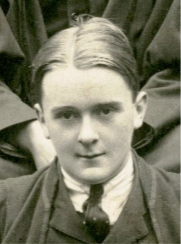
Much as one would like to have enjoyed the celebration of the school’s 40th anniversary this past week, all possible pleasure has been overwhelmed by the sadness we are all feeling at the loss of Hugh Sidgwick. I have no hesitation in saying that he was the ablest boy that ever came to the school, and withal one of the most lovable.

The circumstances of his death (which it pains me greatly to write about) are that on September 16th, Hugh was getting into a car to go to HQ when a German aeroplane dropped a bomb, wounding him and several others.

He was taken straight to the Casualty Clearing Station and underwent an operation. However, there was internal bleeding and he lost consciousness and died in the early hours of the 17th. We are reassured to hear that he was in no pain and slipped away quietly.

By the time his mother received this telegram notifying them that Hugh had been wounded, he was in fact already dead.

Regret to inform you that No 46 Casualty Clearing Station reports September sixteenth Captain AH Sidgwick RGA 157 Siege Btty with bomb wound buttock and right knee. Condition dangerous…    Regret permission to visit cannot be granted.

By the time they received a second telegram the following day telling them of his death, he had been buried in the Mendinghem British Cemetery.

All so quick. One moment he is the vibrant human being we have all loved so much, the next…  all this.


September 19th 1917

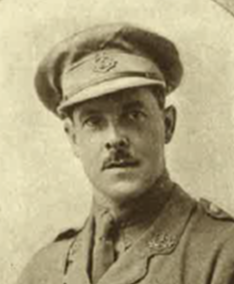
Capt. Hugh Sidgwick (RGA)

Today I should have been concentrating on the start of a new school year, but the most calamitous news came to me from Mrs Sidgwick. Hugh has been killed.

At this time, I feel able only to share with you my response to his mother:

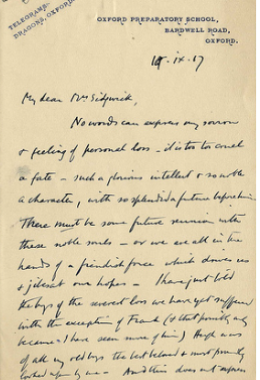
My dear Mrs Sidgwick,

No words can express my sorrow and feeling of personal loss – it is too too cruel a fate – such a glorious intellect & so noble a character, with so splendid a future before him.

There must be some future reunion with these noble souls – or we all are in the hands of a fiendish force which drives us & jibes at our hopes – I have just told the boys of the severest loss we have yet suffered. With the exception of Frank (& that possibly because I have seen more of him) Hugh was of all my old boys the best beloved and most proudly looked upon by me – and this does not express

my very deep feeling of sympathy with you & Frank & his sisters. His father is I hope spared the full knowledge of the loss he has suffered, but I do mourn with you all and sympathise most deeply.

Yours ever,

His old Skipper


Hugh’s father’s illness renders it unlikely that the family will share this news with him.


September 15th 1917

Capt. Tom Sheepshanks (Norfolks) has been attached to the 11th Suffolks, who last month took part in operations to capture a series of German positions, which formed the advance elements of the Hindenburg Line. I think it can be said that they met with singular success:

“We had a champagne dinner the night before we moved up and I remember quite well – well. I think we had better leave it at that; we are digressing.

Zero day was Sunday August 26th, and on Friday we moved up towards the line and bivouacked in a copse… Friday night the other Coy Commander and I walked up to BHQ and went out to reconnoitre the jumping off place, which was a sunken road some distance in front of our line. Saturday we spent sleeping and dishing out bombs, flares etc.

Zero hour was fixed for 4.30 a.m. Sunday morning and we had to be in position by 2 a.m., so we gave the men a hot meal about 11 o’clock at night with a good tot of rum in their tea, under the influence of which I made them a patriotic speech and we then moved off. The intelligence officer had been out earlier in the evening and marked the respective company frontages with pegs marked with luminous paint, so we all got into position quite happily…

The only worry was the cooing of the carrier pigeons and the violent blasphemies of the signallers in charge of them. The noise those beastly birds made was something outrageous and the signaller made it even worse by threatening in a raucous whisper to wring their blank blank necks unless they shut up. I shut him up and the birds quieted down…

Punctually at 4.30 the machine gun barrage opened up and a few seconds later the 18 pounders let fly. We were attacking on a three company front, mine being in the centre, and my company’s objective was a place called Malakoff Farm, with a line of trenches in front of the farm and another behind it.

The barrage was all shrapnel and we followed it at a distance of about 30 yards; the ground wasn’t cut up and the going was good. Eventually we reached the wire or what was left of Fritz’s front line. Our heavies had knocked the trench and wire absolutely flat, so we found no one there.

That was our first objective and the leading wave stopped there and started to consolidate. The rest of the company went on…

A few moments later we got up to our final objective, waited for the barrage to lift and then rushed it. That was where we scored so much by following the barrage closely. He had two or three m.g’s there, but we were on him so quickly that he only got one into action and that didn’t fire long. Fritz showed no fight at all. He either ran away or put up his hands.

One of them was quite pathetic. He was so keen to surrender that he evinced a desire to embrace and kiss me. I kicked him over the back of the trench and went on to dug-out just beyond, which seemed to promise something. We raked ten men out of it and last of all, to my intense delight, an officer with a beautiful automatic and a pair of Zeiss. He seemed unwilling to give them up to my Corporal at first. He thought better of it a second or two later. That Corporal never did like Huns and had a very business-like fist.

I’m a bit hazy about the next ten minutes. I found both my platoon commanders had got in all right and also the company on either side, but there was a lot of sniping going on and a m.g was causing my men trouble. My Sergeant-Major, the finest man I’ve ever known, got killed trying to locate it and knock it out, and one of my subalterns who was standing talking to me got hit badly, whilst I had one through my hair at the back of my head.

However we soon got things straight and started to dig ourselves in. We had got all of our objectives and felt very pleased with ourselves.”

Tom added that his regiment won a VC, three MCs, a DCM and twelve Military Medals in this action.


We still live in hope that Tom’s brother Bill Sheepshanks, who went missing in an action fought on July 26th, is alive and a prisoner of war.


September 6th 1917

Thank goodness for some good news this time.

Hugh is now CAPTAIN Hugh Sidgwick (RGA)!

30/8/17. “They have promoted me to Captain, and I have spent money heavily on new spots to cover myself with.

I am also in a quite different part of the country, and not nearly so pleasant a one. Still, I have been very lucky for most of the summer and so I ought not to grouse.

At present I hope you are all getting some sort of holiday. Most people at home seem to be more sensible on the subject of holidays this year, and I hear that even the Civil Service are going to get them.

For a purely restful and irresponsible holiday I can recommend active service, provided you choose your front carefully. Charming scenery, cheerful company, unlimited food and drink, corps intelligence supplied daily and shelling on alternate Tuesdays…”

I can think of better alternatives for the last two weeks of the summer holiday, so, tempting – but no thank you, Hugh!


September 1st 1917

2nd Lieut. Revere Osler (RFA)

Sir William & Lady Osler have been advised of the death of Revere, their only child, on August 30th.

Revere was severely wounded by the explosion of a shell and taken to a casualty clearing station at Dozinghem. Sir William, Oxford’s Regius Professor of Medicine, has friends amongst the doctors and surgeons currently active in France, who rushed to Revere’s side.  Despite the attention of these eminent men, he could not be saved.

To those who knew Revere as a boy at the OPS at all intimately, he was a delightful friend and companion and was greatly loved. The ordinary Public School curriculum (in which he took little interest) hardly gave him the opportunity for showing his genius, which lay in two directions, observation and love of nature, and also devotion to art and literature.


July 28th 1917

We return today, inevitably, to the War and news of three of our Old Dragons.

On July 21st, the papers reported a number of officers of the King’s Royal Rifle Corps as missing in action. One of them is 2nd Lieut. William Sheepshanks (KRRC).

His mother received a telegram to this effect on the 19th, informing her that Bill has been unaccounted for since July 10th, but that he may still be alive. We must resign ourselves, once again, to a period of painful uncertainty.

The regiment was stationed right on the coastline near Nieuport – at the end of the trench system which stretches from there to Switzerland, and was under severe bombardment. In an account in the Daily Telegraph giving the German view, it was stated by their authorities that they had taken 1,250 prisoners, 27 of whom were officers. That gives us hope.

Bill has been such a close friend of the OPS and he never missed any Old Boys’ dinner or cricket match if he could help it.

* * * * * * *

We were startled and sorry to hear that Lieut. Lindsay Wallace (OBLI) has suffered considerable injury in France, due to unusual causes.  Whilst on a training course behind the front, Pug sleep walked out of an upper floor window. He had a nasty time for a day or two, but is now safely back in Oxford at Somerville College, having been escorted from France by his Engineer-Lieutenant brother Moray Wallace. He will not be short of visitors – if we can get past Sister Wilkinson!

* * * * * * *

We can end with one piece of good news, which has been a fearfully long time coming. It has been confirmed that Capt. Aubrey de Selincourt (RFC), having been “missing” since he was shot down on May 28th, is in fact a Prisoner of War. He joins his fellow OD aviators, Captain William Leefe Robinson VC and Lieut. Peter Warren in captivity.


July 18th 1917

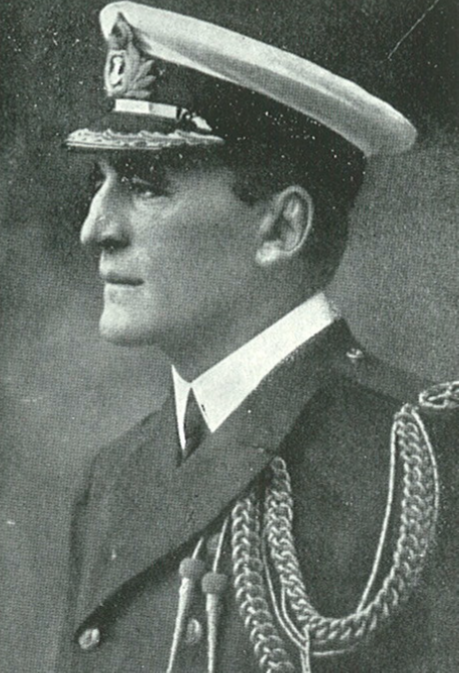
KCB FOR CAPTAIN TYRWHITT

Capt. Reginald Tyrwhitt, CB, DSO, RN (Commodore, First Class).

The Times today has the joyous news of the award of a Dragon KCB:

“Captain Tyrwhitt has been concerned in some of the most brilliant naval exploits of the war, and the honour conferred on him by the King is well deserved. He commanded the destroyer flotillas in the famous action with a German squadron in Heligoland Bight on August 28th 1914. Concerning this action, which resulted in the destruction of the cruisers Mainz, Ariadne and Koln, the official despatch stated ‘his attack was delivered with great skill and gallantry.’ On the same date he was made CB…

He led the destroyer flotillas in the Dogger Bank action of January 24th 1915 and was in command of the Arethusa when she struck a mine and was wrecked off the east coast in February 1916.

Captain Tyrwhitt was awarded the DSO in June 1916, ‘in recognition of services rendered in the prosecution of the war,’ and was decorated Commander of the Legion of Honour by the President of the French Republic in September 1916.

A scouting force of light cruisers and destroyers under Captain Tyrwhitt, on May 10th of the present year, chased 11 German destroyers for 80 minutes and engaged them at long range until they took refuge under the batteries of Zeebrugge. Only the precipitate flight of the enemy’s ships saved them from disaster.

A few weeks later, on June 5th, a force of light cruisers and destroyers under his command engaged six German destroyers at long range, and in a running fight one of the enemy’s ships, S20, was sunk and another was severely damaged.”


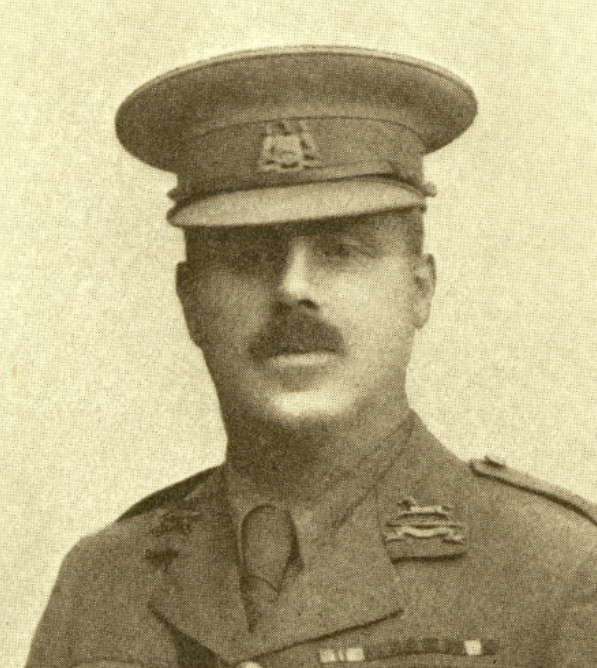
In addition, the London Gazette lists Lieut.-Col Stuart Taylor (West Yorks) as having been awarded the DSO:
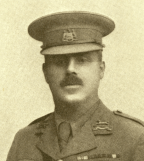
“For conspicuous gallantry when in command of the right of an infantry attack. The attacking troops having been compelled to fall back, he collected the remnants of his battalion and about 100 men of other units, and, regardless of a heavy fire, he organised these in defence of a position, and by his fine example of courage and skill he successfully resisted three counter-attacks, and thus saved a critical situation.”

Fluff will no doubt be demanding another half-holiday for the boys on the back of this when he next visits!


To these awards, we should also note these honours which have been acquired in the course of this term:

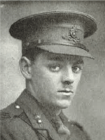
 

Lieut.- Col AR Haig Brown (Middlesex Regiment) and Major S Low (RGA) have both been awarded the DSO.

Capt. GK Rose MC (OBLI) now has a Bar to his Military Cross. The citation reads:

“When in command of a raid on the enemy’s trenches, he displayed the greatest skill and energy. He organized an effective resistance to the enemy counter attack, and conducted a masterly withdrawal under heavy machine gun and rifle fire.”

The Croix de Guerre has been awarded to Capt. JD Denniston (RNR) and 2nd Lieut. CM Hughes-Games (Gloucs), has the MC:

“For conspicuous gallantry and devotion to duty. He displayed great coolness and initiative when in command of a daylight patrol, obtaining valuable information. He has at all times displayed great gallantry under fire.”


June 19th 1917

Capt. Hugh Sidgwick (RGA) still finds time to write to us and his letters are never anything but interesting.

Part of Hugh’s job in the RGA is to spend time in a front-line Observation Post (OP) identifying suitable targets for the guns and seeing the fruits of their labours. In between times there are often lulls in the action:

4/6/17. “I read a Jacobs novel in the intervals and tried to pass the novel-reader’s test. This, by the way, is recommended to anyone who wants to kill time: it is as follows.

Write down the full names of twelve characters in each of 24 novels. Most people can do eight or nine in about twenty novels without difficulty: it is the last few names and books that cause the trouble, unless, like myself,  you have a mis-spent youth behind you.”

5/6/17. “Another beautiful summer morning. Administrative convulsions are proceeding, which may result in my having to command the Battery for a day or two, or in my going elsewhere. But I have long ceased worrying.

As my late OC remarked in a moment of pardonable irritation, the Heavy Artillery only exist to be badgered about (that was not exactly the word he used): and the main thing is to take life calmly.”  


May 28th 1917

Lieut. Hugh Sidgwick (RGA) has replied to Fluff Taylor’s proposal that the School should have a War Memorial for Old Dragons who lay down their lives in this war.

He accepts that the building of a chapel might be the “normal” thing for a school to do…

15/5/17 “But we are not an ordinary school, and our tradition has always been cast in the opposite extreme. Routine, orthodoxy, ritual, unreasoning compliance with comme il faut – all these we have deliberately avoided. Some would say we have gone too far and undoubtedly our tradition, like the others, has its dangers. But freedom and sincerity and spontaneity and genuineness, and the mistrust of the second-rate and the second-hand, are things worth a good deal of risk to obtain and it is my firm belief that the best part of our school tradition is marked with just these characteristics.”

Hugh fears that a chapel would have to be under diocesan supervision and that school services on our present lines (with the staff and boys running them) would be impossible.

“If so, I can only say that the prospect fills me with fear. I fear… the apathy of routine: I fear the wrong kind of parent coming and saying ‘how nice and proper’ : I fear the right kind of parent coming and saying ‘After all, there’s not much in it between this and other schools’…

I am not thinking merely of those whose parents and upbringing are of some other specific creed: and I leave out of account the French and other non-British boys who have been such a strength to the School. I am thinking rather of the numbers in whom religious sensibility develops late, or takes some other form than participation in a uniform code of outward worship. Cannot we find some way of commemorating our common sacrifice which does not leave them out in the cold, and which does really link together all Dragons, past, present and to come?

My own feeling is that the War Memorial should be a building habitually and freely used by all Dragons, where the whole school meets occasionally for certain purposes and where at other times any boy can go at any hour of the day to read or write or reflect, with the names and records and memorials of the honoured dead visibly before him.”

In short, Hugh would rather we thought in terms of “a library, assembly hall, reading room, museum, concert hall or any mixture of these.”


Lieut. Martin Collier (RN) has also written. He supports the idea of a chapel:

“Provided, of course, that the School services remain exactly as they are at present, conducted by the boys themselves…”


I hope others will contribute their views to this debate and I look forward to hearing them.


May 9th 1917

No-one went off to war with a heavier heart than our own Pug – Lieut. Lindsay Wallace (OBLI) – being a Dragon, man and boy.

Since he left our Staff he has managed a number of visits, much to the delight of the boys. Last term he talked to them on the subject “With the troops in training” and they were intrigued by his description of the workings of the Mills bomb.

Pug has now returned to active service and even if, dare I say it, the OPS is not always the tidiest of places, the contrast between home and the Front is a stark one.

28/4/17 “We started off yesterday from the base and were told we would take about two days to reach our division.

Three of us had a first-class compartment to ourselves. We managed to get some tea and cake before leaving the station and then started on our journey very slowly indeed at about 4 p.m.

I have never seen such a sight as the sides of the line, in some places they are layers deep in tins of all descriptions thrown out of the carriages. This doesn’t apply to one particular spot but all along the line: without exaggeration there must have been millions of tins.

Also all along the line were kids who kept shouting ‘bisceet,’ and they generally got one. In many places there were German prisoners, who got cigarettes thrown to them…

After quite a good meal, which was helped on very much by heating up a meat tin over my cooker, we all settled down to sleep and I was very glad to have quite a good night.

Then all of a sudden we were woken up, about 5.30, and all told to get out. We got up and packed our various belongings and turned out, and there we were, right in it: almost every house is blown to bits, some have the walls standing and a few have the roof left in places.

It was a bit of a shock getting out of the train into a sort of shattered world.”


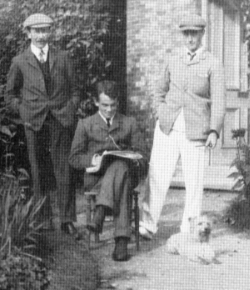
I have picked out this picture to remind us all of happier times.

It was taken by our VC hero, Jack Smyth outside The Lodge a few years before the war, and shows three stalwarts of my Staff: my brother Hum (AE Lynam), Pug (WJL Wallace) and Cheese (GC Vassall).

It seems a long time ago and from a different world now.