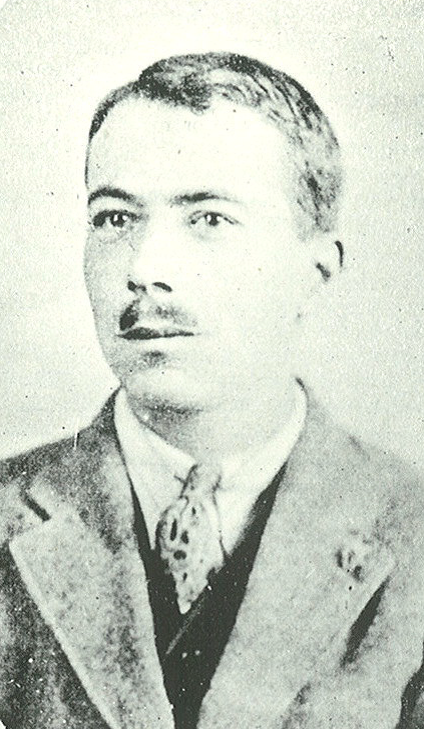
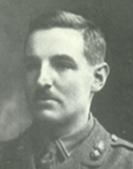
June 7th 1916

As far as one can tell, there have been no other casualties amongst the naval Old Dragons at Jutland – for which we are all most thankful.

Charles Fisher‘s brother Captain William Fisher (HMS St Vincent) was also involved in this action, and was lucky enough just prior to the battle to be able to spend some time with Charles.

WW Fisher

William Fisher

“Charles and I were on shore together having the greatest fun when recalled, as we have been recalled dozens of times before.”

Then, by another extraordinary coincidence, he found himself at the scene of his brother’s death very shortly after the event:

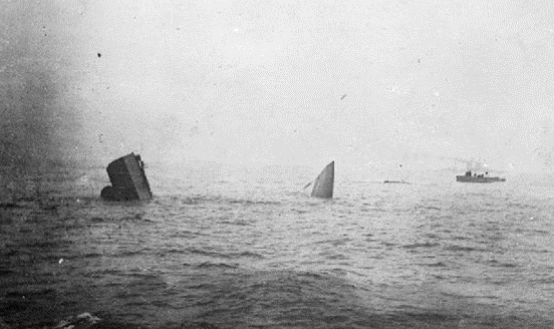
“Exactly twenty-four hours later the ‘St. Vincent’ steamed past the wreck of a ship which we took to be a German. We were, with other ships near us in the line, engaging four German Dreadnaughts at the time, but I looked to see if there was anyone in the water near this ship and saw nothing – not even floating wreckage. All round was still calm water.

The wreck might have been there for weeks – and yet we know now she went down only about a quarter of an hour before our arrival. Her bow was high in the air and so was her stern, the centre having been split in two and apparently resting on the bottom.”

Invincible sunk

The wreck of HMS Invincible

It was not long before someone spotted on the starboard side at the stern, the name: HMS Invincible, and William realised that he had lost his brother.

William writes of Charles:

“I am comforted by the knowledge that he who had seen so much carnage will have steadied everyone near him.

How proud I have been to walk about as Charles’s brother, and prouder, if possible, than ever now…”

These are sentiments we can all share.

* * * * * * * *

TyrwhittIt is good to read some good news at this time. In today’s Court Circular column it is recorded that Commodore Reginald Tyrwhitt was yesterday invested by the King at Buckingham Palace with the insignia of a Companion of the Distinguished Service Order.

June 6th 1916

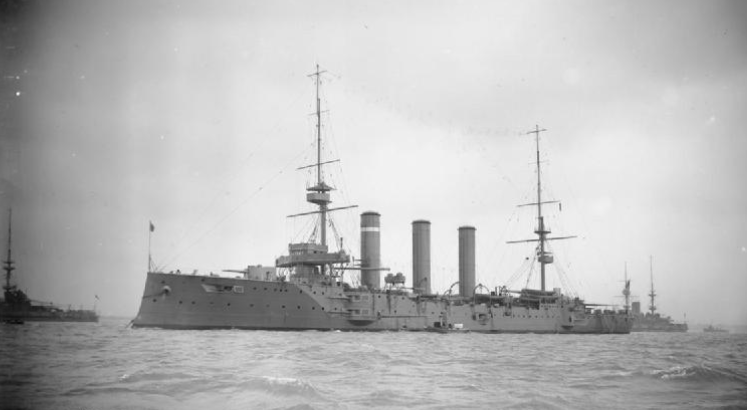
HMS Invincible

HMS Invincible

It transpires that there were only six survivors from HMS Invincible and it is by extraordinary luck that one of them, Commander Dannreuther, was at the side of Charles Fisher when the explosion occurred.

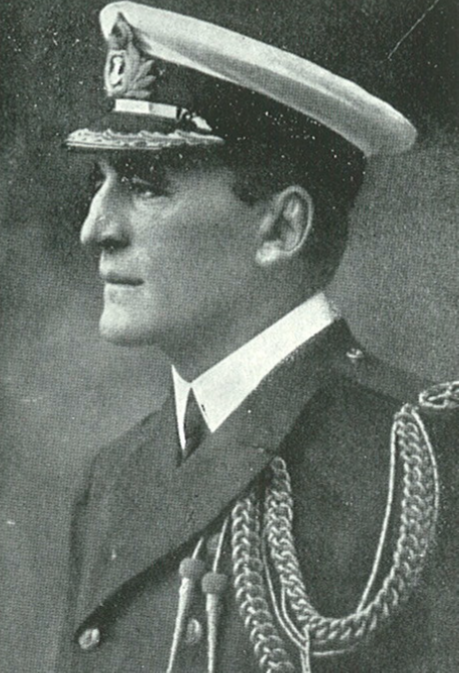
HMS Invincible was involved in a gun battle with the German battleship ‘Derfflinger’:

“We hit the Derfflinger with our first salvo and continued to hit her entirely owing to the perfect rate Charles gave us.

It was all over in a few minutes and death came suddenly and painlessly. Everything was going splendidly at the time, and it was entirely due to Charles’ cool head and excellent judgement that our firing was so effective.

I saw him only a few minutes before the end – a smile on his face and his eyes sparkling. He was by my side and in the highest spirits when there was a great explosion and shock, and when I recovered consciousness I found myself in the water.

Ship and crew had disappeared.”

Commander Dannreuther estimates that this great ship went to the bottom in a matter of only 15 seconds.

June 5th 1916

CDF at sea cropped

Lieut. Charles Fisher (RN)

The death of Charles Fisher is confirmed in the papers this morning. He is described as “a well known Oxford tutor… a great cricketer in his day and a man of very remarkable qualities… His death will be deeply felt not only by his comrades, but by many generations of Oxford men.”

Never have truer words been said of our dear friend.

His was a glittering career. He was first in the Westminster Challenge (winning therefore the top scholarship) when he left the OPS in 1889; he won the Slade Exhibition and got a First Westminster Studentship to Christ Church, where he obtained a First Class in Honour Moderations and Second in ‘Greats.’

He was a don at Christ Church from 1901-14. In 1910 he was Junior Censor and then became a member of the Board of Faculty and of Literae Humaniores and finally Senior Censor.

“His authority was based much more on an extraordinary personality than on the powers of his office, though these were great.”

Academically, his special study was Tacitus, on whom he did much work as editor for the Oxford University Press. He was widely read in Modern & Medieval literature, English, French and Italian.

A writer to the Morning Post said, “Charles Fisher towered a very prince among his fellows.  He was of huge stature and splendid in bearing. The formidable shoulders, the active hands, the swinging gait, the characteristic toss of the foot, above all the noble face and head… He loved games and the men who played them, and cricket and cricketers above the rest.”

He achieved his ‘Blue’ at Oxford and played a number of first-class games for Sussex (his highest score being 80 against Worcestershire).

He was present at all our OD dinners from 1908-13 and frequently used to stroll up to the school to encourage and criticise our games. He once told me that he and I had been classed together as the worst dressed men in Oxford – a great honour to me! And he would laugh his glorious laugh and pull out a dirty pipe and tell us some undergraduate story or some anecdote of his many travels; and always a shadow seemed to fall as he strolled away.

That shadow is today a very long one.

June 4th 1916

Following the news of the sinking of HMS Invincible, our deep concern for the well-being of Lieut. Charles Fisher continues. As always, whilst we fear the worst, we must hope for the best.

We are also aware of others who may well have been involved in this battle off Jutland. Charles’s brother, Captain William Fisher (HMS St. Vincent) is known to be part of Jellicoe’s 1st Battle Squadron.

HMS St Vincent

HMS St Vincent

Mr & Mrs CRL Fletcher have already lost two sons to the war: Regie Fletcher was killed at Ypres on October 31st 1914 (a day that claimed three OPS victims), followed in March 1915 by his brother George Fletcher. Their oldest (and only remaining son) Lieut. Leslie Fletcher is known to be serving on HMS Colossus (also part of the 1st Battle Squadron). Surely fate cannot be so cruel as to take from the Fletcher family their only remaining child.

Attached to the 5th Battle Squadron are HMS Valiant and HMS Malaya. Both have Old Dragons aboard: Commander Geoffrey Freyberg in the former and Midshipman Percy Trevelyan in the latter.

Midshipman Francis Studdy is believed to be on HMS Temeraire in the 4th Battle Squadron, Lieut-Commander John Bywater-Ward is on HMS Ajax and, lastly, we think Lieut. Desmond Stride is on HMS Conqueror.

We await news of all of them.

June 3rd 1916

“On the afternoon of Wednesday, May 31st, a naval engagement took place off the coast of Jutland…”

Today’s Daily Telegraph  has the news of a major battle at sea and reports the loss of HMS Invincible. This is most distressing and we fear for our old friend Lieut. Charles Fisher. The report states the ship was sunk and we can but wait and hope that Charles might be amongst the survivors – if there are any.

CDF despatch rider

Charles Fisher

When war broke out, Charles was over age, and moreover  found that his varicose veins  disallowed him from active service, according to the medical regulations in force. Inaction, however, was impossible for him, and offering himself for the work which would most quickly bring him to the front, he crossed the Channel in the autumn of 1914 as an orderly in a British Red Cross Motor Convoy.

In 1915 he became Adjutant and was mentioned in despatches. Thereafter he transferred to the RNVR with a lieutenancy. Charles turned his mind from the classics to range-finding, commenting that a ship was a ‘floating laboratory with a foreign language of its own, as difficult as Greek.’ He has become an expert range and rate-finder, and we presume he was directing the fire of HMS Invincible in this battle.

Forty or so Old Dragons are serving in the Royal Navy and it is quite possible a number of them were also involved. I am sure many have been champing at the bit to have their chance to engage the enemy and maybe the stories they have to tell will be of a rather more positive nature than the view given in the newspaper.

We hope that over the next few days we will have news of their safe return to port.


May 7th 1916

William Esson

Major William Esson (Royal Marines Light Infantry) 

Lance Freyberg

Lieut-Commander Lance Freyberg (RN)

On 27th April 1916, off the port of Malta, HMS Russell struck two mines laid by a German U-boat and sank. 27 Officers and 98 ratings were lost, including two Old Dragons, William Esson and Lance Freyberg.

HMS Russell

HMS Russell

HMS Russell was flying the flag of Admiral Fremantle, who was amongst the 702 saved. He has written from Malta to say of William Esson, “His cabin was immediately over where the mine struck us. We were hit only four miles from the entrance to Malta Harbour. At that time all the officers, except those actually on duty, were in their cabins, and it is for that reason that we lost such a very large proportion of officers. The great majority of the people on the deck below the main deck, including your husband and five lieutenants (this must include Lance Freyburg) were never seen after the explosion, indeed there are now alive only two men who were in that part of the ship… ”

Whilst 24 officers together with the Captain and Admiral were saved, 27 were killed – almost 50%.

The degree of grief currently the lot of the Esson family can only be understood when one remembers that William Esson’s sister Margaret is the wife of Capt. Edmund Gay (Norfolks), who has been “missing” since last August.

Of Lance Freyberg, Captain Bowden-Smith wrote, “He was asleep in his cabin at the time (5.30 a.m). The explosion took place immediately under his cabin and I think he must have been killed instantaneously and did not suffer. I am afraid that all his belongings went down with the ship. Nothing was saved.”

Clearly, William’s and Lance’s cabins were in very close proximity and it is some small comfort that two Old Dragons should be together, comrades in life and death.

HMS Russell was one of the ships for which our boys supplied the crew with pipes in November 1914. Lance wrote a charming letter back to them. It is a great sadness that the pipes have not become pipes of peace, as he had hoped.


December 21st 1914

A number of Old Dragons are serving in the Royal Navy. Earlier this month an action was fought in the Falkland Islands by a British fleet under Vice Admiral Sturdee, who had been dispatched to intercept Admiral Spee’s East Asiatic squadron. The action that ensued is here recounted by an Old Dragon, Lieut. Desmond Stride, who was on HMS Cornwall.

HMS Cornwall

HMS Cornwall

“A flag-lieutenant in his pyjamas hurried off to tell Admiral Sturdee that they had sighted the enemy and he found the Admiral shaving. ‘You had better get into our clothes, and I will finish what I am doing,’ was the calm comment, ‘then we will have breakfast.’”

Thus fortified, the British ships, having now been observed by the German fleet, gave chase. The speed of the British Battle Cruisers proved too much and the Scharnhorst and Gneisenau turned to give battle. Both were sunk. Stride’s ship was responsible for the sinking of the Leipzig and “all the German ships were badly on fire before the end, and according to survivors, the Germans assisted – when all their ammunition was expended – in the sinking of their ships, by opening torpedo tubes etc.”

Stride was in charge of a 6” gun and was in action for about four hours. It was indeed a clear victory. Only one German ship escaped and whilst over 2,000 Germans were killed, there were only ten British casualties. Although HMS Cornwall sustained a number of hits, damage was slight.

“There was only one serious casualty on my ship. When the fight was over I asked my servant how things had gone. The man looked very grave. ‘Well, what is it?’ I asked. ‘It’s my poor canary; he’d dead. All the feathers were blown off, and the cage, for which I paid 2s 9d at Plymouth, is smashed to pieces. It was a beautiful cage, sir.’”

I sympathise with this loss. Desmond no doubt remembers my study, where two parrots, 27 small birds and 5 canaries enliven the atmosphere. A few of the small birds live loose, whilst Joey and Polly fly about the room – and occasionally devour or otherwise destroy papers of value, such as the boys’ poems or exam papers; they also nibble bits with great discrimination out of my best books.

 *  *  *  *  *  *

We have received another extract from the diary of Treffry Thompson (RAMC), who is still attached to the Royal Horse Artillery near Ypres. It is good to hear that he has been enjoying a period of rest and recreation too.

Treffry Thompson

Treffry Thompson

30/11/14. “Resting… A typical day is as follows. I wake lazily at 7.30 when my servant brings me coffee and hot water. Down and walk sedately up to Mess for comfortable breakfast. Smoke a pipe and look at papers. Start off at 9.15 on horseback to do morning rounds. Trot along canal through woods for 1½ miles. Woods very pleasant and many pheasants about. See the sick of C Battery, then go on to K down the road. Chat with officers and then go off for a short gallop across country to Ammunition Column… Trot back to lunch.

After lunch either the General or some of the Staff come and we go off to the woods with two borrowed 12-bores. We then spend the afternoon waking up pheasants in the more open parts of the woods and get, say, six brace. Back to a cosy tea and much chatting. Change, read papers, and write letters. At 7.30 an excellent dinner of pheasant, venison etc. Pipes and more reading and off to bed at 10. And this is War!”

*  *  *  *  *  *

Next term we will be putting on ‘Hamlet.’ During November, the two top forms read though the play in lessons. There was a certain amount of acting, the parts spread amongst the children and they have all been asked to learn passages for prep. Some of the more difficult passages I have explained to them, but the boys soon got the drift of the thing and gradually grasped the various scenes for themselves. I always prefer that they should form their own ideas, even if not quite accurate ones, than I should give them mine. ‘Clarendon Press’ notes, all philological and critical comments are rigidly avoided. I prefer the haphazard to ordered method.

All the parts were allocated before the holidays and by the start of term the boys are expected to know them absolutely pat. There will be three days for rehearsals and the play will be performed on January 16th in the Hall.

November 23rd 1914

The arrival of winter weather has put an end, at least for the time being, to the fighting at Ypres. Both sides have suffered most horribly and there have been times when British troops have risked their lives to help the enemy wounded. George Fletcher (Royal Welch Fusiliers) describes an incident in which he was involved.

George Fletcher

“We were fortunate in being able to rescue one wretched man. He was one of the advanced party in the charge, and had seven bullets in him. He stopped for a day in front of us shouting, but we were getting such a peppering from snipers all that day that we were not allowed to fetch him. At night I got two volunteers to come and fetch him, and just as we were getting out such a hail of bullets came that we nipped back.

I kept up a conversation (shouted) with him next day – he told me the Germans had been practically up to him in the night, but had refused to help him. I told him to hang on till night, and we would try and rescue him again. So at dusk I got two volunteers again, and we pulled him in successfully, and doctors say he will live in spite of his seven wounds. Funny thing, war.”

 * * * * * *

Whilst the war takes up the thoughts of us adults, it is important that life at the OPS continues as smoothly as possible for our young Dragons.

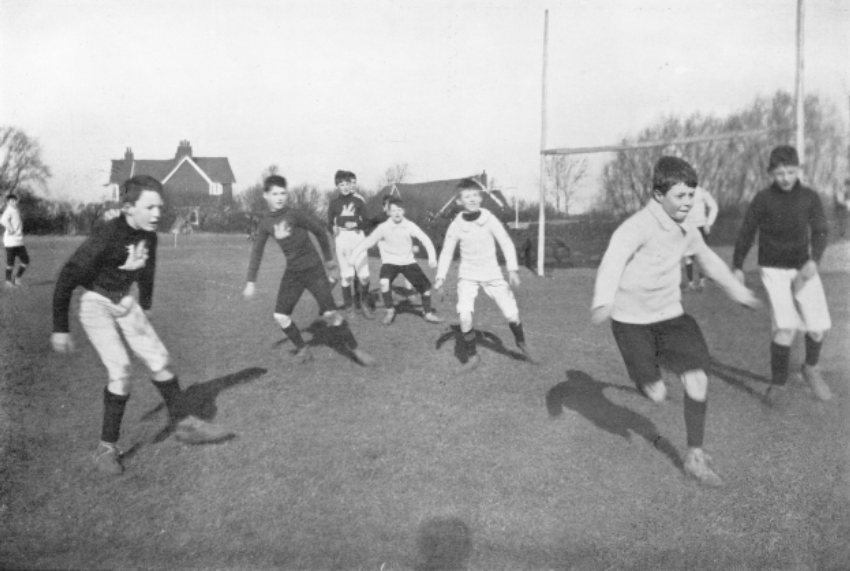
rugger

The beautiful weather which held for the first month of term made rugger impossible. In the first match, against Eagle House on November 4th, considering all things, although the team lost 0-22, they made a good show and look as they might develop into a good side.

I am not convinced of the desirability of keeping each boy to play in a particular place practically always. To know the game properly, a boy ought to be prepared to play half or forward or three-quarters as he may happen to be asked.

There seems to me nowadays a sort of prevalent fear of doing the wrong thing, and not enough initiative, not enough determination to get through and to score against the opponents…

I must say I think criticism of an individual’s play, sometimes very emphatic and loud-tongued, should be entirely abolished during the progress of the game; and nothing but encouragement allowed. Personally I know what the effect on myself would be if I were yelled at as a slacker or funk in the middle of a match!

Why, oh why do not Winchester, Charterhouse, Repton and Shrewsbury play rugby instead of the disgraced ‘soccer’? Malvern, Radley and Rossall have abandoned the professional game and joined the Rugger ranks…

 * * * * * *

The boys have sent stamps to the Base Hospital, and indeed have made a very large money collection considering their small incomes! The ‘Blue Dragon’ gramophone with its lovely old records and many new ones has delighted the inmates of Medical Ward V, where it is guarded jealously from the raids of other wards.

Hum Lynam

Hum Lynam

‘Hum’ has been almoner-in-chief and has installed and looked after Belgian refugees at the Lodge and elsewhere. He has also collected and forwarded sweaters, pipes, pencils and writing books, subscribed for by the boys, to various quarters, including HMS Colossus, HMS St. Vincent and HMS Russell.


We have had the following replies:

H.M.S. St Vincent

First Battle Squadron

November 20th 1914.

My Dear Dragons,

Pipes very much appreciated – now smoked by His Majesty’s Jollies.
Pipe 1
Who owned?                         


And the other one that might have been made by Krupp?
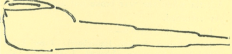
Pipe 2


It was a kind thought and entailing some sacrifice I’ve no doubt – parting with old friends – Censor allows no news.

William Fisher (Capt. R.N.)

H.M.S Russell

21/11/14

Dear Dragons,

A line to thank you all for sending us that generous supply of briar pipes. The men are no end pleased, and wish me to thank you for your kind thought for them. I only wish I could come and thank you all personally for them! But I shan’t be able to do that until they become Pipes of Peace.

 Lance Freyberg (Lieut-Commander R.N)