December 15th 1916

In the course of the last four months a number of our gallant Old Boys have been honoured and, as the end of another term approaches, they should be recorded on these pages:

Victoria Cross (VC)

Capt. William Leefe Robinson (RFC), “for conspicuous bravery. He attacked an enemy airship under circumstances of great difficulty and danger, and sent it crashing to the ground as a flaming wreck. He had been in the air for more than two hours and had previously attacked another airship during his flight.”

Distinguished Service Order (DSO)

Capt. Harry Maule (North Lancs) has been awarded the DSO “for conspicuous gallantry when leading his company during operations. During several days’ fighting he set a fine example of cheerfulness and cool courage to those around him. He was three times knocked down by the blast of shells.” (Edinburgh Gazette, Sept. 28th 1916)

Major Ernest Knox (Sikhs) in Mesopotamia.

Major James Romanes (Royal Scots). “For conspicuous gallantry in action. He led his battalion with the greatest courage and initiative. He set a splendid example throughout the operations.” (London Gazette, Nov. 25th 1916)

Military Cross (MC)

2nd Lieut. Stopford Jacks (RFA). “He, assisted by a sergeant, organised a party to extinguish a fire in a bomb store. Although burnt in several places, he continued at the work until the fire was extinguished.” (Edinburgh Gazette, Dec. 13th 1916)

2nd Lieut. Budge Pellatt (Royal Irish). “When a Platoon was required from his company to replace casualties in the front line, he at once volunteered and led his men forward with the greatest determination, though suffering heavy casualties.”

2nd Lieut. Northcote Spicer (RFA). “For conspicuous gallantry and devotion to duty in registering all batteries of the artillery brigade from the advanced lines prior to attack. He was severely wounded, chiefly from having to signal by flag, which was observed by the enemy.” (London Gazette, Oct. 20th 1916)

French Honours

‘The Times’ (Sept 16th) noted that Commodore Reginald Tyrwhitt had been made Grand Officier of the Legion of Honour.

2nd Lieut. Trevor Hoey (OBLI) has been awarded the Croix de Guerre decoration by the French Commander on the Salonika front for distinguished conduct, referred to in the Army Orders as follows:

“When all the other officers were placed hors de combat, he took command and led the final charge against the Bulgarian position, which was brilliantly carried at the point of the bayonet.”

Mentioned in Despatches

2nd Lieut. FRG Duckworth (RFA) in Salonika, Capt. WW Fisher (RN) & Cdr GH Freyberg (RN) at Jutland, Maj. EF Knox (36th Sikhs) – for the second time, Capt. RJK Mott (Staff) in Salonika, Lieut. JC Slessor (RFC) in Egypt, and Maj. RD Whigham (King’s Own Scottish Borderers) – for the second time.

It is difficult to express just how proud we are when our Old Boys distinguish themselves so.

October 8th 1916

Lieut. Hugh Sidgwick (RGA) is proving a prolific correspondent.  Being currently under-employed behind the lines on the Somme, he apparently has plenty of time for both reading and writing.

sidgwick-ah-226/9/16. “I was in the most forward of our batteries the other day just at ‘zero’ time – i.e. the prearranged moment when the final bombardment begins. The noise was really appalling. Our own howitzers were comparatively mild members of the orchestra: the high velocity guns easily out-topped them: now and then came the roar of the really big guns far behind: while the rumble of field guns was practically continuous. If you don’t stop to think, it is something of an experience: if you do, you want to sit down and cry.

Generally, I feel a complete fraud and quite unworthy of print in the ‘Draconian’.  I have only been a combatant for about six weeks and am now a petty clerk. So this is my last contribution to the war columns. Veni, vidi, Vick-E: I came, I saw a little of it and it was all over. Any telephonist will explain the joke to you. It is the first I have made since 1902.

The modern Pepys and Shane Leslie book are much appreciated here. Leslie is quite interesting, but what right has he to be compiling memoirs and summing up an epoch at his age (31)?

Besides, I am not at all so certain that the epoch is over yet. Everyone I meet out here appears to wish to live after the war pretty much as he did before, though all agree that other people ought to reform their ways and show signs of spiritual uplift.

I hope all goes well with the OPS.”

August 26th 1916


Benham, Frank

Captain Frank Benham (RFA)

Frank has died in Queen Alexandra’s Hospital, Millbank, London.

He received wounds to the right side of the head, the neck and shoulder on August 5th. He was able to write three short communications to his wife on arrival at the No. 2 Stationary Hospital at Abbeville on the 8th and it was thought that he was being transferred to England on August 11th.

There was considerable confusion as to his whereabouts, until he sent a telegram to his wife saying he had arrived in Southampton on August 20th. The following day he was transferred to Queen Alexandra’s.

He had in fact spent the week following the 11th at the No.2 General Hospital at Havre, it having been decided that he was too exhausted to continue to England. On the 14th he suffered a minor haemorrhage from the neck wound. It stopped quite quickly, although the cause of it remained unexplained.

On August 22nd, Frank suffered another haemorrhage and underwent an unsuccessful operation to save him.

His wife was at his side when he died.

August 13th 1916

Edmund GayCaptain Edmund Gay (Norfolk Regiment) was declared missing a year ago.

The Daily Telegraph reported about ten days ago that our Government understands that there are only nineteen officers and 359 other ranks known still to be in Turkish hands as Prisoners of War.

With regards the 290 officers (amongst whom Edmund is numbered) and 9,700 other ranks still missing, they feel that there are no longer any grounds for hoping they might be prisoners,

“and therefore it was consequently decided that the missing officers and men not accounted for must be officially accepted as dead. Effect is being given to this decision after due consideration of the circumstances of each individual case.”

There has still been no official confirmation of his death given to the family however, and until such time we will continue to list him as “missing.”

* * * * * * *

Benham, FrankCaptain Frank Benham (RFA) was wounded by a German shell hitting his dug-out on August 5th. At the time he was in charge of a battery at Mametz Wood on the Somme.

On August 8th he was strong enough to be able to write to inform his wife of his situation and the matron on his ward has also written to say she hopes he will be strong enough to return to England shortly.


March 1st 1916

It has been delightful to receive a visit from Lieut. Patrick Duff (RFA) on his safe return from the Gallipoli campaign. He is kindly allowing us to publish extracts from the diary he kept at the time.

The entries below cover the events from December 30th until January 9th, when he was evacuated.

Any starred space has been censored to meet the requirements of paragraph 453, King’s Regulations.
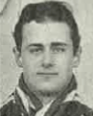
Lieut. Pat Duff

30/12/15. “I think there is very little doubt that we are going. I write this in the middle of a large expenditure of ammunition on what seems a useless target, just, I take it, to get rid of the stuff…

It is quite exciting and I have no sentimental objection to leaving Gallipoli, as the show is obviously a failure, and we shall see another war in a new country…

31/12/15. Ordered to remove two guns today; spent busy morning packing heavier kit and arranging about despatch of my two guns…

At W Beach delivered two guns, two G.S. wagons and four gharries with men’s kit and some of my own on lighters, and saw them safely off. Rather tired and sleepy as we are having pretty hard days and nights. Write this at 3 a.m. smoking a cigar instead of going to bed, feel absolutely dead tired in the mornings, but the coldness of the night keeps one going for the night work.

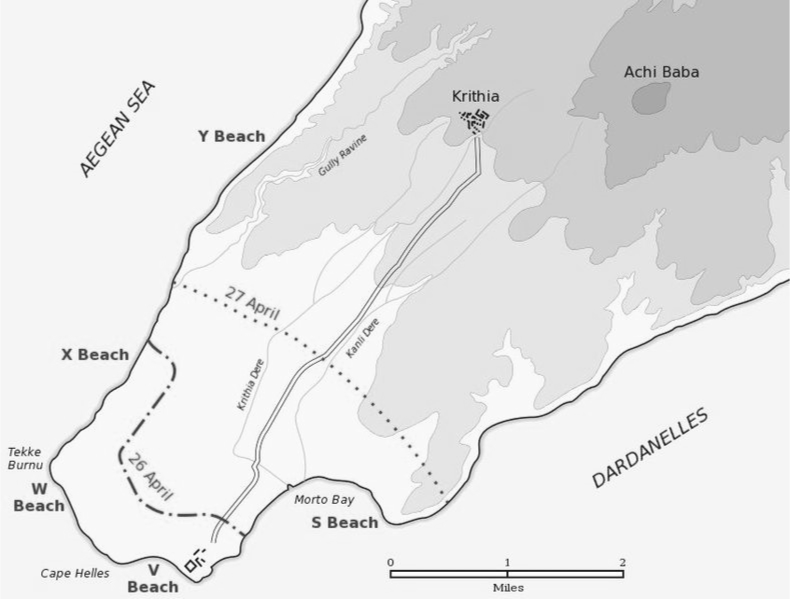
1/1/16. We rode into W Beach to learn how to blow up guns in case we had to abandon them..

W_Beach_Helles_Gallipoli 2

Preparation for evacuation. W Beach – January 1916

Thank God we don’t evacuate every day of our lives; it is tiring, as one pulls about guns and heavy stuff in addition to getting no sleep.

General ******* sent us a wire this morning wishing us a ‘Happy and victorious New Year.’ A farcical epithet at a moment when we are in the act of sneaking away from a place we’ve held for eight months and in a deadly funk every minute that the Turk will spot it and jump on us. Took teams out at 11 p.m. and got to Clapham Junction in Krithia nullah about 12.30, having had to wait on Artillery Road owing to block of traffic. Was at W Beach at about 2 a.m., where I soon got rid of the guns. Back to bed about 3.30.

2/1/16. Am staying up for the purpose of seeing wagons loaded with oats, hay and our kit (We are all packed up, leaving out only shaving things and flea bags).

The ravine presents already the appearance of the abomination of evacuation standing where it ought not. All dug-outs have been left as they stood, but it is perceptible that the Peninsula is emptying.

3/1/16. We have now one gun, 58 men and all the horses. Probably I shall leave tomorrow night with our last gun…

4/1/16. 9.45 p.m. The wind is rising. We have got one gun and about 50 rounds of ammunition; if the wind continues we can’t get away. It is beginning to howl like the devil outside. I wonder –

5/1/16. The beach is in a state of disorder; I noticed that last night they had embarked nothing as there was a long train of 18 pounders waiting to go off…. All the ordnance tents were turned inside out, piles of stuff lying about in confusion… There was every kind of thing there if one could only have carried it away. Rather pathetic. Everything is going to be piled up on the edge of the cliff and to be blown to blazes by the Navy the morning after we leave….

Tonight the wind has gone, so that we may be able to get away. The storms here generally last at least three days, so it is nothing short of providential.

6/1/16. Rode out on my little horse with the gun about 8, and thought how I should follow the dim roads of Gallipoli by night no more. Some of the more recent arrivals hail the departure with delight; but we who have been here since the very beginning find it hard to leave the place. One knows it more intimately than any spot on earth, having moved about on it at all hours of the night, and dug ourselves into it in every direction.

Frightful crush on the beach. I managed to get a move on and presently brought my gun to the pier. Shells were dropping on the other side of the beach, but nothing close to us. The horses were unhooked and sent away; my saddle was taken off my little horse and put on the limber and off he went in the dark…. Got out to a ship and had the gun and limber on it by about 5 a.m., and so now I write this sitting on the floor of a cabin, feeling the wiggle of the screw and beginning to realise that, for the time being, I have saved my soul alive.

7/1/16. I have left nothing in Helles, only my little horse, which will be shot. I told ***** to take off a shoe for me.

Started back to Helles about 5… I worked in the hold until about 4 a.m. getting stuff on board; but got some sleep in the night. Yesterday I felt quite sick with sleepiness. Still calm, perhaps we shall be able to get some horses off yet.

8/1/16. Everyone thinks this is ‘Z’ night, when everyone comes off. Wish I were on shore.

About 4 a.m. the Chief woke me and said, ‘the bonfires are lit.’ I went on deck; on W beach about eight great fires were burning and the blaze lighted up the whole place. *********

****** suddenly a terrific explosion came ******* throwing up the earth in the shape of a huge fan about 100 feet into the air. Shortly after came another awful burst, hiding the whole beach behind the falling debris and smoke. Flaming splinters seemed to be flying about everywhere, some falling in the sea.

There was another fire on V beach, and I could see the huge wall of the castle of Sedd-ul-bahr in the glare (reminded me rather of Virgil’s description of the fall of Troy when the forms of the malignant gods loomed out above the smoking walls). Just around the corner from W beach another heap ************* was ablaze, and there was a fire on Gully beach. For an hour or more I stood watching the flames; the Turks were at first firing shrapnel into the middle of the beach, thinking they had set fire to something and that they would catch those who were putting it out. About 5 a.m. they seemed to realise we were gone, as they started shelling out to sea among the ships.

About 5.30 we began to move slowly away and the fires grew smaller in the distance. So we left W beach, looking likes the gates of hell, as it was when we first came there….

This is the end of the Expedition which was to have opened the Dardanelles, filled up Russia with supplies, and as we fondly hoped, advanced in rear of the Austro-Germans along the Danube. How far the frightful waste of men and materials will affect England’s fortunes one can’t tell, and just now it is hard to take a dispassionate view; but, results apart, I cannot think there is any enterprise comparable to this, except the Athenian Expedition to Sicily, which started with the same high hopes and ended…****************”

June 10th 1915

Whilst many Old Dragons have been enduring the terrors of the trench warfare in France and Belgium, Lieut. Pat Duff, serving with the RFA in the Gallipoli campaign, has found some time for recreation and the occasional acquisition of luxuries; but even then there are reminders that the war is not far away.

Gallipoli Peninsula

The Gallipoli Peninsula

22/5/15 “I went and bathed on a beach facing Imbros and Samothrace, in beautiful clear water. On the cliff-edges were little wooden crosses signifying where men of the landing party had fallen at the first assault. It seems a funny thing to be bathing and enjoying oneself in the midst of all this, but one just takes things as they come and when one can enjoy oneself, one does.

27/5/15. I am with the Battery and living in the Eagle’s Nest, as we call it; incidentally not a bad name, as I saw a Sikh a bit further up the ravine feeding a young eagle, which he must have found here. The Sikhs are good to see in the mornings combing their long black hair; in this setting it puts one in mind of the Spartans before Thermopulae.

Had rather fun the other day; I had gone down to the beach and saw that the ship I came from Alexandria in was here. I managed to get on board and secure a bottle of fizz and a bottle of whisky.. Fizz was Heidsieck, and only 6/- a bottle because duty-free – you can have best brands of fizz at that price. Seemed funny to have it out here.

2/6/15. I had some plum pudding the other day which G’s people had sent; also the waiter at Buol’s had sent him a slab of turtle soup. This slab was watered down to make soup for all of us, and consequently tasted as if it was water that a turtle had had a bath in.

6/6/15. We have some long days now and again, getting up at 4 a.m. and going to bed about 1 a.m. occasionally; but sleeping practically out of doors makes what sleep one has go further…

The time one feels it most is about 2 p.m., when there is no shade of any kind; in the trenches the sun simply beats down on one and one’s clothes get full of sand; I got covered with sand and earth yesterday by a shell and it got all inside my riding breeches, annoying me very much.

The great comfort is having the sea so handy; by means of the communication trench we can go from the guns to the edge of a cliff and so down to the great and wide sea also without showing ourselves on the sky-line.”


May 27th 1915

Attempts to break through at Gallipoli continue, where Pat Duff is currently with the RFA. Part of his job is to join the infantry in their trenches to identify suitable targets for the artillery. This, strangely, includes the Turks’ tea-time.

22/5/15. “I was in the observing station yesterday evening with G. We peered through our glasses for ages and could see nothing, until at last little puffs of smoke came out of one of the Turkish trenches, signifying that the Ottoman was making his tea.

This was more than we could stand, so we telephoned down to the Battery, ‘Action,’ and gave various angles and elevations with the result that the Turkish trench was heavily shelled, causing, as we hoped, AAD (which being interpreted means ‘Alarm And Despondency.’)

It is rumoured that the above condition prevails in the English Press regarding this expedition; not surprised.”

May 18th 1915

Pat Duff (another of our 1911 Oxford Hockey Blues – see May 4th picture) is now a 2nd Lieutenant in the RFA with our forces in Gallipoli. He has some amusing stories to tell about our French allies.

9/5/15 “There have been some strenuous night attacks, and stray people dashing into one’s lines at night give alarming views of what is going on. The Frenchman gets rattled at times. One dashed into my lines two nights ago (being nearly shot by my guard).

I shouted ‘Francais, venez ici.’ He was a little man with a huge rifle and bayonet, and looked as if he were supporting a lamp-post. I asked what was happening, and where were his comrades.

He gesticulated and danced about saying ‘on crie, sauve qui peut. Rien ne va plus; les Turcs do this, that, and the other and I am a most miserable soldier.’

So I replied, ‘Courage, comrade; revanche, Marseillaise, Paris attaque, grande attaque.’

Upon which he took heart and returned whence he came, leaving me, however, a bit disconcerted, as that was the only news of the situation I had, and the shrapnel was very frequent and rifle fire seemed to be getting nearer. However, Frenchmen always get hold of the wrong end of the stick, so I decided to wait for confirmation, which of course didn’t come…

Great fun talking to the French tommies, and hearing how as the Corporal was about to bayonet a Turk, another Turk was just about to knife the Corporal when Alphonse and Pierre appeared behind the last-named Turk. As they go to kill him, a sniper appears in the rear.

‘But I am here, and tire mon fusil and lui make brûler la tête, which flees into two piece’ – whereat he waves his arms like a windmill.

15/5/15. There was rather fun the other day, though I didn’t see it. A hare got up and all the English, of course, leapt to their feet with fearful yells. Presently a French General came to complain of this behaviour: ‘à la guerre, comme à la guerre, et à la chasse come à la chasse!’  He explained that his enfants think it is the Turks who arrive when they hear the row. 

I must honestly say that I think this is going to be a long affair, but I hope to return some day.”

November 2nd 1914

We can consider ourselves most fortunate that thus far there has only been one OPS fatality in the frightful conflict in which we are engaged. However, our good fortune has now ended and it is with a heavy heart that I report the deaths of three Old Dragons, all who have given their lives and all on the same day:  Saturday 31st October.

The fighting in the Ypres salient has stretched our forces to the very limits and they have valiantly prevented the Germans from breaking through. Rupert Lee’s regiment, the Worcesters, played a vital role (Rupert was wounded on the 16th and did not take part). Their counter-attack in which they retook the village of Gheluvelt saved the day and may yet prove to be a turning point in the battle.

Regie Fletcher

2nd Lieut RG Fletcher (RFA)

It was at that very moment that Regie Fletcher, who is serving in the RFA, was hit by shellfire as he crossed open ground from his dug-out to his guns. Attempts to save him were to no avail and he died two hours later. His burial was supervised by one of his close friends from Eton, who was nearby.

From the OPS Regie had won a scholarship to Eton (in 1905) and had gone on to Balliol College, Oxford. He rowed in the 1914 Boat Race for Oxford.

He loved to sleep in the open air, and would sleep quite comfortably under several degrees of frost. As in face and colouring, so in his fierce independence of character, he seemed like some old Norse Rover; and it was this same independence that made one of his schoolmasters compare him to Achilles. He was extraordinarily well-read for a man of twenty-two, in the best modern literature. His highest delight was in Greek poetry; he knew enormous stretches of Homer and Aeschylus by heart, and would chant them, to the amazement of his crew, in the Balliol barge.

He was second in command of the Artillery section of the Oxford University OTC (1913-14) and obtained his commission on the day war was declared. He sailed for France on August 20th with the RFA and so only saw just over two months’ service.

*  *  *  *  *  *

Whilst the Worcesters were saving the day, a number of the senior commanders were at nearby Hooge Chateau. General Munro and a number of other staff officers, including Arthur Percival, were conferring with the Divisional Commander, Major-General Lomax when a shell hit their office. Whilst Munro was only concussed, Arthur & six others were killed outright and General Lomax was very seriously wounded.

A Percival

Lt. Col Arthur J-B Percival (Northumberland Fusiliers).

Arthur Percival, the son of the Rt Rev John Percival, the late Bishop of Hereford (and previously Headmaster of Clifton College, President of Trinity College, Oxford and Headmaster of Rugby) arrived at the OPS in 1879, only two years after the school was started. He was a resolute and sturdy little fellow, who went his own way regardless of what others might think of him, not afraid to stand up to anyone who tried to bully him, however big his opponent.

From the OPS Arthur went to Marlborough College before transferring to Rugby, when his father became headmaster there.  After Sandhurst he joined the Northumberland Fusiliers. He was present at the Battle of Omdurman in 1898. He also fought in the Boer War and was the first Old Dragon to win a DSO in 1901.  During the first eleven weeks of the current war he was twice mentioned in Sir John French’s dispatches and was one of the first British officers to receive the Croix d’Officier of the Legion of Honour. He has been serving as General Staff Officer to Major-General Munro (2nd Division of the First Army Corps).

*  *  *  *  *  *

 Alan Leggett

2nd Lieut. Alan Leggett (North Staffs Regiment)

South of Ypres, the North Staffs Regiment has been engaged in action near Armentières. Alan Leggett ‘s trench was hit by a shell. A fellow officer and friend, 2nd Lieut. Pope, has written to say “His death, I trust, was almost painless, for he was asleep when he was hit, and he became unconscious almost immediately.”

At the OPS he was always a chivalrous and gallant lad and, after Tonbridge and Sandhurst, Alan followed his father into the Army in 1912.

The day before he was killed, Alan’s name was forwarded hopefully to be mentioned in dispatches. Lieut. Pope’s words should provide some consolation to his parents in this time of grief:

“During our last engagement the Company, belonging to another Regiment which he had reinforced, withdrew, leaving him isolated on the Battalion’s right flank, but he absolutely refused to retire, because by so doing he feared he would expose our flank to the German attack, and so stayed there alone, and undoubtedly saved the part of his Company, if not the whole regiment.”

*  *  *  *  *  *

Missing in Action

Percy Campbell, who has been serving as a 2nd Lieutenant in the 2nd Wiltshire Regiment at Ypres, has been declared “missing.” On October 24th there was such an intensive attack by both artillery and infantry that his battalion was virtually wiped out. Only 170 are accounted for, but it is known that a large number of our troops were captured in the first surprise attack made by the Germans and we fervently hope that Percy is one of them.