December 31st 1915

Christmas for our gallant old boys, stationed in numerous theatres of war, has varied considerably.

Capt. Geoffrey Carpenter (Uganda Medical Service) is currently somewhere in the vicinity of Kabale in Uganda:

“Xmas Day passed without any excitement and our mess managed to put up quite a decent dinner. Tinned tomato soup, herrings and jugged hare, a guinea-fowl (shot with a rifle) to take turkey’s place – they are as good eating as any bird I know.”

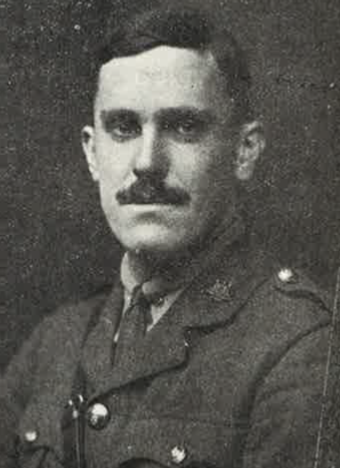
Capt. Charlie Childe (Gloucestershire Regiment), in a billet near Richebourg St. Vaast, on the other hand, has had no relief from the day-to-day realities of the war:

Charlie Childe“From 5 p.m. on Christmas Eve till 5 p.m. on Christmas Day all our batteries had more or less carte blanche and all started blazing away at midnight.

I went in on Christmas Day after tea and there was a great deal of whizz-banging and salvoes of shrapnel all night. I was quite pleased when I got back to my dug-out, as it was rather a poor game wandering about over the open in the pitch dark, and wet, with all this hatred breaking out from time to time.”

Lieut. Jack Smyth (15th Ludhiana Sikhs) is now in Egypt, defending Alexandria from attack by the German-supported Sennussi tribe. No Christmas spirit to be found there either:

Jack Smyth“I spent the most exciting Christmas Day and the coldest Christmas night I have ever spent in my life; the whole day was spent in an attack on the Sennussi position. I was doing Adjutant duties and as I had only a few days before come out of hospital in Alexandria, I was almost dead, not counting the additional ‘almosts’ from bullets…

I should love to have been able to get back to Oxford for Xmas, but must not think of such things till the war is over…”

2nd Lieut. Maurice Jacks (King’s Royal Rifle Corps), whose location is given simply as “this dreary corner of North France” has ascertained that the Boche may be suffering somewhat worse than our troops:
“A deserter came in the other day and to his amazement the men gave him cigarettes and tea, and Headquarters a dinner; he was feted all round, but we could not let him off without displaying a little ‘frightfulness’ and the whole battalion having just had a Xmas dinner of goose and plum pudding, we asked him, ‘I suppose you had goose and plum pudding on Xmas Day. We all did!’

He threw up his hands in amazement and was green with envy; he apparently had not even had a sausage!”

Lastly, my daughter, Kit Marshall (St. Leonard’s School YMCA hut, Camp 18, Harfleur Valley, near Havre) has been helping entertain those Tommies behind the lines, who were able to celebrate in some style:

KIt Lynam portrait“This morning we were all taken to the Irishmen’s and RFA dining halls to see their Christmas dinner and the decorations. They had turkey, geese, plum puddings, some given by the Ulster women, and beer.

Then at 3 p.m. we went to their concert. The men from both dining halls crammed into one… and they all joined in the choruses – ‘The little Grey Home’, ‘The Sunshine of Your Smile’, ‘Ragtime Cowboy Joe’ etc.

The pianist was splendid, played anything in any key; the voices were somewhat husky, the result of a huge dinner and a very smoky atmosphere. They had been given churchwarden pipes, too, by the Ulster women and the scene was most picturesque – all these men standing and sitting under the elaborate wreaths of different coloured paper and evergreens, all singing lustily.

Now I am sitting in the pay-box, having a slack time, as most of the men are down dancing in the lower Hut. All those under 5 ft. 6 ins. are decorated with ribbons, which shows that they are ladies…”

For these men, Kit’s old school (after the OPS of course!), St Leonard’s, provided Christmas presents:

…The men came up to the platform, each in turn, and dipped into a huge bran-pie for a present… 1,465 presents were given away and still some did not get any. They were awfully pleased with the things they got: wallets, handkerchiefs, socks, pocket-books, knives, pipes, purses, cigarette cases, cases for matchboxes etc etc. The School and Seniors gave the money, about £68, and Miss Grant chose and sent all the presents.”


December 21st 1915

A number of minor items of interest, concerning the term that has just ended, failed to make these pages. These are now included here, together with some information pertaining to the start of next term:

The first half of term we had practically no illness at all. Later on we had some coughs and colds. Two boarders were rather seriously ill with pleurisy, but it was taken in time and both have quite recovered. One little fellow had to have the operation for appendicitis, but has made a capital recovery (he is the first boarder on record to undergo it).

* * * * * *

The boys have done some excellent knitting. Sock knitting was supposed to be too difficult, but many excellent pairs of socks were produced. Also a large supply of toys and other products of the carpenter’s shop were forwarded to the Albert Hall Exhibition.

* * * * * *

Young Lance Mallalieu’s Marionette Shows have given much amusement on winter evenings.

* * * * * *

It has been most delightful to welcome so many Old Dragons back this term to tell us something of their experiences and hopes. Besides giving the greatest pleasure to us who knew them as ‘kiddies,’ it is a fine thing for the boys to see and hear those who have taken part in the great war. It does us all good to have them amongst us.

* * * * * *

The Ford has taken parties of wounded soldiers to Woostock, Frilford and Stanton Harcourt; more interesting companions than these men ‘home from the war’ it would be hard to find.

* * * * * *

Spurling H

Rev. Spurling

We are sadly losing the Rev. Henry Spurling from our staff. The Hampshire Regiment, which he has joined as Chaplain and interpreter and possibly fighter (he actually starts as a Tommy!) with the hearty approval of the Bishop of Winchester, has for its Colonel Bobby Johnson (OD), for its adjutant Stephen Low (OD), one of its captains Lionel Smith (OD) and a subaltern Wilfred Johnson (OD). The regiment is bound for East Africa.

Henry, together with Bobby Johnson, started our magazine, The Draconian, when they had moved on to Winchester College, their aim being to keep in touch with other Old Dragons and “to tighten the bond of union between friendships that would otherwise be severed…”

* * * * * *

Next term we will perform ‘Hamlet.’ The various parts have been assigned. The words are to be known pat and I shall be grateful if parents and friends will hear them in the holidays. N.B. No books will be allowed on stage at all when we begin the rehearsals on Wednesday Jan. 12th. I hope to have a performance for the Elementary School children on Thursday (13th), one for wounded soldiers on Friday (14th) and the usual two performances for friends on the Saturday (15th).


Next term begins on Wednesday 12th January 1916.


December 16th 1915

With the approach of the end of term, I used my talk in the final Sunday Service to prepare the children for a more austere Christmas than they have hitherto experienced.

“We are in the second winter of the Great War and we do not seem to have gained much; but I believe we really are in a far better position.

But there is a long time before we can beat our enemies and win a lasting and glorious peace. We shall lose and suffer much before that good time comes, and your parents and friends at home will be full of anxiety, though they will try to hide it from you, their children.

The future is dark, everything will be dear and money short, but you will know they will make great sacrifices for you. They think that the most important thing is that you should go on and they will give up other things for that; and you must help them.

There will be few parties, theatres, etc., and you must employ yourselves usefully, cheerfully and unselfishly. Help them all quietly and show that you feel for them in their many troubles. Don’t grumble if you don’t have a lot of presents, a large Xmas dinner, etc., but rather ask for the turkey and plum pudding to be sent to the soldiers or Belgians, wounded or unwounded. Think of those who are fighting for us in danger and cold…

All of you know within yourselves whether during this term you have been brave and honest and helpful. You know whether you have lied, cheated, used bad language, lost your tempers, been unkind, wasted your time and your parents’ money, given your parents pain by not writing regularly. If you feel that you have done these things, do try to cure yourselves and don’t do them again.

We masters have doubtless often been unfair, thought you were lazy or inattentive when you weren’t, pitched into you when you did not deserve it, but we are only boys grown up and it is best for us all to forgive one another at the end of term.”


December 13th 1915

Lieut. Arthur Egerton, late of 3rd West Yorks and 11th Hussars, is now with the Royal Artillery and is in charge of a trench mortar battery in France, where the winter conditions are as much the enemy as the Boche:

4/12/15.  “Nearly all our dug-outs are swimming in water and we have to pump hard every day to get the water out by big hand pumps and also dig pits for it to drain off, but these fill in no time…

Some of our guns were nearly under water and our bomb stores, so we must dig new emplacements and ammunition recesses. There is very little trench fighting now, it is nearly all artillery (situated a mile or more back) – as you can barely walk about in the thick slimy clay and infantry can’t move at all. Under half a mile an hour (a bit slow for a charge!), but there is a good deal of mining going on, on both sides. Several have been exploded and the thing is to occupy the empty craters (if they are between the lines) as soon as possible, before the enemy can get there first.

Several deserters told us of mines that were to explode on our front on particular days and we were able to take the necessary steps in time. We get a good deal of information from prisoners and deserters, especially about the state of internal affairs in Germany. These are circulated to the officers in intelligence reports marked ‘confidential.’

Our snipers account for a good many of the German ones each day; we have those hyposcope rifles by which you can aim in safety without showing your head in the fire trenches.”

In more recent correspondence Arthur added:

“The water is now four or five inches deep and above my ankles on the floor of my dug-out, but I can sit with my feet on a shelf and it hasn’t reached the level of my bed yet! We are having to abandon several of our dug-outs and places, but it is the same everywhere, let us hope with the Boches too.”

December 9th 1915

Lieut. Lindsay (Pug) Wallace has come home several times this term on ‘home-sick’ leave from his regiment in Bicester and is now quartered in Oxford. We were lucky to be able to secure his services as referee in the first few rugger matches (and he had a most enthusiastic and interested audience at the School House one Saturday evening whilst he explained the mysteries of his Machine Gun.)

Away matches have proved difficult, particularly if returning after dark, under black-out regulations (in case of attracting the attention of German zeppelins). The trip back from Eagle House in Sandhurst involved a brief halt in Reading to lay in a supply of provisions for the journey home; some narrow escapes for passers-by, lamp-posts and animals; various compulsory halts for interviews with special constables; an uninterrupted bump along the Iffley Road till finally arriving back at the School House.

1915 Rugger Team

Sadly our rugger season has come to a disappointing and unexpected end. We have been attacked and smitten, hip and thigh, by a devastating kind of influenza cold. We are glad to think that at least two of the unplayed games can be played next term.

Meanwhile, if (a) Pentreath can convince himself that the shortest distance between two points is a straight line; (b) Mallalieu will forget himself and realise that the man with the ball in his hands is the most likely person to score a try, on whichever side he is playing; (c) Gunther will remember that the haphazard pass in his own “25” is likely to lead to disaster (otherwise he is excellent); (d) Adamson will practise until he finds out that it is possible to be tackled without the ball being hurled in any direction and to any player of either side who happens to be on the look-out (his own tackling is v.g. indeed); Potts will find out that it is fatal to change your mind when attempting either to fall on the ball or to pick it up… we may confidently meet any of the teams who were opposed to us this term.


December 5th 1915

Raymond Venis

2nd Lieut. Raymond Venis (IARO., 48th Pioneers)

The death of Raymond Venis was announced in the Times of December 3rd.

When war broke out, Raymond joined the Indian Army Reserve of Officers and was attached to the 48th Pioneers. He went to Mesopotamia with the expeditionary force in February and was killed in the battle at Ctesiphon on November 22nd.

He showed courage and endurance under the heaviest of fire, earning the respect of his fellow officers. While lying mortally wounded on the battlefield, he continued to cheer his men on.

Raymond left the OPS in 1902 to go to Repton. From there he went to RMC Sandhurst and was duly commissioned in the South Staffs. Regiment. However, he resigned from the army in 1907 to join a Calcutta firm. His varied career took him into the Postal Department in Burma, indigo planting in Behar and he was with the Burma Para Rubber Company prior to the war.


November 29th 1915

Capt. Jack Denniston (King’s Own Scottish Borderers) reports that a letter from fellow Old Dragon, Naomi Haldane (Lord Haldane’s niece), was of no help in getting him out of a spot of bother!

J Denniston

Capt. J Denniston

“You will be shocked to hear that I was arrested as a spy last night. It was great fun. I had to take a working party of 150 men up to the trenches to work. They were divided into three sections. I went with one section myself and left the other two to the sergeants. After settling up my own section and visiting one of the other two, I went to look for the third.

They were working in a rather obscure and unimportant little trench and I wondered about for some time, unable to find them. After wandering about a bit, I wondered into a keep. The sentry challenged me. I answered him and he said he didn’t know my name and seemed embarrassed. So to console him, I suggested that he should arrest me and take me to the officer commanding the keep. He said there was no officer but a corporal in charge. The corporal emerged from the dug-out and I abused him for being (apparently) asleep.

The sentry began timidly, ‘Corporal, this gentleman…’

‘Here, none of that!’ I interrupted. ‘You’ve got to tell him that you consider me a suspicious character and have therefore arrested me.’

He obeyed, rather coyly, and I then explained my position to the corporal, who seemed quite satisfied and let me go, without, however, being able to direct me to my destination.

Wondering on, I met a Scottish officer with another working party. I asked him to direct me, but he couldn’t. Then I said, ‘What’s the number of this trench?’

He then said he must detain me until I could prove my identity. I assented cordially…

‘Let’s see,’ I said. ‘I wonder if I have any letters on me, or anything which would convince you.’ I felt in my pockets, but could find nothing but the inside of a letter from Naomi Haldane.

‘I have a letter,’ said I, ‘from a friend of mine, but as she is the niece of the notorious Germanophile, Lord Haldane, I suppose it only makes things worse. He took this quite seriously and agreed that the letter was not satisfactory… He said he was sorry to detain me, but two German officers had been caught recently, wearing British uniform and that he had to be careful.”

Eventually Jack was recognised by one of the men in the machine-gun section of his company and all was well.

November 25th 1915

The first successful flight over the English Channel by Louis Bleriot took place in 1909, whilst Jack Slessor was busy playing in his gang and building forts at the OPS. He probably was aware of the event but not particularly excited by it or the founding of the Royal Flying Corps three years later. His father was in the Army and that was where his ambition lay. But surely, we all felt,  there could be no real hope of such a career for him. He was lame in both legs due to childhood polio. As a result, he was not allowed to play rugger. (As Jack Haldane’s sister Naomi was also not allowed to play, they would go rowing together on the Cherwell.)

Despite his infirmities and having been declared ‘totally unfit for any form of military service,’ Jack has been accepted by the Royal Flying Corps. A helpful uncle in the War Office is rumoured…

Jack has now won the race to become the first Old Dragon to fly across the Channel. He flew in a new biplane over the School field one day during games on his way from Coventry to Farnborough, flew across the Channel to St. Omer the next day and was back again with us watching games before we realised he had time to get started!

Here is a part of his account:

Jack Slessor...

2nd Lt. Jack Slessor

“We left Farnborough at 10.15 and got to Folkestone at 11.25. We went and had lunch… We pushed off from Folkestone a little after 3.00 and got to St. Omer a little after 4.00, taking about two and a half hours altogether…

I crossed the Channel at 9,000 feet, but there were great white clouds drifting at about 6,000 feet and a heat haze, so I did not see France till about mid-Channel… Cape Gris-nez was the first thing I saw and I followed the coast down to Calais and then up the railway inland to St. Omer. I could see the famous Belgian sand dunes and Hazebruck, and Ypres a blur in the distance.”

The noise of the aircraft was such that, on landing, Jack was almost stone deaf and unable to hear the noise of the guns.

* * * * * * * *

My brother (Hum Lynam) has been responsible for a concert held on November 15th in Keble College Dining Room in aid of the Professional Classes’ War Relief Fund & the Fund for Oxfordshire Prisoners of War in Germany.

The varied programme featured a number of people connected with the OPS. Miss Rosina Filippi is the mother of two of Old Dragons (John & Lawrence Dowson) and Miss Carmen Hill is married to George Drinkwater. Miss Hill sang in one of the Promenade Concerts of 1910 under Henry Wood with the Queen’s Hall Orchestra.


November 20th 1915

It is some time since I last mentioned my own daughter Kit on these pages. The story following the most happy event of her wedding (see March 1st) has been too painful to tell until now.

Her marriage to Lieut. Marshall lasted less than three months. He contracted meningitis and died in hospital in Portsmouth on May 12th 1915. During his illness and following his death, Kit showed great fortitude. May I leave it at that?

Only five months later and she is, I am proud to say, in France, driving a car and working in connection with St. Leonard’s School YMCA hut, Camp 18, Harfleur Valley,  near Havre.  Albeit behind the lines, she has been seeing a lot of the Tommies and it is most interesting to hear about them in her letters.

KIt Lynam portrait

Kit Marshall

27/10/15. “Lots of our men went up to the Line tonight; it is rotten saying goodbye to them… I wonder if we shall ever see them again? I picked up and took three men down to Havre who were going to ‘Blighty’ this morning. One man had been blown up by a trench-mortar and had had one side of his head dislodged. Another man had had cholera and enteric on August 21st in hospital at ‘Eatables,’ came down here for a rest, and had been doing fatigue for three weeks, though his nerves are gone.”

Kit has also noted that Tommies doing fatigue get a shilling a day, whereas the local navvies get three times as much. She comments,

“No wonder our men get fed up. A lot of things want straightening out.”

29/10/15. “The King visited the camp yesterday, and he looked ill and worn. Only a few of the soldiers around saw him, as they had been on fatigue the day before in a downpour of rain, and of course were soaked to the skin. They have no change of clothes and consequently could not appear properly dressed, so had to stay in their tents till he had gone.”

It must have been soon after this that the King was himself injured.

As with our young subalterns, Kit is meeting the sort of people she could not have got to know in normal life. She has been asked to help write their letters and deal with tales of domestic woe.

“One man came and told us a most pathetic story yesterday. He had been home on leave and when he got to his house, he found it was shut up and his wife and ten months old daughter had gone off with a Belgian refugee…”

The Tommy who has surprised her most is a strongly built north country miner, who was able to quote Shelley and Keats to her and wanted her to teach him Latin (“I have got a Latin grammar in my tent,” he told her).

How did he come to be so educated?

(7/11/15) “You see, I like my books better than women, and they call me a woman-hater – It is funny I should be telling you that, isn’t it? But I have been living in lodgings, and I have never met a woman who liked poetry.”

Having had 23 teeth out recently, he could not return to the line until a new set of false teeth arrived, so Kit got to know him even better and has found that he has the most extraordinary knowledge of poetry.

“…he floors me completely in all save Swinburne and Kipling, which two he does not know. But what surprises me is that things we have been educated up to, such as Milton’s sonnets, Dante, Spenser and the like, he has discovered and read for his own enjoyment.  He has never discussed poetry and his opinions are entirely his own. Ever since he was ten he has lived in lodgings, thirty-five of them, and he is now twenty-five…  Browning he quoted freely, Tennyson, Longfellow etc, but Shelley and Keats he knows to perfection and just glories in them.

One day he said, ‘Have you read Kubla Khan?’ I told him it was one of my favourite poems. He said he thought it was the one inspiration Coleridge ever had and was most interested to hear it was a dream…”

November 16th 1915

Mikado 10.1915

The school’s  recent performances of Gilbert & Sullivan’s ‘The Mikado’, could not go by without noting the pain we still feel at the loss of the two members of staff who have died in the War, Leslie Eastwood and Tom Higginson. Higgy it was who first brought G & S to the OPS stage.

How appropriate that we were joined in the audience by a number of wounded soldiers, who were most appreciative. As one of our reviewers said,

“How can one care to do anything so much as for these dear men who have gone out, simply, with a sort of bright eagerness and cheeriness, to lay down their lives and who, having nearly lost them, having seen death and hell and having suffered every torment and hardness, return with the same brightness and cheeriness in this dark world of loss and anxiety?”

The Friday audiences were cheered by many young soldiers, all longing to be out of the OTC and at the Front, and the mother of the School’s own VC, just home from seeing him in Egypt, and by some Dragons home from the Front in France, Russia and the Dardanelles.

2nd Lieut. Jack Gamlen (Ox & Bucks Light Infantry) attended the one of these performances.

“It was delightful to find this performance awaiting one as a treat after a cold and wet October in camp. We, too, when under canvas, had tried to warm ourselves by singing songs from the G & S operas.

Our greatest success was to rouse our Colonel in his pyjamas at 11 pm, by beating the big drum as an accompaniment to the Duke of Plaza-Toro’s  first song, and to be sent to bed. There were five of us, including a College Dean, two solicitors and a real wounded warrior from the Indian Army…”

When Jack came down from Balliol (to which he had won an exhibition from Rugby School) he trained as a solicitor and was practising here in Oxford in the firm of Morrell, Peel & Gamlen, when the war broke out. Much of his military training has been done locally and he likely to be sent to the Front before long.