March 22nd 1916.

My daughter Kit is proving a good correspondent and writes most interestingly from her YMCA hut near Havre:

“Do you remember me telling you about the literary miner? He is in ‘Blighty’, having been badly wounded in the head. He has sent me out Ibsen’s ‘The Warriors of Helgeland’; he writes that he has just discovered Oscar Wilde and is devouring his plays…

Kit Lynam 1912The others all tease me about young Davie Curry; the poor boy has had almost everything the matter with him; he has been blown up and is now lame, but he still has a delicious twinkle in his eyes, dimples, sticking out ears and a brogue of the very finest. He was eighteen the other day, having joined when he was ‘saxteen past’; he has got no parents and used to work in the Belfast shipyards…

I heard that he had lost his pay-book and could not get any pay, so I asked him as nicely as I could if I could help him in any way, and immediately he flared up, ‘Who’s after tellin’ you I had lost it? Shure it’s no matter at all, I have got plenty money.’ Though, of course, I knew he had not got any…

Next morning I asked him if he would help me clean Betsy (the car) as she was so dirty, and he polished her well, but was quite reluctant to take the ‘bulls’ eyes’ I offered him.

Since then, he has taken Betsy under his especial care and ‘shure he forgits’ everything I tell him, but I could never be cross with him, his smile is much too captivating.

He and some other Irish boys found a young boy wandering about and brought him in to their Sergeant. This young kiddy of ten said his father and two brothers had been killed in the Belgian Army and his mother in the explosion at Harfleur. The Sergeant took him to the C.O. and asked permission to adopt him – it was granted and he became the mascot.

He was called Jimmy Ulster and we all bought him clothes; the tailor made him a khaki suit, he marched at the head of the Band and we all spoilt him thoroughly. He was most vivacious and sang French songs, soon learnt English ones and he used to entertain us immensely; and help us too, with opening match boxes, peeling potatoes etc.

Then the end came, his father was discovered in the worst slum in Havre, no-one knew of his mother and all his tales were absolutely and entirely untrue!

He was taken home, but returned to camp immediately. He was put into the guardroom under arrest and finally was marched off between two burly Sergeants as an escort!”

March 18th 1916

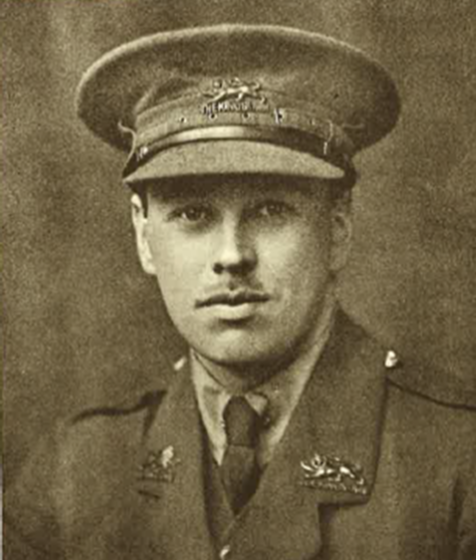
Nigel Madan

Lieut. Nigel Madan (8th King’s Own Royal Lancaster Regiment)

We had heard that Nigel Madan was missing and we are distressed to see his death announced in today’s edition of The Times.

It is understood that Nigel’s regiment was involved in diversionary attacks around the Ypres Salient.  The Germans had captured strategically important high ground called the ‘Bluff’ last month and the aim was to re-take this to deny the Germans the opportunity to observe our lines.

The artillery bombardment began on 1st March and the attack went in early on the morning of 2nd March. It caught the Germans by surprise and was successful. Nigel Madam, however, was declared missing at the end of the day and today’s announcement confirms that he did indeed die in this attack.

Nigel’s father is Mr Falconer Madan, Bodley’s Librarian, and Nigel attended the OPS in 1897/98.

All who knew him mourn a gallant gentleman, who fell in the flower of his early manhood, fighting for his country and in defence of a cause of which no higher can be found.

March 16th 1916

It is marvellous how some of our old boys correspond with us, despite the many distractions provided by the war and the need to keep in touch with their families.

This is the eighth time Capt. Charlie Childe has appeared on these pages.  He has been out of the front line, but expects to return to the action very shortly. This period of ‘rest’ has given him and his colleagues time to enjoy Frank Sidgwick‘s Narrative Macaronic Verse:

Charlie Childe9/3/16. “Thanks very much for the books of poems. I have lent them to two or three fellows and they liked them, especially Sidgwick’s collection in the small blue book…”

Charlie has been in reserve, but stationed near to a gun battery, which was very inconsiderately shelled:

“One old fellow was rather shaken and got behind a wall; he might just as well put up an umbrella.

From then onwards they put over 70 shells at 3-minute intervals – big 8-inch howitzers. Practically every shot got into the battery position – a farm and garden about the size of the School House grounds. That is wonderful shooting at a range of at least six miles, when you consider that all the German gunners could see was their own gun and probably a hedge in front.

They did not hit any of the guns as it happened, only filled the place with big holes and knocked a piece off the house. There was a sausage-balloon up behind their lines, so there must have been an enthusiastic Fritz up there spotting for his battery.”

Despite this, Charlie seems to have enjoyed this period of ‘rest.’

“This is quite a good place on the whole. We can get a good dinner and baths, and there are plenty of shops where we can get anything we want. I don’t think it will last much longer though, as it is about our turn to be in the line again.”

March 12th 1916

Whilst so many Old Dragons are wielding the sword, there are some who have not entirely forsaken the pen and endeavour to keep our spirits up in these troubled times.

Some Verse – F.S

(Available for 2/6 from Sidgwick & Jackson)

Frank Sidgwick, the author of many of the verses in the various Logs of the Blue Dragon has in this little volume given us a collection of poems, a few of which have appeared in the Cornhill and other magazines.

One of them has given rise to considerable and learned discussion in the Times Literary Supplement – viz. Narrative Macaronic Verses. The VIth form learned this witty and amusing essai by heart and quote it constantly with enjoyment.

Narrative Macaronic Verses                                      

Charmer virumque I sing, Jack plumigeramque Arabellam.
Costermonger erat Jack Jones, asinumque agitabat;
In Covent Garden holus, sprouts vendidit asparagumque.
Vendidit in Circo to the toffs Arabella the donah,
Qua Piccadilly propinquat to Shaftesbury Avenue, flores.

Jam Whitmonday adest; ex Newington Causeway the costers
Erumpunt multi celebrare their annual beano;
Quisque suum billycock habuere, et donah ferentes,
Impositique rotis, popularia carmina singing,
Happy with ale omnes – exceptis excipiendis.
Gloomily drives Jack Jones, inconsolabilis heros;
No companion habet, solus sine virgine coster.
Per Boro’, per Fleet Street, per Strand, sic itur ad “Empire”;
Illinc Coventry Street peragunt in a merry procession,
Qua Piccadilly propinquat to Shaftesbury Avenue tandem
Gloomily Jack vehitur. Sed amet qui never amavit!

En! Subito fugiunt dark thoughts; Arabella videtur.
Quum subit illius pulcherrima bloomin’ imago,
Corde juvat Jack Jones; exclamat loudly “What oh, there!”
Maiden ait “Deus, ecce deus!” floresque relinquit.
Post asinum sedet illa; petunt Welsh Harp prope Hendon.

O fons Brent Reservoir! Recubans sub tegmine brolli,
Brachia complexus (yum yum!) Jack kissed Arabella;
“Garn” ait illa rubens, et “Garn” reboatur ab Echo;
Prositique tenax Jack “Swelp me lummy, I loves yer.”
Hinc illae lacrimae; “Jest one!” et “Saucy, give over.”

Tempora jam mutantur, et hats; caligine cinctus
Oscula Jones iterat, mokoque immittit habenas.
Concertina manu sixteen discordia vocum
Obloquitur; cantant (ne saevi, magne policeman)
Noctem in Old Kent Road. Sic transit gloria Monday.

March 9th 1916

Whilst Lt. Col. Fluff Taylor is busy defending the Suez Canal from our enemies on the ground, Lieut. Jack Slessor (RFC) is doing the same from the air. He is with C Flight, 17th Squadron Base, MEF, in Egypt.

Jack Slessor...

Lieut. Jack Slessor

“… We have been having a most exciting time of it since we arrived here (Suez)…

The enclosed is a sort of picture of an incident that happened to me when I was on a patrol job in the desert, with an observer.

We came upon quite a large reconnoitring patrol of the enemy’s cavalry, come down from the hills to have a look round. We had a machine gun with us and promptly came down to four or five hundred feet to make sure of them. They behaved in the most idiotic manner and seemed to lose their heads, for instead of scattering they most of them dismounted and gathered in a bunch, offering an ideal target; so we circled round and attacked them with the machine gun from about 4-500 feet.

It really was the funniest thing to watch, for as soon as I opened fire the horses took fright and bolted full speed to the mountains, leaving those who had dismounted running about in the sand and the whole scene was the most perfect chaos.

I evidently got in some lucky shots, as one or two fellows, who lay still, testified…”

Slessor attacks

J.C. Slessor v. the Turks

Incidentally, Jack is claiming to have been the first pilot ever to intercept an enemy aircraft over England, when he came up against a German Zeppelin on October 13th last year.

March 4th 1916

Lt. Col. Stuart Taylor (West Yorks) is currently with 93rd Brigade, 31st Division in Egypt. He is of course known to us all at the OPS as ‘Fluff’ and is the most loyal of Old Boys. He has contributed on numerous occasions to the pages of the Draconian on his time in the South African War, on horseback in Crete and in Northern Nigeria.

On leave in 1897, Fluff acted briefly as our swimming instructor and clearly his interest in matters aquatic continues unabated!

Stuart Taylor 2“We saved 1000 gallons of water in the last week out of our water allowance and yesterday, Sunday, we celebrated the close kinship of cleanliness to godliness by letting every man indulge in a bath! They made nice oval holes in the sand, spread their mackintosh sheets over the holes and pressed well down into them; and then poured in their hard-saved water – and then, the joy of it! It reminded me of days when I watched seals at the Zoo revelling in their plunges in and out of their various water ponds. Soap, sunshine, splash and singing, it made up a wonderful picture and how they all enjoyed it.

These men of mine are passionately fond of soap and water and the absence of these things worries them more than short rations or sleepless nights…”

Fluff has paid us two visits since this war started. On the first occasion, last April, he was – for reasons unexplained – escorting a Turkish prisoner along Charlbury Road and dropped in. Last term, before he went out to Egypt, he came and demanded of me two ‘extra halves’ and two ‘no preps’ – the biggest yet – and this of course was met with great enthusiasm by the boys, so that I could hardly refuse.

March 1st 1916

It has been delightful to receive a visit from Lieut. Patrick Duff (RFA) on his safe return from the Gallipoli campaign. He is kindly allowing us to publish extracts from the diary he kept at the time.

The entries below cover the events from December 30th until January 9th, when he was evacuated.

Any starred space has been censored to meet the requirements of paragraph 453, King’s Regulations.
Lieut. Pat Duff

30/12/15. “I think there is very little doubt that we are going. I write this in the middle of a large expenditure of ammunition on what seems a useless target, just, I take it, to get rid of the stuff…

It is quite exciting and I have no sentimental objection to leaving Gallipoli, as the show is obviously a failure, and we shall see another war in a new country…

31/12/15. Ordered to remove two guns today; spent busy morning packing heavier kit and arranging about despatch of my two guns…

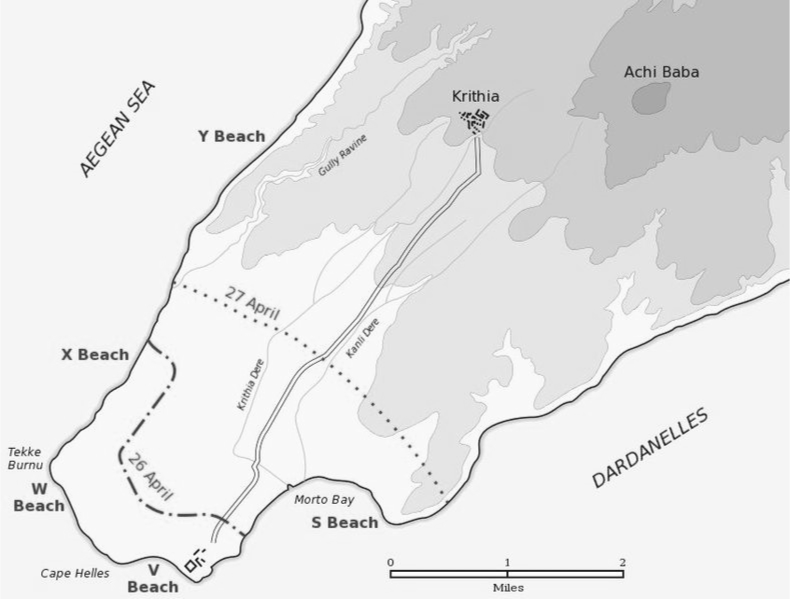
At W Beach delivered two guns, two G.S. wagons and four gharries with men’s kit and some of my own on lighters, and saw them safely off. Rather tired and sleepy as we are having pretty hard days and nights. Write this at 3 a.m. smoking a cigar instead of going to bed, feel absolutely dead tired in the mornings, but the coldness of the night keeps one going for the night work.

1/1/16. We rode into W Beach to learn how to blow up guns in case we had to abandon them..

W_Beach_Helles_Gallipoli 2

Preparation for evacuation. W Beach – January 1916

Thank God we don’t evacuate every day of our lives; it is tiring, as one pulls about guns and heavy stuff in addition to getting no sleep.

General ******* sent us a wire this morning wishing us a ‘Happy and victorious New Year.’ A farcical epithet at a moment when we are in the act of sneaking away from a place we’ve held for eight months and in a deadly funk every minute that the Turk will spot it and jump on us. Took teams out at 11 p.m. and got to Clapham Junction in Krithia nullah about 12.30, having had to wait on Artillery Road owing to block of traffic. Was at W Beach at about 2 a.m., where I soon got rid of the guns. Back to bed about 3.30.

2/1/16. Am staying up for the purpose of seeing wagons loaded with oats, hay and our kit (We are all packed up, leaving out only shaving things and flea bags).

The ravine presents already the appearance of the abomination of evacuation standing where it ought not. All dug-outs have been left as they stood, but it is perceptible that the Peninsula is emptying.

3/1/16. We have now one gun, 58 men and all the horses. Probably I shall leave tomorrow night with our last gun…

4/1/16. 9.45 p.m. The wind is rising. We have got one gun and about 50 rounds of ammunition; if the wind continues we can’t get away. It is beginning to howl like the devil outside. I wonder –

5/1/16. The beach is in a state of disorder; I noticed that last night they had embarked nothing as there was a long train of 18 pounders waiting to go off…. All the ordnance tents were turned inside out, piles of stuff lying about in confusion… There was every kind of thing there if one could only have carried it away. Rather pathetic. Everything is going to be piled up on the edge of the cliff and to be blown to blazes by the Navy the morning after we leave….

Tonight the wind has gone, so that we may be able to get away. The storms here generally last at least three days, so it is nothing short of providential.

6/1/16. Rode out on my little horse with the gun about 8, and thought how I should follow the dim roads of Gallipoli by night no more. Some of the more recent arrivals hail the departure with delight; but we who have been here since the very beginning find it hard to leave the place. One knows it more intimately than any spot on earth, having moved about on it at all hours of the night, and dug ourselves into it in every direction.

Frightful crush on the beach. I managed to get a move on and presently brought my gun to the pier. Shells were dropping on the other side of the beach, but nothing close to us. The horses were unhooked and sent away; my saddle was taken off my little horse and put on the limber and off he went in the dark…. Got out to a ship and had the gun and limber on it by about 5 a.m., and so now I write this sitting on the floor of a cabin, feeling the wiggle of the screw and beginning to realise that, for the time being, I have saved my soul alive.

7/1/16. I have left nothing in Helles, only my little horse, which will be shot. I told ***** to take off a shoe for me.

Started back to Helles about 5… I worked in the hold until about 4 a.m. getting stuff on board; but got some sleep in the night. Yesterday I felt quite sick with sleepiness. Still calm, perhaps we shall be able to get some horses off yet.

8/1/16. Everyone thinks this is ‘Z’ night, when everyone comes off. Wish I were on shore.

About 4 a.m. the Chief woke me and said, ‘the bonfires are lit.’ I went on deck; on W beach about eight great fires were burning and the blaze lighted up the whole place. *********

****** suddenly a terrific explosion came ******* throwing up the earth in the shape of a huge fan about 100 feet into the air. Shortly after came another awful burst, hiding the whole beach behind the falling debris and smoke. Flaming splinters seemed to be flying about everywhere, some falling in the sea.

There was another fire on V beach, and I could see the huge wall of the castle of Sedd-ul-bahr in the glare (reminded me rather of Virgil’s description of the fall of Troy when the forms of the malignant gods loomed out above the smoking walls). Just around the corner from W beach another heap ************* was ablaze, and there was a fire on Gully beach. For an hour or more I stood watching the flames; the Turks were at first firing shrapnel into the middle of the beach, thinking they had set fire to something and that they would catch those who were putting it out. About 5 a.m. they seemed to realise we were gone, as they started shelling out to sea among the ships.

About 5.30 we began to move slowly away and the fires grew smaller in the distance. So we left W beach, looking likes the gates of hell, as it was when we first came there….

This is the end of the Expedition which was to have opened the Dardanelles, filled up Russia with supplies, and as we fondly hoped, advanced in rear of the Austro-Germans along the Danube. How far the frightful waste of men and materials will affect England’s fortunes one can’t tell, and just now it is hard to take a dispassionate view; but, results apart, I cannot think there is any enterprise comparable to this, except the Athenian Expedition to Sicily, which started with the same high hopes and ended…****************”

February 25th 1916


Captain Robert French (Royal Welch Fusiliers)

The death of Robert French, which occurred on February 19th in the Empire Hospital for Officers in London, was announced in the Times yesterday.

We had news of his situation last month (January 5th) and understood that he had been hopeful of recovery and was quite expecting to go to a convalescent home in Roehampton up to, at any rate, a week or two before his death. And now, nearly five months after he was wounded, he has succumbed to infection.

Robert won a scholarship to Blundell’s School from the OPS and was part of the Officer Training Corps there, rising to the rank of Sergeant. In 1911 he was commissioned in to the 3rd Battalion the Royal Welch Fusiliers as a probationary second Lieutenant.  According to his father, he spent the whole of a legacy (practically all he had) on his training and outfit. This was in addition to the Government grant, which was found to be totally inadequate for the purpose.

At the outbreak of war, Robert joined the 2nd Battalion Royal Welch Fusiliers (the same unit as Capt. George Fletcher, who was killed on March 20th 1915). He took part in the retreat from Mons and the battles of the Marne and Aisne and was promoted to the rank of Captain in February 1915.


February 23rd 1916

With magazines such as our Draconian making their way to front line trenches, some thought has to be given to security.

We are requested by the Director of Military Intelligence at the War Office to state that the matter contained in any War Article or Letter in the Draconian is to be treated as confidential, and that no extracts from them may be sent for publication to the newspapers.

* * * * * * * *

It is good to know that magazines, such as our own Draconian, are well received by our old boys. Capt. Maurice Jacks (KRRC) writes from Northern France:

jacks-ml3“In a stray ‘Oxford Chronicle’ which found its way to this dreary corner of Northern France the other day I read an account of ‘The Tempest’ and a letter from the Skipper about the bad state of the roads. These two led my thoughts to the ‘School House afar’ and hence this letter. My ‘Draconian’ has not turned up yet; but I can’t get on without it and have written for a copy from home.”

The Draconian has certainly made its way to General Headquarters where Major Cecil Lucas (RHA) and friends “simply devoured every word… and look forward to every number like anything.”

Capt. Charlie Childe (Gloucestershire Regiment), on reading what he had written in the first months of the War, now finds that he sees things differently:

Charlie Childe“I have just had the ‘Draconian’ and was very glad to get it. I’m afraid some of my letters now display a rather green and enthusiastic spirit. In fact I rather wonder at myself in the first days of August and September as a fierce hero! I see I said I didn’t mind shells. However, I am not ashamed to admit that familiarity doesn’t breed contempt. Jack Smyth quite agreed with me in this when I saw him last, so that is enough to go by…”

Lieut. Jack Smyth VC (15th Ludhiana Sikhs) has received his Draconian in Egypt:

Jack Smyth“I wrapped myself up in two blankets in  a deck chair yesterday evening and read the ‘Draconian’ from start to finish.

Charlie Childe’s letters interested me a great deal, as I have been practically in all the places he mentions.”


February 12th 1916

Yesterday, our dear young Naomi Haldane was married to Dick Mitchison, a 2nd Lieutenant with the Queen’s Bays. The marriage took place at the Oxford Registry Office on the High Street. Only a few friends (including Aldous Huxley, the editor of the literary magazine, ‘Oxford Poetry’) attended and the austerity of these times restrained them from holding a party.

We, however, celebrated by taking a half-holiday!

Naomi has been training as a nurse at St. Thomas’s in London, but recently has been  helping with the outpatients at the Radcliffe Infirmary.

It is only ten years since Naomi was performing on the OPS stage here in Romeo & Juliet. How quickly our children grow up!