July 20th 1916

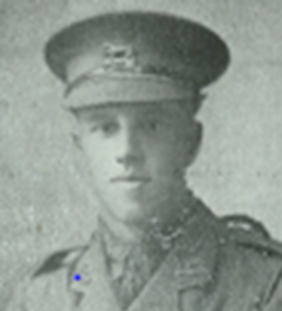
DW Brown 2The length of the lists of those who have become casualties in the newspaper this morning is truly horrifying, and now we have heard that Capt. David Brown (Leics Regiment) has been reported as “wounded and missing” since July 14th.

His father understands that David went out with a sergeant to reconnoitre prior to an attack. The sergeant was subsequently found dead but there was no sign of David.

Further information is awaited.

* * * * * * *

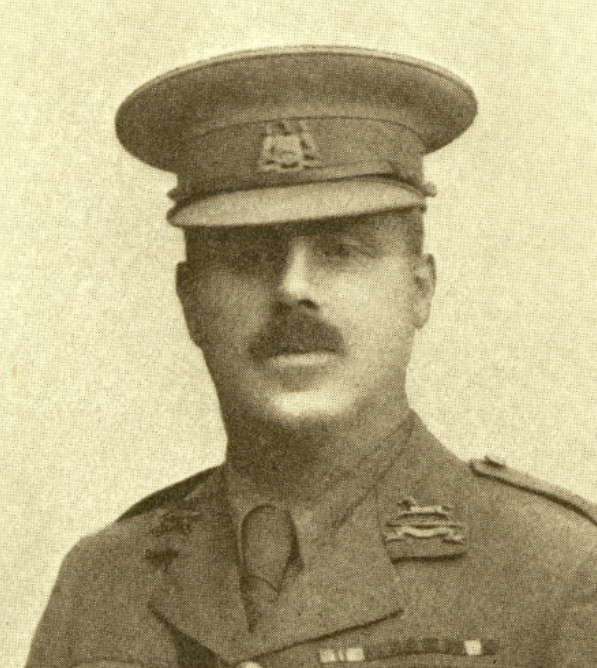
One of the hardest hit regiments on July 1st was the Leeds Pals Battalion (West Yorks). Their commanding officer, Lieut. Col. Stuart Taylor, was not with them as he is recovering from wounds he received in an earlier encounter with the enemy in May.

He has written from the Queen Alexandra’s Hospital in London to the Yorkshire Evening Post:
Stuart Taylor 2“I mourn the loss of tried comrades and dear friends with whom I have been closely associated day and night, in sunshine and storm, for the past fourteen months. But with my sorrow is mingled an immense pride, a great gladness, as I hear from all sources of the magnificent bearing and heroic conduct of our dear lads, who have cheerfully given their lives for their King and country.

The tidings of their gallant conduct and courageous deeds causes me no surprise, as I well knew how splendidly they would stand the test when the supreme call was made upon them.

To those who are left behind to mourn their loss, may God grant consolation in the sure knowledge of their dear ones’ valiant deaths. For the wounded I pray earnestly for a speedy return to health and strength.

For myself, my only wish is that I had been able to be with the battalion in their great and glorious attack.”

On July 1st, 233 of his men lost their lives. In addition, 15 of his 24 officers were killed (and the rest were wounded).

July 18th 1916


Lt Robert Gibson

Lieut. Robert Gibson (South Staffs Regiment attached to 2nd Bedfords)

The letter dear Robert wrote to us at the end of June warned us that the ‘Big Push’ was imminent and that he was going to be part of it.

It was clear from all he wrote that he understood that, not withstanding all the planning and practising for the ‘Push,’  much of what happens in battle is a matter of chance:

“It lies in the lap of the gods.”

He has become the fourth Old Boy to have been killed in the last two weeks.

Lieut. Col. HS Poyntz, the commanding officer of the Bedfordshires, has kindly written to the family with his condolences and to give an account of the attack in which Robert was killed:

“On July 11th at 3.27 a.m. we were ordered to attack Trones Wood where very heavy fighting has been going on. It had been taken by us and re-taken by the Germans, so we were ordered to re-take it again.”

A fellow officer, 2nd Lieut. Primrose-Wells, was close by when Robert and his platoon attacked a position that, as the gods would have it, had not been destroyed by our bombardment:

“We estimate that there were 300 Huns in the wood when we attacked. Your son was on my left and he and his platoon were to enter the wood a little way up on the west side. The Germans had a trench all down the west side of the wood, which we did not know about and just where your son wanted to enter was one of their strong points.

He and his platoon opened fire and he fired several shots himself with his revolver, but the Huns had the advantage from the trenches, besides being excellent shots. Your son was shot and died instantaneously, not making a sound.

I had to advance over the same ground and tried twice to get his body in, but lost men both times, so we left it until we could finally get the whole wood. We were relieved after 48 hours of very hard fighting – hand-to-hand – and very nerve-wracking.

Two days after, when the wood was finally taken by the British, I asked the Colonel if I might go up again and get your son’s body and bury it, but he refused to let me go and our Chaplain with four volunteers went up and found the body and buried him in Maricourt Cemetery.” 


Robert had a very successful school career, winning scholarships to Winchester and New College Oxford. A teacher who knew him at Winchester said that, during an experience lasting over twenty years, he had never come into contact with a mind so naturally gifted for classical scholarship as Robert Gibson’s.

The following tribute has been written by a great friend of his, both at the OPS and afterwards at Winchester.

“… When he came to Oxford, he looked round for some kind of service into which he might throw himself, and so discover something about a stratum of society widely separated from that which he knew. This he found in the boys’ club which had lately been started by New College in St. Ebbe’s; and if he was anything like as successful in winning the confidence of his men as he was with these boys, he must have been one of the most popular officers that ever entered the army.”

His Headmaster at Winchester has written a capital letter to Robert’s father:

“Your one consolation will be that he takes a very white soul to the other world, that he lived a keen, joyous, wholesome, and honourable life, very free from any sort of stain.” 

No tribute could be higher, and it comes from one who loved him, and knew him through and through.


July 15th 1916

CH Counsell

Lieut. Christopher Counsell (Hampshire Regiment)

The Counsell family have suffered a week of grief, mixed with hope and despair. First they received a telegram informing them that Chris had been wounded in the “Push”:

Counsell wounded

Three days later has come the news that Chris is dead.

Counsell killed

His battalion had received their orders too late on July 1st to launch a further attack on Beaumont Hamel that day and thus they remained in the original British Front line.

Chris was providing cover for a working party on July 6th, whilst they placed some advanced outposts. A machine gun opened fire and Chris was severely wounded.

It transpires that he died on the way to the Casualty Clearing Station.


July 11th 1916

AG Clarke

2nd Lieut. Geoffrey Clarke (Rifle Brigade)

It is with particular sadness that I have to give you the news of the death of Geoff Clarke. His brother, Capt. “Bim” Clarke (10th Gurkhas) received the telegram on July 7th and the notice of Geoff’s death is in the Times this morning.

Geoff, who was first thought to have been killed on July 2nd, was in fact a casualty of the initial attacks on July 1st. The Redan Ridge, north of Beaumont Hamel, was the objective of the 4th Division, which included Geoff Clarke’s Rifle Brigade. Although it must have been hoped that the bombardment of which we have read in the newspapers had obliterated the German defences, this does not appear to have been the case in this instance. When their time came to advance, The Rifle Brigade was repulsed with heavy losses.

Geoff was one of the few to reach the second line of German trenches, though twice wounded on the way. A fellow officer has kindly written to the family to explain the circumstances of his death:

“He led his bombers well on to his objective under a heavy fire before he fell, wounded, into a shell hole. One of our bombers dressed his wounds and Geoffrey continued to throw bombs into the enemy trench till he was killed by a Boche bomb.”

Geoff was the son of my predecessor, Rev AE Clarke, the first headmaster of the OPS. Geoff was only aged 3 when his father died and I have known him all his life. He boarded at the OPS, in the house run by his mother. He won scholarships to Winchester and then New College, Oxford.

He spent five years as an assistant master at the Royal Naval College at Osborne and then two years in Bethnal Green, helping to found Boys’ Clubs and studying the social and economic conditions. ‘A Text Book of National Economy’ resulted, for use in schools.

In 1914 he had attempted to enlist, but was rejected on medical grounds. He therefore undertook a course of physical training, first for Home Service and shortly after for General Service in the Royal Fusiliers (Public School Brigade). He obtained promotion to non-commission rank, and later received a commission in the Special Reserve 5th Rifle Brigade.

The last time I saw Geoff was at Tonbridge in 1915. He ‘spotted’ me in the Ford, and we had a pleasant lunch together and a long talk about old times and about the war.


July 9th 1916

JF Ruttledge 2

Capt. John Ruttledge (Prince of Wales’s Own West Yorks Regiment)

It was inevitable, I know, that a number of our Old Boys would be involved in the “Push” that has taken place on the Somme and inevitable too that we would be adding to our “Roll of Honour.”

Jack Ruttledge was involved in the second wave, supporting the Middlesex & Devonshire Regiments in their assault on the German-held village of Ovillers eight days ago, on July 1st.

The Commanding Officer has written to Jack’s father explaining the circumstances of Jack’s death:

He led his men with great gallantry right up to the enemy trench, where he was killed by a shell, (he was wounded early in the battle but went on leading his men). I personally noted the fine leading of his company at the commencement of this action under heavy fire.

The battalion maintained its splendid reputation; 702 went over and only 192 were left unwounded.

I cannot adequately express my grief at the loss of your gallant son. He was my best company commander… Had your son survived I would have recommended him for the DSO.”

The scale of our losses are considerably greater than one would have thought from the reading of the newspapers this week. One can only hope that this state of affairs is not reflected in the attacks on other parts of the front.

July 7th 1916

A letter has made its way from Lieut. Jack Smyth VC (15th Sikhs) in Peshawar in India.

Jack Smyth26/6/16. “I am so glad May 18th turned out a good day and the boys enjoyed the whole holiday. I do indeed hope I shall be able to spend it with you next year.

I am up doing a signalling course in a little hill station, but it gets most unpleasantly hot here in the middle of the day, especially as we are only in tents…

This course lasts three months, at the end of which time we shall be tapping out the Morse Code in our sleep and sending messages at table with our knives and forks and otherwise getting really ‘signalling mad.’

We waive flags from 7-8 a.m., starting easily and finally working up till we are sending almost the whole hour without a pause and everyone has muscles in his forearms like a blacksmith.

Breakfast at 8 and then we sit on the top of the hill in pairs and read messages in Helio, Morse and Semaphore till 11 a.m., by which time the rocks had got so hot that one can hardly sit on them. There is then a stampede to the Mess to get a long iced drink safely by one’s side before the lecture commences. This goes on till 12 and keeping awake is the hardest thing I have ever known.

We then take pencil and paper and write down while the Instructor sends us telephone messages till 1 p.m. Lunch, and then we write up any notes we have made, get into pyjamas and sleep till 4 p.m., when three days a week I play polo and the other days tennis…

There is only one ground here and we have to play at 4.30 p.m. (very hot then) so that the men can get their games afterwards. As soon as the last chukker is over, the polo posts are rooted up and half the ground converted into a hockey ground and half into a soccer ground and the men get two inter-company league matches in on each ground before it gets dark.

It is the only flat bit of ground in the place, and when the soccer and hockey are fairly underway and the officers’ tennis courts and squash courts in one corner are going strong, the whole place is covered with flying figures ‘strafing’ various sorts and sizes of balls with different kinds of weapons.”

All so very different when compared with what our troops are currently facing in France at the moment, but it is good to know that Jack, who has surely already done his bit, is safe and well.

July 4th 1916

Somme map

The Anglo-French Offensive

The Push has indeed started, but we have little news as yet.

The report (as it appeared in yesterday’s Daily Telegraph) was general in scope, but positive in tone. However, the German statement quoted on page 10 suggests that the Germans were well prepared for this and that we suffered “very heavy casualties.”

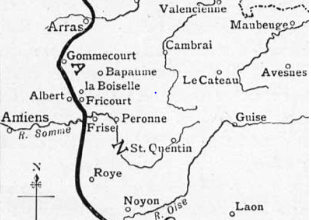
Today’s paper (page 9) does mention that the West Yorks Regiment were involved in an attack on Fricourt and that they “went across toppingly.” Whilst we know that its Commanding Officer, Lieut. Col. Stuart Taylor is not involved (he is recovering from wounds received earlier in May in Princess Alexandra’s Hospital for Officers in London), Capt. Jack Ruttledge is a West Yorks man and may well be in the thick of it.

Lieut. Robert Gibson, whose letter we received only a few days ago, may well now be in action, as the Bedfordshires are also mentioned as taking part in this offensive.

We most earnestly hope that our dear Old Boys all come though unscathed, but meanwhile their parents are condemned to live in continual fear of the post boy with a telegram for the duration of this great battle.

We must all be brave.


July 1st 1916

Lieut. Robert Gibson (2nd Bedfordshire Regiment) is one of a large number of Old Boys to have visited us this term and we are delighted to receive news from him now. (I wondered where my pencil had gone…)

Lt Robert Gibson29/6/16. “It is many weeks ago since I pinched the Skipper’s pencil to write you this letter in the train from Oxford to Paddington. Unfortunately 7 more candidates for the 6 seats got on at Didcot, and writing became impossible. Perhaps it is for the best, as you would hardly be interested in a description of the ‘Reading flower-beds’ or ‘Trafalgar Square on a wet Friday in war time.’

Leave was a very pleasant interlude and preparation for future efforts; for this front is a very noisy one these days and I think the staff fondly hopes it is to become a mobile one. The gunners are having gala days, and the sins of the batteries are visited on the men in the line by the discriminating Teuton.

The men, however, are quite willing to put up with occasional retaliation, provided they can spend most of the day lounging over the parapet watching Fritz’s hearth and home going up in a cloud of smoke and barbed wire. It was not often they have had the opportunity of watching such a drama from the orchestra stalls, and I think they mean to do a lot of stage-work before long.

Raids have been the order of the day for the last six months, with the object of wearing out the enemy and keeping him awake; our regiment did one a short time ago with complete success; all they need is very careful thinking out, no detail should be left to the imagination.

For instance with regard to place, tell a party to get into German trenches between such and such a place clearly marked on the map, show them the place in the actual trenches, and even so they will lose their way in No Man’s Land on the night of the event. If you want to guarantee success you must dig the German trenches involved (by aeroplane photo) on some ground behind, and practise them by night for several days before, and it is the same with all the other details of the raid.

Our fellows knew their job and did it very well. All of which pleases the Staff, annoys the enemy, and keeps Tommy’s tail up. We have got bigger fish to fry now; and I think from the spirit of our own men and the French on our right, that something will be done.

Still, when we have done our best and the Boche his worst, you come back to the old saying of men who fought with their hands at close quarters, not in lead and steel at 1000 yards and more:

Greek

(Ask someone in VIa to correct accents before publication; my Greek alas is slipping from me. I hope the war will be over before I forget the lot).

Best love and luck to all Dragons, militant and expectant.”


In case your Greek is also a little rusty, the snippet above translates as:

‘It lies in the lap of the Gods.’

Indeed it does.


(The reports in today’s edition of the Daily Telegraph (pages 9 & 10) leads one to think that the big “Push” is imminent).


June 28th 1916

A report on the Summer Term at the OPS is long overdue.

A mumps scare put us into quarantine for the first month, but since then all has been well and we have been able to play cricket matches against other schools. The weather was lovely at the beginning, even if it is execrable at present. Some people call cold and rain healthy. It may be so, but it is not pleasant.

* * * * * * *

We have had two grand whole holidays. About 50 boys and girls went in a char-à-banc to Stokenchurch Woods on May 18th – V.C. Day, marking Jack Smyth‘s deeds of valour – and a more delightful day could not have been spent. Others went to Frilford and enjoyed golf with Mr Vassall.

* * * * * * *

I discovered that the school car could be put to a better use and as a result the Ford was sent to Rochdale at the beginning of June and a ‘Scott’ Ambulance body was built on the Ford chassis.

Since then it has been in constant use in taking wounded soldiers to and from the station and various hospitals, and in taking the men for country drives. It accommodates two stretcher cases very comfortably and often has carried six or seven sitting patients.  These patients were refreshed on their short journeys by bunches of grapes, kindly provided by money raised by the boys and their families.

* * * * * * *

We invited over a hundred wounded soldiers to attend our production of ‘The Gondoliers.’ They came limping in, some on sticks, some on crutches. Some in chairs and some on stretchers, but one and all meant to have a good time, and the Dragons in charge saw to it that they had it. What the doctors said the next day about the effects of too many cigarettes and too many other good things does not concern us here.

One thing that confused the soldiers was the fact that the female parts were also being played by boys. In short, nothing would persuade Tommy that black was white, and when he saw 3 or 4 girls, and very pretty ones too, girls they were – and he did not believe for one moment they were boys.

The actors themselves got a little mixed sometimes, and once one of them earnestly assured us that he would make a “dutiful husband, I mean wife.”

This made Tommy think a little, and one of the staff had the great idea of getting the ‘boy-girls’ amongst the wounded, and parting the golden and raven locks to show the unbelievers the unmistakable hairy heads of Dragons beneath.

On the way from the green room, one of the damsels tripped, and what he (she) said, made one soldier remark, “Well, that one’s a boy anyhow!”