November 16th 1914

We have been notified of the death of another very dear Old Dragon.
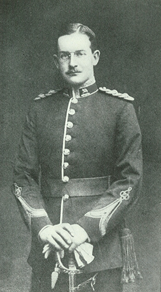
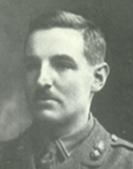
 Roderick Haigh 2

Lieut. Roderick Haigh (Queen’s Royal West Surrey Regiment)

Roderick has been killed; his crusade has come to an end. He was in the last charge of the 22nd Battalion at Klein Zillebeke (also known as Hill 60) near Ypres on the night of the 6th– 7th November, when the Brigade, only 700 strong, attacked and carried the German trenches, capturing three machine guns.

A private in his Regiment witnessed his death:

“We had the order to attack some trenches at dawn. I saw our Adjutant (Lieut. Haigh) cheering the men. We had only advanced a few yards when the enemy saw us and fired ‘Rapid Fire’ at us, and then we charged through a terrible hail of bullets, and got the first line of trenches.

Then Mr Haigh gave the order to advance, which we did, quick; and we took another trench, and then were told to get ready again, and we took the last trench; but when we got into it we found it was a running stream. The Adjutant with myself and 14 others got into this ditch only to find that the Germans were only 10 to 15 yards away, strongly entrenched.

We were firing point-blank range at each other, and all the time the Adjutant was standing up in the trench, head and shoulders showing. I actually stopped firing to look at him and admire him. He was using his revolver with great effect, and kept saying to encourage us, ‘That’s another one I hit.’ Oh, he was a cool man.

The Lance-Corporal went back for reinforcements, but couldn’t return. We kept firing for half-an-hour afterwards; then the brave Adjutant was shot through the temple. He died a noble death. I found myself alone, the only one of the fifteen alive, and I made a dash for it, and never got hit, though I had three bullets in my pack close to my neck.”

One of his tutors when at Corpus Christi writes:

“When the war broke out, he was recalled with his battalion from South Africa, and ordered to the front.  I know that he went fully realising the possibility that lay before him, but counting it the highest honour which can befall a soldier, to be allowed to give his life for his country and his king.  For him, therefore, we must not grieve.  Almost ever since I heard of his death, Shakespeare’s glorious words have been beating in my brain:

    ‘Your son, my lord, has paid a soldier’s debt.’…
    ‘Had he his hurts before?’
    ‘Ay, on the front.’
    ‘Why then, God’s soldier he be!
    Had I as many sons as I have hairs,
    I would not wish them to a fairer death.’

May his memory and example long continue to inspire those who knew him.”

Roderick’s sister was notified of his death on November 11th by way of a telegram from the War Office:

Haigh telegram 2

Lieut CR Haigh Queens Reg’t was killed in action 7 November  no further details – Lord Kitchener expresses his sympathy.

*  *  *  *  *  *
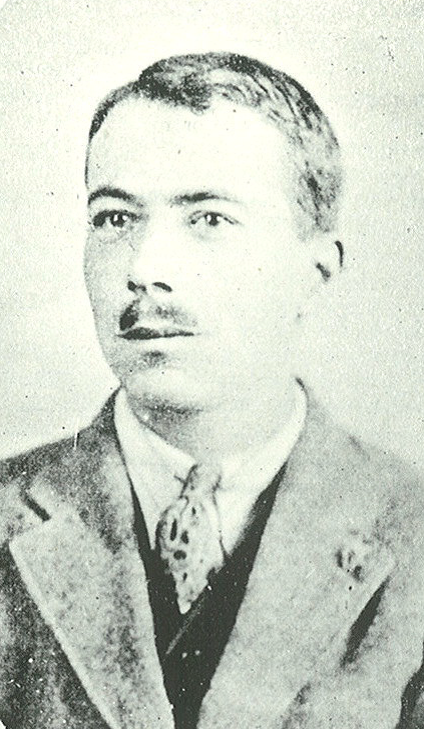
Teffrey ThompsonTreffry Thompson is not only an Old Dragon but a sailing companion. Some of you may have read of our voyages together in the ‘Log of the Blue Dragon.’ He is kindly sending us extracts from the diary he is keeping.

Having been a casualty house surgeon at the Radcliffe Infirmary in Oxford, he joined the RAMC. At present he is attached to the headquarters of XV Brigade with the Royal Horse Artillery (RHA). He writes of the battle which has been going on at Ypres since mid October.

“It might interest you to know what sort of things the Germans fling into Ypres. One of the RAMC men was walking outside a large house on the outskirts of the town, which had been taken over for a hospital, when a large shell burst some distance away, and the flat base only of the shell came back and hit him on the foot. This flat base was 16 inches in diameter and weighed 93 lbs., so that the whole shell probably weighed about 800-900 lbs.

These evidently come from large howitzers a very long distance off, as one never hears the bang of the gun, but suddenly a rushing noise, just like that of a train in a tunnel, ending in a mighty crash, which even 3-400 yards away shakes the ground and trees, and when they fall only 50 yards away, as a couple did this morning, they make the whole house rock.

One great advantage here at present is that the ground is very soft; so that the shell buries itself about 12 feet  (down) before it explodes, so that most of the force is spent hurling large sods and chunks of shell into the air; one can be quite close comparatively without real danger. It is anywhere from 100-150 yards away that one may get hit by the fragments.

November 9th 1914

One of the first Old Dragons to volunteer was George Fletcher, an older brother of Regie, whose death we recently reported.  He is known to some young Old Dragons as a ‘beak’ at Eton. He was summoned to join the Intelligence Corps, as he is a fluent German-speaker. He was last seen departing London for Southampton on a motorbike! He has somehow now found his way into the Royal Welch Fusiliers.

This letter was written by George Fletcher to colleagues on the staff at Eton and has been passed on to us. It describes life in the trenches and his experiences in the battle still being waged at Ypres:

2/11/14. “The rule of existence in trenches is, on the whole, this: – 5.30 a.m., daybreak – nothing much visible in front – except certain groups of grey-clad figures and a few spades appearing and re-appearing above the earth 300 yards away. When the grey figures are moving about I am at a loophole in the trench with field-glasses.

‘No. 15 section! Three hundred yards! At the Germans moving three fingers right of sloping apple tree! Five rounds! Fire!’

Then a shindy, and the grey figures either squat or fall down.

‘Now, you silly asses, don’t waste ammunition when you can’t see them!’ – and so on.

Probably now for the rest of the morning the Germans do not appear again, but they dig and dig, sticking out snipers and Maxim guns in houses or on haystacks, so that they sweep the trenches and plough the brain of anyone who puts his head above the trench  the whole day.

About 7 I go off down the trench to a little hole where the Captain is, and eat anything there is. There is probably some bread and jam or sardines, and very likely some rum. The rations are procured at dusk, when sniping has ceased and the attack is not going on.

Then are seen figures flitting to our rear with great biscuit tins on their backs, or mackintosh sheets full of water bottles. Sometimes, however, these loads never get into the lines, for the store where they are kept has been shelled and the rations wiped out – once, anyhow, for forty-eight hours the men had to exist on what they carried in their pockets. The ration party also bring back our letters, and the reception of letters in the trench was the one thing that kept us alive…

Sniping till evening, then there is a hush; then just after dusk a Maxim rings out and a great fusillade starts from the enemy’s side. There are attacks every night, but there was one particularly big one when, as a wounded German told me, they hoped to take the trenches but failed.

There began on this occasion, soon after dark, a terrible musketry outburst on our right. It rolled along, and soon the enemy began firing from in front of us. There was a continual rattle of pellets on our parapet, and on looking out, or rather, bobbing the head up for a moment, one could see the flashes from their rifles. Then we got the order to answer it, and we did so. All through the night this went on, fiercer and fiercer, and the artillery took it up from both sides, the flash after the exploding shrapnel lighting up the battlefield at intervals. Not only that, but the enemy, who had hidden some bold spirits in rifle pits thirty yards ahead of us, with wire cutters, began by means of these to throw up bright green flashlights to illuminate our trenches – also illuminating themselves for our benefit. All this time I was crawling about among the men and saying, “Don’t fire in the air, you ass. Fire occasionally. Rapid fire. Slow fire,” etc., etc.

At about 2 a.m., the fire slackened, and there were rustlings in the turnips ahead, and callings, and rallyings among the Deutschers.

‘The rally for the charge,’ said I to myself. And it was.

There were hoarse captains crying,

‘Erste Compagnie, hierber! Wurst! Schweinhund! Einhundertzweiundzwanzigstes Regiment!’ and so on.

Then a pause again, and suddenly, ‘Alle Fertig! Vorwarrts! – Los!!’ and they came on. They got as far as the open ground and near our wire, thirty yards away, and then fell face-forward on the ground with heads to the enemy like the good men they are. Of course, it is a terrible thing to attack a strong entrenchment full of thoroughly armed defenders, and they never got nearer than thirty yards.

One poor devil did, however, and I pointed him out to my next man, who shot him. Unfortunately the poor devil had wanted to give himself up – being sick of the war (of course he deserved to be shot for this). We took him into the trench, and he lay till 4 p.m. next day in my dug-out, when he died. Only yesterday did I wipe his blood off my hands – which were a crust of this and of mud!

Well, this attack waned again at dawn, and ‘in the morning they were all dead corpses,’ like Sennacherib. We saw 200 in front of our Company. Add to those the number of dead in the turnips which we did not see, perhaps 200 more = 400. Add to these the number of wounded which must have been removed (six wounded to one dead) = 2,400 + 400 dead = nearly 3,000 out of action in front of our Company, if such calculations are worth anything…

Imagine the conditions: trench just wide enough for two men to squeeze by: parapet just high enough to fire over comfortably, and so necessitates continual crouching while walking along. Perfect quagmire whenever rain falls, as it did in torrents for several hours one or two nights, drenching wet clothes, of course, and covering you with a perfect plaster layer of yellow mud, especially about the hands. Squashed frogs underfoot, and all around stinks. Let me enumerate the (printable) stinks.

Carcases

(a) of cows which were killed in an early morning attack the first day I got there. They came browsing within thirty yards of us, and the Germans fired at them on purpose, as I believe, to leave them there and stink us out.

(b) Of men; after every attack more dead men, some within thirty yards of the trench, and some of these, by now, a week or more old. Of course, whenever we attempt to remove them they fire on the parties, even those bearing the Red Cross, so I believe it is also part of their object to stink us out with the dead bodies of their own brothers and comrades.

(c) Of sheep; same case as the cows.

(d) Tins of old beef, sardines etc.”

November 2nd 1914

We can consider ourselves most fortunate that thus far there has only been one OPS fatality in the frightful conflict in which we are engaged. However, our good fortune has now ended and it is with a heavy heart that I report the deaths of three Old Dragons, all who have given their lives and all on the same day:  Saturday 31st October.

The fighting in the Ypres salient has stretched our forces to the very limits and they have valiantly prevented the Germans from breaking through. Rupert Lee’s regiment, the Worcesters, played a vital role (Rupert was wounded on the 16th and did not take part). Their counter-attack in which they retook the village of Gheluvelt saved the day and may yet prove to be a turning point in the battle.

Regie Fletcher

2nd Lieut RG Fletcher (RFA)

It was at that very moment that Regie Fletcher, who is serving in the RFA, was hit by shellfire as he crossed open ground from his dug-out to his guns. Attempts to save him were to no avail and he died two hours later. His burial was supervised by one of his close friends from Eton, who was nearby.

From the OPS Regie had won a scholarship to Eton (in 1905) and had gone on to Balliol College, Oxford. He rowed in the 1914 Boat Race for Oxford.

He loved to sleep in the open air, and would sleep quite comfortably under several degrees of frost. As in face and colouring, so in his fierce independence of character, he seemed like some old Norse Rover; and it was this same independence that made one of his schoolmasters compare him to Achilles. He was extraordinarily well-read for a man of twenty-two, in the best modern literature. His highest delight was in Greek poetry; he knew enormous stretches of Homer and Aeschylus by heart, and would chant them, to the amazement of his crew, in the Balliol barge.

He was second in command of the Artillery section of the Oxford University OTC (1913-14) and obtained his commission on the day war was declared. He sailed for France on August 20th with the RFA and so only saw just over two months’ service.

*  *  *  *  *  *

Whilst the Worcesters were saving the day, a number of the senior commanders were at nearby Hooge Chateau. General Munro and a number of other staff officers, including Arthur Percival, were conferring with the Divisional Commander, Major-General Lomax when a shell hit their office. Whilst Munro was only concussed, Arthur & six others were killed outright and General Lomax was very seriously wounded.

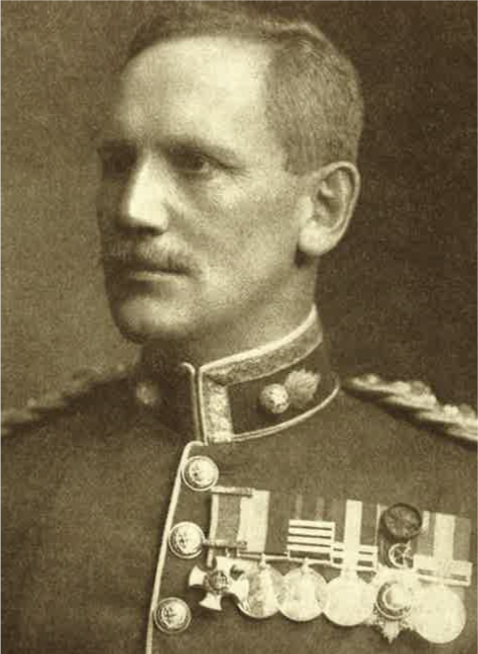
A Percival

Lt. Col Arthur J-B Percival (Northumberland Fusiliers).

Arthur Percival, the son of the Rt Rev John Percival, the late Bishop of Hereford (and previously Headmaster of Clifton College, President of Trinity College, Oxford and Headmaster of Rugby) arrived at the OPS in 1879, only two years after the school was started. He was a resolute and sturdy little fellow, who went his own way regardless of what others might think of him, not afraid to stand up to anyone who tried to bully him, however big his opponent.

From the OPS Arthur went to Marlborough College before transferring to Rugby, when his father became headmaster there.  After Sandhurst he joined the Northumberland Fusiliers. He was present at the Battle of Omdurman in 1898. He also fought in the Boer War and was the first Old Dragon to win a DSO in 1901.  During the first eleven weeks of the current war he was twice mentioned in Sir John French’s dispatches and was one of the first British officers to receive the Croix d’Officier of the Legion of Honour. He has been serving as General Staff Officer to Major-General Munro (2nd Division of the First Army Corps).

*  *  *  *  *  *

 Alan Leggett

2nd Lieut. Alan Leggett (North Staffs Regiment)

South of Ypres, the North Staffs Regiment has been engaged in action near Armentières. Alan Leggett ‘s trench was hit by a shell. A fellow officer and friend, 2nd Lieut. Pope, has written to say “His death, I trust, was almost painless, for he was asleep when he was hit, and he became unconscious almost immediately.”

At the OPS he was always a chivalrous and gallant lad and, after Tonbridge and Sandhurst, Alan followed his father into the Army in 1912.

The day before he was killed, Alan’s name was forwarded hopefully to be mentioned in dispatches. Lieut. Pope’s words should provide some consolation to his parents in this time of grief:

“During our last engagement the Company, belonging to another Regiment which he had reinforced, withdrew, leaving him isolated on the Battalion’s right flank, but he absolutely refused to retire, because by so doing he feared he would expose our flank to the German attack, and so stayed there alone, and undoubtedly saved the part of his Company, if not the whole regiment.”

*  *  *  *  *  *

Missing in Action

Percy Campbell, who has been serving as a 2nd Lieutenant in the 2nd Wiltshire Regiment at Ypres, has been declared “missing.” On October 24th there was such an intensive attack by both artillery and infantry that his battalion was virtually wiped out. Only 170 are accounted for, but it is known that a large number of our troops were captured in the first surprise attack made by the Germans and we fervently hope that Percy is one of them.

October 29th 1914

Whilst the German advances through Belgium and France have now been arrested, attempts to outflank the German forces seem to have failed.   Tyrrell Brooks (Duke of Cornwall’s Light Infantry) does not think we can now hope for a quick victory.

JBBrooks

23/10/14 “We have been in this place for eight days and there is a sort of state of siege – each side digging in – so one hardly ever gets on a horse and consequently they are all eating their heads off. I have three extraordinarily good horses, all of which would make real good hunters.

This war is going to be a very slow one, and a decisive victory seems hard to realise or rather imagine, owing to the length of the line and the various ups and downs which occur in it. There is one thing I am sure of and that is the Germans are as tired and cold as we are, perhaps more so, as I doubt if their Commissariat is as good as ours. The RAMC have done splendid work out here and the removal of the sick has been quickly and splendidly carried out.”

* * * * * * *

Roderick Haigh (Royal West Surrey Regiment) has been wounded in the battle going on at Ypres, although thankfully not badly:

Roderick HaighSt Crispin’s Day (25/10/14). “This has been no St Crispin, but a quiet, peaceful Sunday in Reserve after a week’s very heavy fighting.

On Tuesday last I was wounded by a shrapnel bullet in my thumb. These bullets are about 1/3 to ½ inch in diameter. The bullet was ¾ covered. I at once bit the bullet out, and Capt. Weeding put on my ‘First Field Dressing.’ It is a very slight wound indeed, and is healing up well. I am remaining with my unit, and can even write orders, although, as it is my right hand, I cannot write as fast as usual.

I cannot tell you how much I enjoy it all. There is something so noble and something so grand about the whole show, which places it on a far higher plane than any other scene in which one has acted in this life.”