April 10th 1915

Ronnie Poulton is now in sight of the Front Line, at Romarin, two miles west of Ploegsteert (referred to asArmentieres-North_Sea,_winter_1914-1915 ‘Plug Street’ by Tommy). He is therefore only three miles behind the firing line.

Here are extracts from his journal entries for 8th/9th April:

Thursday 8th April. “About 9.30 p.m. my Company paraded for night digging. We marched to a point about 1,000 yards from the German lines and, as we came over the hill and down the avenue, we heard several stray bullets flying overhead. My Platoon was detailed to complete an all-round defence of a farm in the second line of the defences.

We got back safely about 3.00 a.m.”

Friday 9th April. “We were again paraded for night digging. This time it was to complete a breastwork between two of the actual British fire trenches, about 150 yards from the German lines. When we arrived at our rendezvous, the Engineer officer in charge said he could only take 50 of my 100 men, as the Germans were shelling and firing on the working parties.

We then proceeded down the road towards our object in fear and trembling, as it is covered by a German machine gun. On arrival at the reserve trenches of the firing line, I got my men into a communication trench and awaited orders. There was a lot of firing and shelling going on and finally he decided not to send out a party, which was a considerable relief to us.”

April 7th 1915

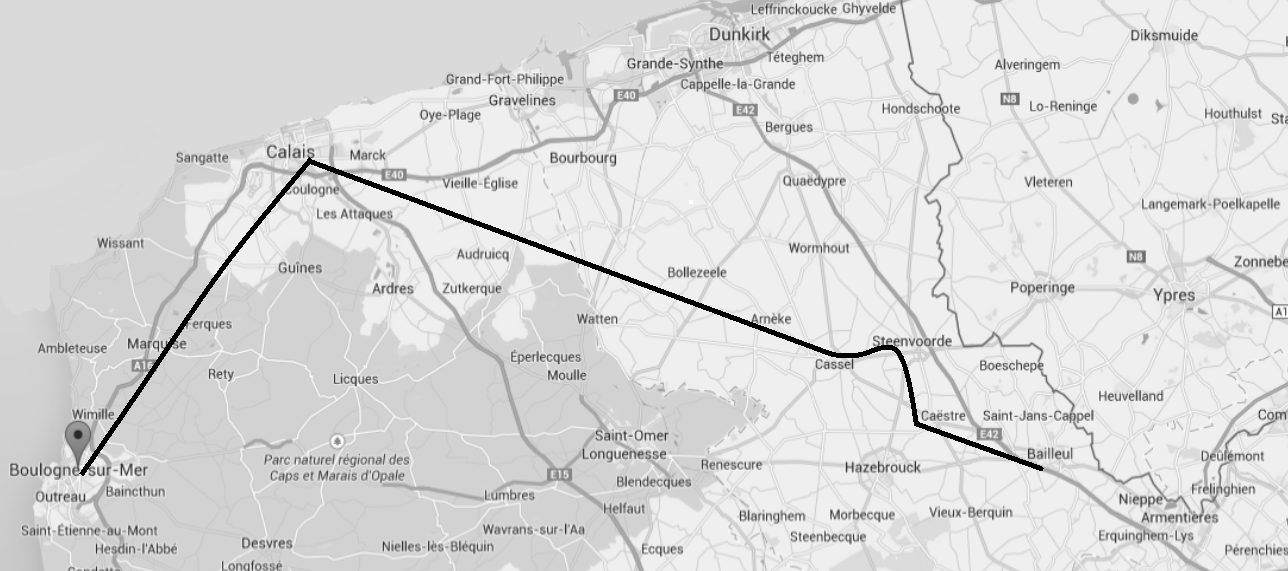
Ronnie Poulton’s Battalion has now moved on to Steenvoorde, the Brigade headquarters, where the troops were inspected by Sir Horace Smith-Dorrien (General i/c British 2nd Army),  who explained that they were to undergo further instruction before going up to the Front.

Ronnie’s journal tells of his other duties too.

RWPP profileSaturday 3rd April. “This day passed quietly with parades in the morning, spoilt by rain. The beautiful weather of the last few days seems to have broken up. We had several interesting talks with French soldiers who have just been relieved from the trenches. They were very cheery, but not very smart.

Franking the men’s letters is a great nuisance, though unavoidably one gets some interesting lights on their characters. The men were paid five francs this day.”

Easter Day was spent at Flêtre.

Monday 5th April. Flêtre. “The people round here in the farms are very much on the make. My French is coming on by leaps and bounds and I am doing my best to stop the fellows getting cheated. The food is very plentiful and good, but mostly tinned and biscuit; so they will buy bread at exorbitant prices.

It is much better fun than at Chelmsford because, though discipline is more strict in lots of ways and the punishments much more severe, the tone can be much more friendly with one’s men and it’s rather humorous to receive compliments unofficially by reading the men’s letters, as we have to censor them; and they are meant because the writers do not give their names and you only know that they come from the Company, but do not know which Platoon.”

From Flêtre, Ronnie has now moved on to Bailleul and it cannot be long now before he reaches the Front.

Boulogne-Bailleul route