December 21st 1914

A number of Old Dragons are serving in the Royal Navy. Earlier this month an action was fought in the Falkland Islands by a British fleet under Vice Admiral Sturdee, who had been dispatched to intercept Admiral Spee’s East Asiatic squadron. The action that ensued is here recounted by an Old Dragon, Lieut. Desmond Stride, who was on HMS Cornwall.
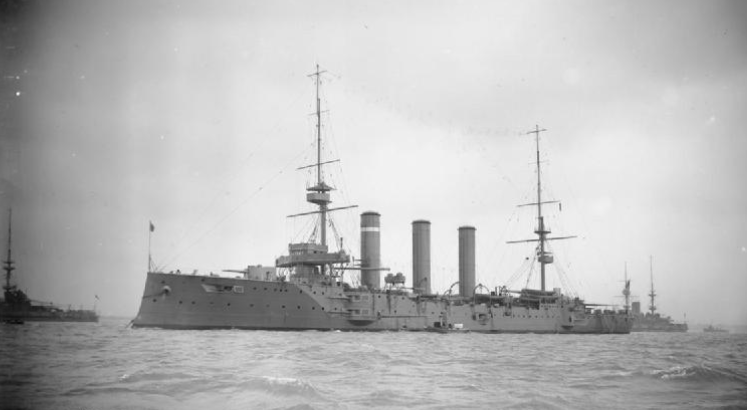
HMS Cornwall

HMS Cornwall

“A flag-lieutenant in his pyjamas hurried off to tell Admiral Sturdee that they had sighted the enemy and he found the Admiral shaving. ‘You had better get into our clothes, and I will finish what I am doing,’ was the calm comment, ‘then we will have breakfast.’”

Thus fortified, the British ships, having now been observed by the German fleet, gave chase. The speed of the British Battle Cruisers proved too much and the Scharnhorst and Gneisenau turned to give battle. Both were sunk. Stride’s ship was responsible for the sinking of the Leipzig and “all the German ships were badly on fire before the end, and according to survivors, the Germans assisted – when all their ammunition was expended – in the sinking of their ships, by opening torpedo tubes etc.”

Stride was in charge of a 6” gun and was in action for about four hours. It was indeed a clear victory. Only one German ship escaped and whilst over 2,000 Germans were killed, there were only ten British casualties. Although HMS Cornwall sustained a number of hits, damage was slight.

“There was only one serious casualty on my ship. When the fight was over I asked my servant how things had gone. The man looked very grave. ‘Well, what is it?’ I asked. ‘It’s my poor canary; he’d dead. All the feathers were blown off, and the cage, for which I paid 2s 9d at Plymouth, is smashed to pieces. It was a beautiful cage, sir.’”

I sympathise with this loss. Desmond no doubt remembers my study, where two parrots, 27 small birds and 5 canaries enliven the atmosphere. A few of the small birds live loose, whilst Joey and Polly fly about the room – and occasionally devour or otherwise destroy papers of value, such as the boys’ poems or exam papers; they also nibble bits with great discrimination out of my best books.

 *  *  *  *  *  *

We have received another extract from the diary of Treffry Thompson (RAMC), who is still attached to the Royal Horse Artillery near Ypres. It is good to hear that he has been enjoying a period of rest and recreation too.
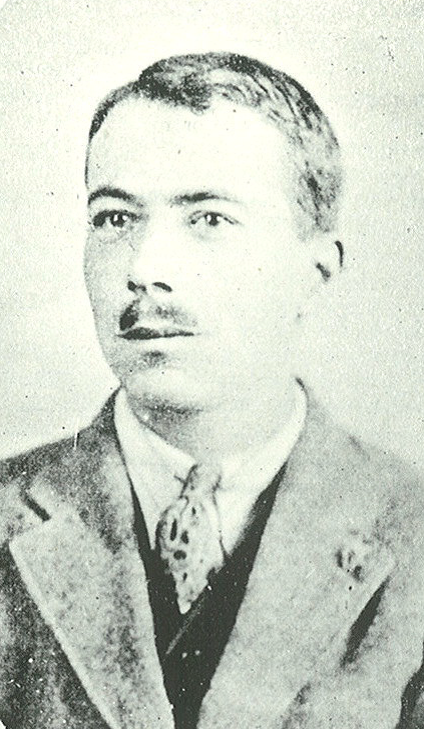
Treffry Thompson

Treffry Thompson

30/11/14. “Resting… A typical day is as follows. I wake lazily at 7.30 when my servant brings me coffee and hot water. Down and walk sedately up to Mess for comfortable breakfast. Smoke a pipe and look at papers. Start off at 9.15 on horseback to do morning rounds. Trot along canal through woods for 1½ miles. Woods very pleasant and many pheasants about. See the sick of C Battery, then go on to K down the road. Chat with officers and then go off for a short gallop across country to Ammunition Column… Trot back to lunch.

After lunch either the General or some of the Staff come and we go off to the woods with two borrowed 12-bores. We then spend the afternoon waking up pheasants in the more open parts of the woods and get, say, six brace. Back to a cosy tea and much chatting. Change, read papers, and write letters. At 7.30 an excellent dinner of pheasant, venison etc. Pipes and more reading and off to bed at 10. And this is War!”

*  *  *  *  *  *

Next term we will be putting on ‘Hamlet.’ During November, the two top forms read though the play in lessons. There was a certain amount of acting, the parts spread amongst the children and they have all been asked to learn passages for prep. Some of the more difficult passages I have explained to them, but the boys soon got the drift of the thing and gradually grasped the various scenes for themselves. I always prefer that they should form their own ideas, even if not quite accurate ones, than I should give them mine. ‘Clarendon Press’ notes, all philological and critical comments are rigidly avoided. I prefer the haphazard to ordered method.

All the parts were allocated before the holidays and by the start of term the boys are expected to know them absolutely pat. There will be three days for rehearsals and the play will be performed on January 16th in the Hall.
November 16th 1914

We have been notified of the death of another very dear Old Dragon.

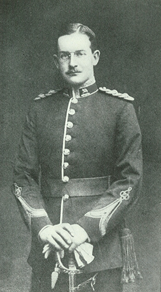
 Roderick Haigh 2

Lieut. Roderick Haigh (Queen’s Royal West Surrey Regiment)

Roderick has been killed; his crusade has come to an end. He was in the last charge of the 22nd Battalion at Klein Zillebeke (also known as Hill 60) near Ypres on the night of the 6th– 7th November, when the Brigade, only 700 strong, attacked and carried the German trenches, capturing three machine guns.

A private in his Regiment witnessed his death:

“We had the order to attack some trenches at dawn. I saw our Adjutant (Lieut. Haigh) cheering the men. We had only advanced a few yards when the enemy saw us and fired ‘Rapid Fire’ at us, and then we charged through a terrible hail of bullets, and got the first line of trenches.

Then Mr Haigh gave the order to advance, which we did, quick; and we took another trench, and then were told to get ready again, and we took the last trench; but when we got into it we found it was a running stream. The Adjutant with myself and 14 others got into this ditch only to find that the Germans were only 10 to 15 yards away, strongly entrenched.

We were firing point-blank range at each other, and all the time the Adjutant was standing up in the trench, head and shoulders showing. I actually stopped firing to look at him and admire him. He was using his revolver with great effect, and kept saying to encourage us, ‘That’s another one I hit.’ Oh, he was a cool man.

The Lance-Corporal went back for reinforcements, but couldn’t return. We kept firing for half-an-hour afterwards; then the brave Adjutant was shot through the temple. He died a noble death. I found myself alone, the only one of the fifteen alive, and I made a dash for it, and never got hit, though I had three bullets in my pack close to my neck.”

One of his tutors when at Corpus Christi writes:

“When the war broke out, he was recalled with his battalion from South Africa, and ordered to the front.  I know that he went fully realising the possibility that lay before him, but counting it the highest honour which can befall a soldier, to be allowed to give his life for his country and his king.  For him, therefore, we must not grieve.  Almost ever since I heard of his death, Shakespeare’s glorious words have been beating in my brain:

    ‘Your son, my lord, has paid a soldier’s debt.’…
    ‘Had he his hurts before?’
    ‘Ay, on the front.’
    ‘Why then, God’s soldier he be!
    Had I as many sons as I have hairs,
    I would not wish them to a fairer death.’

May his memory and example long continue to inspire those who knew him.”

Roderick’s sister was notified of his death on November 11th by way of a telegram from the War Office:

Haigh telegram 2

Lieut CR Haigh Queens Reg’t was killed in action 7 November  no further details – Lord Kitchener expresses his sympathy.

*  *  *  *  *  *

Teffrey ThompsonTreffry Thompson is not only an Old Dragon but a sailing companion. Some of you may have read of our voyages together in the ‘Log of the Blue Dragon.’ He is kindly sending us extracts from the diary he is keeping.

Having been a casualty house surgeon at the Radcliffe Infirmary in Oxford, he joined the RAMC. At present he is attached to the headquarters of XV Brigade with the Royal Horse Artillery (RHA). He writes of the battle which has been going on at Ypres since mid October.

“It might interest you to know what sort of things the Germans fling into Ypres. One of the RAMC men was walking outside a large house on the outskirts of the town, which had been taken over for a hospital, when a large shell burst some distance away, and the flat base only of the shell came back and hit him on the foot. This flat base was 16 inches in diameter and weighed 93 lbs., so that the whole shell probably weighed about 800-900 lbs.

These evidently come from large howitzers a very long distance off, as one never hears the bang of the gun, but suddenly a rushing noise, just like that of a train in a tunnel, ending in a mighty crash, which even 3-400 yards away shakes the ground and trees, and when they fall only 50 yards away, as a couple did this morning, they make the whole house rock.

One great advantage here at present is that the ground is very soft; so that the shell buries itself about 12 feet  (down) before it explodes, so that most of the force is spent hurling large sods and chunks of shell into the air; one can be quite close comparatively without real danger. It is anywhere from 100-150 yards away that one may get hit by the fragments.