September 30th 1916

We have another letter from Lieut. Hugh Sidgwick (RGA), who is keeping us in touch with events on the Somme. I am delighted to hear that he has received his copy of our magazine, even if I have every intention of overlooking his protest:

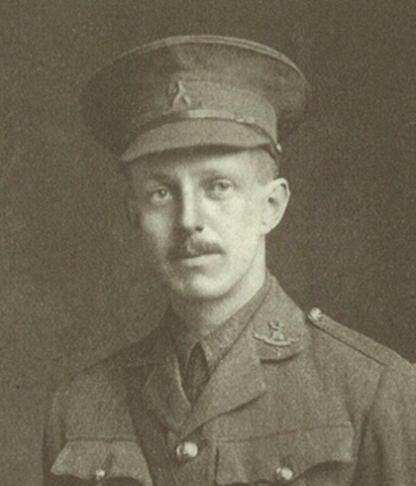
sidgwick-ah-2“The ‘Draconian’ has arrived and I have been devouring it in a hole beneath the earth, to the accompaniment of heavy howitzers and field guns.

But I must write at once to protest against the publicity given to my private and amateur attempt to translate Roger Mott’s inscription…  I have always hated and frequently insulted archaeologists and now they have got a handle against me.

If, as I expect, about six of them write to the next number of the ‘Draconian’, cutting off my head and holding it up afterwards to show that there are no brains in it, for Heaven’s sake either suppress the letters or bribe some really eminent archaeologist to say that my translation is right.” 

Since his last letter, Hugh has been sent back to the headquarters in order to attend a course that will equip him for the role of Adjutant.

20/9/16. “Headquarters are a number of dug-outs and tents in a sea of mud: the Adjutant is a cross between a bottle-washer and a private secretary and there are more and worse telephones than ever. So for all practical purposes I am back in Whitehall and any sympathy expended on me as surrounded by the horrors of war will be quite wasted. I feel an awful backslider in leaving my battery, but orders is orders…

What I find most difficult to realise is that since I came out I have been in the middle of a big battle. It is quite a shock to read the ‘Times’ and find names mentioned as critical and exciting points, when I have been there on the previous day.

There is a casual air about a modern battlefield, until the show actually starts – people walking about, horses standing in lines, men cooking food, and telephonists brooding over their instruments at tapping in stations.”


September 18th 1916

2nd Lieut. Sydney Carline (RFC, 19th Squadron) was shot down and wounded at the end of August over the Somme battlefield, on a bombing expedition against a railway cutting some 20 miles behind the front line.  His brother, George Carline, visited him in hospital and has extracted the following details:

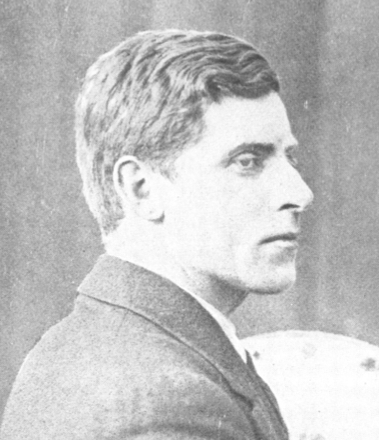
George Carline

“After Sydney had dropped his bombs and was returning, it appears he got separated from the rest of his squadron and was attacked by four German machines. These machines had been flying at about 15,000 ft on the look-out for any separated machine to tackle. It is one of their methods to fly high and dive at a great speed on an enemy machine, firing their machine gun as soon as they are within range until they catch it up, when they turn to one side and continue their dive to their aerodrome and safety.

My brother was apparently unconscious of any enemy machines about, until he heard the firing of the gun behind him. He says that owing to the noise of the engine it is impossible to hear anything except a gun at close range or the explosions of anti-aircraft shells.

The first German machine damaged his engine slightly and wounded him in the leg. He says there were eight holes in the petrol tank, and other shots hit the back of the seat he was sitting on.  With his damaged engine he had to put his nose down to keep up speed and consequently could not bring his gun into play. His machine was a single-seated scout, with a Vickers gun timed off the engine to fire through the propeller, and to aim the gun the whole machine had to be directed towards the object, as the gun is a fixed one.

Not being able to turn and fly upwards at the German machines and so use the gun, he had to continue his course and keep turning about trying to escape the Germans or at least make their firing harmless, and at the same time firing a Lewis gun fitted behind him. But this gun, he says, is very difficult to aim with success and fly a machine at the same time.

One after another of these machines dived on to him firing their guns, and after he had dropped about 5,000 ft., the Germans made off home, and he was able to get over the lines again at about 5,000 ft. up. Crossing again by the Somme, ‘Archie’ left him alone, anywhere else he would have made a good target at that height.

His leg was numbed by the wound, so that it did not pain him, and by using his heel on the rudder instead of his toe, he was able to manage his machine all right and get back to the aerodrome. The petrol pouring from his tank was very useful, he said, as it kept his leg cool and he was able to drive his engine off his spare tank.”

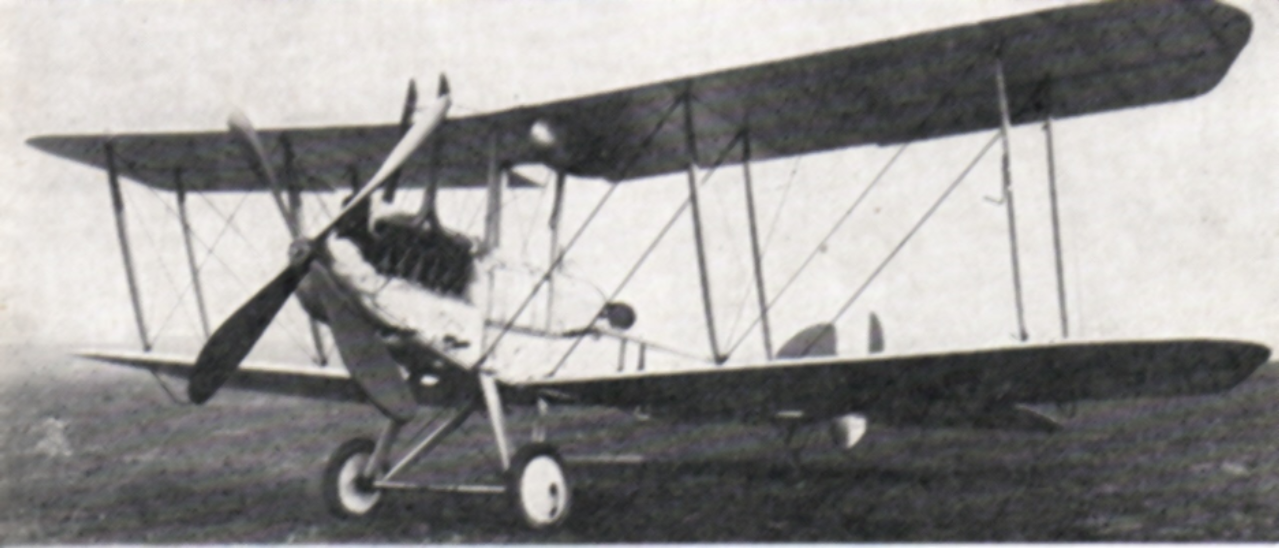
b-e-12-carline

A B.E 12 aircraft of the type flown by the 19th Squadron.

Sydney has told George that he is spending his sick leave in helping with an invention connected with flying.

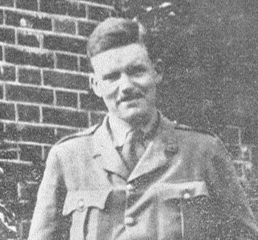
Sydney Carline

Before the war Sydney was a budding artist, following in the footsteps of his father George Carline. In 1911, W. Davis of Turl Street commissioned him to complete six charming etchings of Oxford.

On the outbreak of war he became a dispatch rider before joining the RFC.

August 30th 1916

CH Counsell

Further information has been received on the death of  Lieut. Christopher Counsell on July 6th.

A fellow officer in the Hants Regiment, 2nd Lieut. Churcher, has confirmed that Chris was providing a covering party for a working party when he was hit in the head, and possibly in both hands, by machine gun fire. He never regained consciousness and died in transit from 89 Field Ambulance to 29 Casualty Clearing Station.

Oxford has converted a number of buildings to receive and treat the wounded and by chance a wounded sergeant in Chris’s company was brought to the Oxford Hospital at the new Schools. He said that Chris was always ready and eager to go out at night on any wild entertainment towards the Hun lines, and he was evidently greatly impressed with his Lieutenant’s daring.

Christopher’s father, Dr H.E. Counsell (whose practice is at 37 Broad Street) is in charge of Surgical 5 in the North School.

* * * * * * *

The Esson family have suffered another bereavement: Mr William Esson passed away in Abingdon aged 78 on August 25th. (Mrs Esson predeceased him, having died in 1893).

His poor daughter Margaret lost her brother Capt. William Esson on April 27th 1916 on HMS Russell; her husband, Capt. Edmund Gay has been missing in action since August 12th 1915 and now her father has died, all in the space of just over a year.

August 26th 1916


Benham, Frank

Captain Frank Benham (RFA)

Frank has died in Queen Alexandra’s Hospital, Millbank, London.

He received wounds to the right side of the head, the neck and shoulder on August 5th. He was able to write three short communications to his wife on arrival at the No. 2 Stationary Hospital at Abbeville on the 8th and it was thought that he was being transferred to England on August 11th.

There was considerable confusion as to his whereabouts, until he sent a telegram to his wife saying he had arrived in Southampton on August 20th. The following day he was transferred to Queen Alexandra’s.

He had in fact spent the week following the 11th at the No.2 General Hospital at Havre, it having been decided that he was too exhausted to continue to England. On the 14th he suffered a minor haemorrhage from the neck wound. It stopped quite quickly, although the cause of it remained unexplained.

On August 22nd, Frank suffered another haemorrhage and underwent an unsuccessful operation to save him.

His wife was at his side when he died.

August 13th 1916

Edmund GayCaptain Edmund Gay (Norfolk Regiment) was declared missing a year ago.

The Daily Telegraph reported about ten days ago that our Government understands that there are only nineteen officers and 359 other ranks known still to be in Turkish hands as Prisoners of War.

With regards the 290 officers (amongst whom Edmund is numbered) and 9,700 other ranks still missing, they feel that there are no longer any grounds for hoping they might be prisoners,

“and therefore it was consequently decided that the missing officers and men not accounted for must be officially accepted as dead. Effect is being given to this decision after due consideration of the circumstances of each individual case.”

There has still been no official confirmation of his death given to the family however, and until such time we will continue to list him as “missing.”

* * * * * * *

Benham, FrankCaptain Frank Benham (RFA) was wounded by a German shell hitting his dug-out on August 5th. At the time he was in charge of a battery at Mametz Wood on the Somme.

On August 8th he was strong enough to be able to write to inform his wife of his situation and the matron on his ward has also written to say she hopes he will be strong enough to return to England shortly.


August 10th 1916

Paddy Burton‘s father, who writes under the pseudonym of ‘Touchstone’ for the Daily Mail, has sent us this poem for the forthcoming edition of the ‘Draconian,’ to be printed alongside the notice of his son’s death.

How well it captures the pain all parents must feel when receiving such heart-breaking news as the death of a beloved son.

Burton P (2b)

Deeply regret to inform you that Capt HPC Burton 1st Bedford Reg’t was killed in action July 27. The Army Council expresses their sympathy.

A SCRAP OF PAPER
A scrap of paper! “Killed in action,” so
Die all the dreams of happier days to be!
And yet, thank God, you were the first to go
When England called for Men to keep her free.
Thank God for that pure, manly heart and true
That kept your face for ever towards the light
That lit the only path you ever knew
And made you victor still in death’s despite.

Not all our sighs, not all our selfish tears,
Can call you back, but you whose clear young eyes
Looked on the promise of the coming years,
You never grudged the final sacrifice.
Is it not written that your latest breath
Bade him who brought you succour not to stay
But to pass onward through that land of death,
To lead your well-loved soldiers in the fray?

A scrap of paper? Nay, a sacred scroll,
A great and glorious treaty, signed and sealed
In your heart’s blood, wherein our England’s soul
For those who shall come after, stands revealed.
So thank we God who in his mercy gave
His own dear son to death upon the tree,
For all who follow him who died to save
And win the deathless crown of victory!
                                       Touchstone

August 5th 1916


Paddy Burton

Captain Paddy Burton (4th Bedfordshires)

Alongside the notification of the death of Robert Gibson, The Times yesterday also listed the death of Paddy Burton.

On July 27th, Paddy led an attack on Longueval by the 1st Bedfordshires (to whom he had been attached since May 1915). This was a success, but there were isolated pockets of resistance. He and another officer discussed how they could dislodge the Germans from a house, where a machine-gun was sweeping over the British position. Paddy decided on an attack with hand grenades, during which he fell wounded in the leg.

Company Sgt Major Afford went to his assistance, dressing his wound before attempting to carry him to a place of safety. However, before Afford could move him, Paddy received a second and fatal wound, caused by a bullet having come through the lip of the shell hole and penetrating the lower part of his head.

Afford reported that Paddy “…remained conscious for a few hours, during which time I stayed with him and comforted him. His last words were to me, requesting me to carry on with the task he had so nobly set out to do…

At day-break I supervised his body being laid to rest close by the spot where he met his end.”

The day before he was killed, Paddy Burton had reconnoitred the approaches to the village of Longueval together with another officer, who recalled:

“It was a very trying job, as our guide lost himself and we sent him back. We were under incessant shell-fire and we knew that a great part of the ground was exposed to snipers, and we had to find out absolutely everything for ourselves. I don’t think I could have done it without Paddy… He must have been at least as tired and depressed as I was, but he wouldn’t allow it to show.”

Paddy was one of those boys who make life ceaselessly interesting to a schoolmaster. It may be said that he was a strange compound of liberal and conservative, but what characterized him most was his independence of judgement and his pluck.

He was to have been married during his next leave.

July 29th 1916


DW Brown

Capt. David Westcott Brown (Leicestershire Regiment)

It has now been confirmed that David was killed in the fighting for Bazentin le Petit on July 14th. Although his body has not been found, a Sergeant reported seeing it.

Like many, David realised in the spring that the summer months ahead would see the launching of a new offensive. Foreseeing the high number of casualties amongst officers, he felt the need to prepare himself – and his family. He wrote to his cousin Lillian in May:

“…. I am writing like this because summer is here, and I don’t think our present peacefulness can go on much longer. People at home are beginning to wonder what they pay us for; and I think Death must come to many of us, if not to most (I am talking of officers now) before very long: and, if it does come to me, I don’t want you to feel it as a shock, and I don’t want you or anyone to grieve.

You know it is rather an honour to die now, to die for all that we hold precious, for our country, to die that we may live, and to die with so many better men.

I don’t want to die. I want to live and tell how I was in the War, how I was a fighter in it, not merely a server; but, if I do get killed, I want you and everyone to know that I knew of the possibility, that I was ready for it, and facing it, and not shirking and dodging the thought of it. It seems to me that for a man who is, if not ready or willing to die, at least aware of the presence of death, and looking it in the face not caring or wondering what lies beyond, Death has lost its power. When you cease to fear Death you have conquered it, and Death has become only a gate, no harder to pass through than the door of a room.

Am I just being morbid? I hope not; because I feel somewhat that should the worst happen it may help Mother and Dad to know that I was not caught by surprise, not realising what I was in for…”

David also wrote a poem around this time, when still behind the lines:

Two Voices
“The roads are all torn” ; “but the sun’s in the sky,”
“The houses are waste” ; “but the day is all fair,”
“There’s death in the air” ; “and the larks are on high,”
“Though we die – ” ; “it is spring-time, what do we care?”
“The gardens are rank” ; “but the grass is still green,”
“The orchards are shot-torn” ; “there’s a bloom on the trees,”
“There’s war all around” ; “yet is nature serene,”
“There’s danger” ; “we’ll bear it, fanned by the breeze.”
“Some are wounded” ; “they rest, and their glory is known,”
“Some are killed” ; “there’s peace for them under the sod,”
“Men’s homes are in peril” ; “their souls are their own,”
“The bullets are near us” ; “not nearer than God.”

David was a cousin of Percy Campbell (one of the first OPS casualties) and the godfather of a current young Dragon, Per Mallalieu.

He won a scholarship to Marlborough and then went to Balliol to read ‘Greats’, when war broke out and he joined up.

July 27th 1916

Whilst we have learnt much from the newspapers about the ‘Big Push’ on the Somme, it is not the same as hearing from someone in the thick of things. Capt. Leslie Grundy (late of York & Lancaster Regiment, now serving with 90th Machine Gun Company) has found the time to provide us with a first-hand account of the events of July 1st.

He was involved in the attack on Montauban at the southern end of the battlefield. (Here the preliminary bombardment was clearly more effective than further north and casualties considerably fewer).
grundy-glo“We had done all the practising for the last fortnight and were now waiting in the assembly trenches. For us, these consisted of a few small trenches cut in a hollow between two woods about 700 yards behind our front line. We had arrived in these trenches late the night before, and had passed a very cold night indeed. Consequently we were all awake when dawn broke.

The guns had been keeping up a pretty heavy bombardment throughout the night, increasing in intensity every minute. The fringe of the wood behind us (curiously enough called ‘Oxford Copse’) was lined with 18-pounders, who were firing over our heads. As they were only 150 yards away, the noise was deafening.

Although we had not been given the time for ‘Zero,’ we judged it was near enough for us to issue the rum, so an issue of two jars among 150 men was made at 5 o’clock. We got word from Brigade Headquarters that Zero was to be at 7.30.

About this time a heavy ground mist appeared and for some time it looked as if the attack would have to be postponed. As it was near to 7.30 the Company Commander and I went over to a small piece of rising ground that was in front of us to watch the first wave go over the top. Over it went at 7.30 exactly, and as far as we could see there was only one casualty and it did not sound as if there was very much hostile rifle fire…

At 8.30 I went forward with my servant, and the two other sections followed 50 yards behind, interval 100 yards, but owing to the weight of our loads we fell behind our appointed place and found ourselves mixed up with some engineers. This ground was made up later on, while waiting for our artillery to lift.

When about 100 yards off our original front line, we saw that the enemy was putting up a barrage in No-man’s-land and a lot of our infantry were knocked out going through. When we got right up to this barrage we made a dash and, as far as I could make out, lost very few men. One of the section officers, however, was wounded rather badly in the back.

We found the Boche wire, when we got up to it, had been blown to pieces by our artillery fire and the trenches themselves had suffered so terribly that it was difficult to tell in what direction they ran. I had my first rest here; it was a hot day, and the packs were beginning to tell on us.

As it looked as if the Boches were shortening their range, we thought it best not to make too long a stay at this spot and therefore pushed on as far as the Glatz Redoubt. In a few minutes No. 2 section came up; so far they had only lost three men.

At this point a party of about 30 Boche prisoners were marched past; all of them apparently in great fear of their lives! They had all, seemingly, been very much shaken by our bombardment, and in the trench we were occupying there were many of them lying badly wounded. After a few minutes we mounted our guns and opened fire on the Boches to the left of Montauban, as the Brigade there did not seem to have attained its objective.

All this time our heavy artillery had been keeping up an intense bombardment on Montauban, and we could see our infantry waiting in the open in long line, ready to go in when the artillery fire lifted. Later there seemed to be some slackening of the fire and our troops immediately went forward. The whole thing was done as if on parade. They went over at a steady walk, keeping their dressing all the time. As far as we could see, there was no hostile rifle fire from Montauban at all and, as yet, no shell fire was falling on them.

I then decided that this would be the time to get our machine-guns into Montauban, so we went forward…

The whole place was literally blown to pieces, and it was with great difficulty we discovered where the roads had been. However, somehow or other, we managed to get both sections to A. Keep, where we found some men already busily consolidating. We had only been there a few minutes when a Boche machine-gun started traversing the village…

Just before dusk there seemed to be a small attack, but it was easily dispersed by rifle and machine-gun fire. All that night we fired at all small parties of Boches who could be plainly seen, and as it grew light we heard the sound of bombs exploding and found the Boches were bombing Montauban Alley from the other end.

About 7 o’clock the bursting bombs seemed to be very close to one another and… about 30 of our men jumped out of the trench and started to retire towards us in Montauban. Immediately on seeing this, the Boches jumped out of their trenches and started firing on them. We turned two machine-guns on the Boches and wiped the party completely out, but not before they had accounted for all our men.

The wounded in our trench were coming into the dug-out at an alarming rate and soon it became evident that the only people holding the keep were the machine gunners, and we had only two men per gun. As the bombing attack seemed to be developing, the Company Commander sent a message back for an artillery barrage. In a short space of time our shells started to come over, bursting in the valley in front of Montauban…

After this, the attack seemed to fizzle out. Several Boche snipers however, had managed to get into position in the diagonal trench leading from Montauban Alley to Montauban. They managed to cover all the exits from C Keep and they got a number of our walking wounded, who were trying to get back.

The shelling was fairly heavy throughout the day, but there were no more infantry attacks…”

That evening Leslie and his men were relieved and here at least undoubted success was achieved.


July 20th 1916

DW Brown 2The length of the lists of those who have become casualties in the newspaper this morning is truly horrifying, and now we have heard that Capt. David Brown (Leics Regiment) has been reported as “wounded and missing” since July 14th.

His father understands that David went out with a sergeant to reconnoitre prior to an attack. The sergeant was subsequently found dead but there was no sign of David.

Further information is awaited.

* * * * * * *

One of the hardest hit regiments on July 1st was the Leeds Pals Battalion (West Yorks). Their commanding officer, Lieut. Col. Stuart Taylor, was not with them as he is recovering from wounds he received in an earlier encounter with the enemy in May.

He has written from the Queen Alexandra’s Hospital in London to the Yorkshire Evening Post:

Stuart Taylor 2“I mourn the loss of tried comrades and dear friends with whom I have been closely associated day and night, in sunshine and storm, for the past fourteen months. But with my sorrow is mingled an immense pride, a great gladness, as I hear from all sources of the magnificent bearing and heroic conduct of our dear lads, who have cheerfully given their lives for their King and country.

The tidings of their gallant conduct and courageous deeds causes me no surprise, as I well knew how splendidly they would stand the test when the supreme call was made upon them.

To those who are left behind to mourn their loss, may God grant consolation in the sure knowledge of their dear ones’ valiant deaths. For the wounded I pray earnestly for a speedy return to health and strength.

For myself, my only wish is that I had been able to be with the battalion in their great and glorious attack.”

On July 1st, 233 of his men lost their lives. In addition, 15 of his 24 officers were killed (and the rest were wounded).