November 16th 1915

Mikado 10.1915

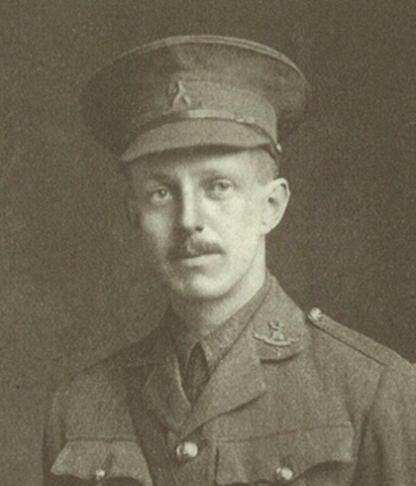
The school’s  recent performances of Gilbert & Sullivan’s ‘The Mikado’, could not go by without noting the pain we still feel at the loss of the two members of staff who have died in the War, Leslie Eastwood and Tom Higginson. Higgy it was who first brought G & S to the OPS stage.

How appropriate that we were joined in the audience by a number of wounded soldiers, who were most appreciative. As one of our reviewers said,

“How can one care to do anything so much as for these dear men who have gone out, simply, with a sort of bright eagerness and cheeriness, to lay down their lives and who, having nearly lost them, having seen death and hell and having suffered every torment and hardness, return with the same brightness and cheeriness in this dark world of loss and anxiety?”

The Friday audiences were cheered by many young soldiers, all longing to be out of the OTC and at the Front, and the mother of the School’s own VC, just home from seeing him in Egypt, and by some Dragons home from the Front in France, Russia and the Dardanelles.

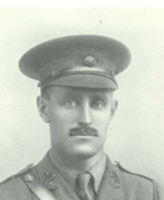
2nd Lieut. Jack Gamlen (Ox & Bucks Light Infantry) attended the one of these performances.

“It was delightful to find this performance awaiting one as a treat after a cold and wet October in camp. We, too, when under canvas, had tried to warm ourselves by singing songs from the G & S operas.

Our greatest success was to rouse our Colonel in his pyjamas at 11 pm, by beating the big drum as an accompaniment to the Duke of Plaza-Toro’s  first song, and to be sent to bed. There were five of us, including a College Dean, two solicitors and a real wounded warrior from the Indian Army…”

When Jack came down from Balliol (to which he had won an exhibition from Rugby School) he trained as a solicitor and was practising here in Oxford in the firm of Morrell, Peel & Gamlen, when the war broke out. Much of his military training has been done locally and he likely to be sent to the Front before long.

September 2nd 1915

Edmund Gay

In yesterday’s edition of The Times, under the heading “Missing” is the name of Lieut. Edmund Gay (5th Norfolk Regiment).

He has been serving in Gallipoli and was involved in a battle for Tekke Tepe on August 12th. Edmund is one of some 250 men involved in this attack who are unaccounted for as at present.

This is a most worrying situation for his family and it must remain our hope that he has in fact been captured.

His wife Margaret is the sister of Major William Esson, also an Old Boy of the OPS, who is currently serving with the RMLI on HMS Russell.


June 15th 1915

JBS Haldane

Lieut. JBS Haldane (Black Watch)

If anyone could be said to be enjoying the war, it is Jack Haldane. For him, life in the trenches is apparently “an enjoyable experience.”

Having joined the Black Watch, he has discovered the joys of bomb-throwing. His detachment have been allowed to roam along the line, firing off trench mortars and experimental devices at will. Such visits are not always popular with those around them at the time, as Charlie Childe, now a lieutenant in the Gloucestershire Regiment, told me.

“These trench mortar people are a little tribe of pariahs, who stalk up and down other people’s trenches, drink their whiskey, and make themselves quite pleasant. Meanwhile their satellites stealthily fire the beastly things, knock in some Hun dug-outs, put out a few of their cook-houses (you can see the smoke coming out of their trenches here and there), and thoroughly annoy the Hun over his lunch – a most ungentlemanly thing to do. Fritz then urgently telephones to his gunners, and the creators of all the fuss have meanwhile gone away somewhere else.”

Jack’s previous experiences helping his father, John Scott Haldane, understand the dangers of gases in mines, have turned out to be of particular help to our war effort.

When on April 22nd 1915, the Germans released a gas attack allied troops at Ypres, it was not surprising that Lord Kitchener should turn to the good Dr. for advice. JS Haldane went straight over to France to investigate the situation personally, returning with the lung of one of the dead to investigate in the laboratory at his home, ‘Cherwell’. It was imperative to confirm the exact nature of the gas and develop an effective respirator as soon as possible. Here, aided by a long-standing family friend, Aldous Huxley, taking notes for him, he carried out numerous tests on the effects of chlorine gas on himself and other volunteers.

Last month JS Haldane was back in France, where he set up a laboratory in St Omer. Jack was summoned from his bombing duties to assist him. The Professor could think of no-one better than his son to have in his gas chamber, reporting on the effects of the gas he was inhaling.

“We had to compare the effects on ourselves of various quantities, with and without respirators. It stung the eyes and produced a tendency to gasp and cough when breathed. For this reason trained physiologists had to be employed.”

But why did it have to be him in the gas chamber? Jack continued:

“An ordinary soldier would probably restrain his tendency to gasp, cough and throw himself about if he were working a machine-gun in battle, but could not do so in a laboratory experiment with nothing to take his mind off his own feelings. An experienced physiologist has more self-control.

It was also necessary to see if one could run or work hard in the respirators, so we had a wheel of some kind to turn by hand in the gas chamber, not to mention doing 50 yard sprints in respirators outside. As each of us got sufficiently affected by gas to render his lungs duly irritable, another would take his place. None of us was much the worse for the gas, or in any real danger, as we knew where to stop, but some had to go to bed for a few days, and I was very short of breath and incapable of running for a month or so.”

Jack, on learning that his troops were about to go into an attack, returned to the trenches. Here he suffered wounds from shell fire and found himself being given a lift by the Prince of Wales to the Casualty Clearing Station. “Oh, it’s you.” The Prince is reputed to have said. They had met in Oxford before the war, where one of the Prince’s tutors was another OPS Old Boy– Lionel Smith.

Jack’s wounds were “blighty” ones and he is now back here in Oxford at ‘Cherwell’, recovering from an operation to remove a shell splinter.

The sounds of our old colleague Blair Watson, firing off blanks from his revolver on the school fields for the boys benefit, were resoundingly defeated by Jack exploding German bombs along the road at Cherwell.  He is clearly on the mend!

Indeed, together with his sister (Naomi) he is now going to set this term’s General Paper, to be undertaken shortly by our 5th and 6th forms.

May 30th 1915

A second Memorial Service for the life of Ronnie Poulton was held in St Giles’ Church, Oxford, yesterday, which I attended with some of the OPS staff and boys.

Rev. William Temple gave an excellent address in which he emphasised the role Ronnie might have played at Huntley & Palmer (which he had inherited in 1913) and in a wider field of industrial relations after the war.

“Many of us believed that with his ready sympathy, his utter freedom from selfishness, and his courage to follow what he saw to be right, he would grasp the causes of our labour unrest and class friction, and by removing them from the great industry in whose control a large part was to be his, set an example which would prove a great force in our social regeneration… What he hated most in our usual manner of life was the artificial barriers that hold people apart, and the suspiciousness of one class towards another…”

Further to Ronnie’s “ready sympathy, his utter freedom from selfishness and his courage to follow what he saw to be right,” he added,

“There are many of us who, if asked to point to a life without blemish, would have pointed to Ronald Poulton.”

* * * * * *

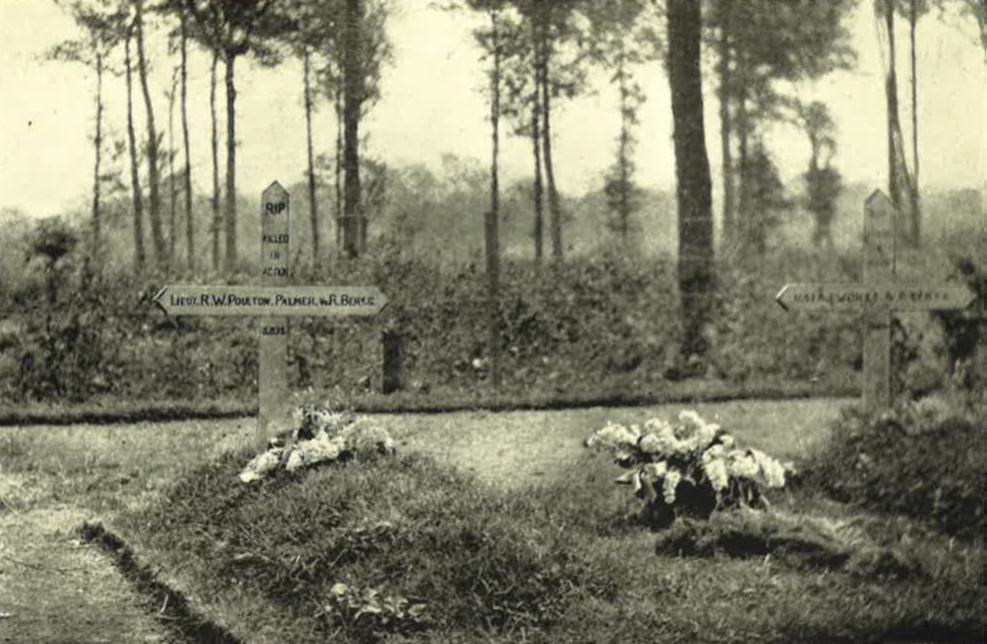
We are grateful to Lieut. G.M. Gathorne-Hardy, who recently sent this picture of Ronnie’s grave to his parents.

RWPP grave

May 10th 1915

RWPP Oxford3

Ronnie Poulton

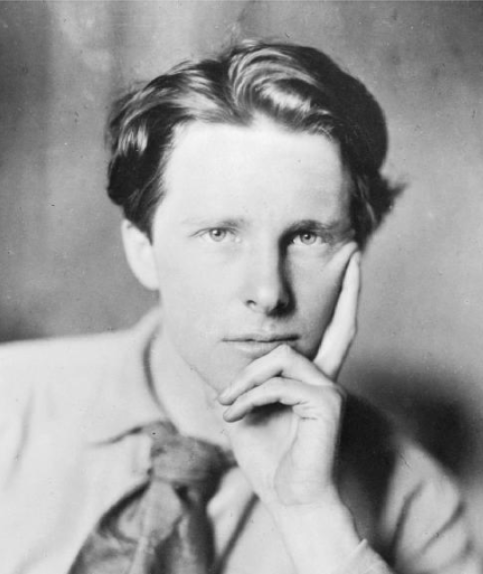
Rupert Brooke

Rupert Brooke


Yesterday, a service was held at Rugby School in memory of the lives of two of their old boys, Ronnie Poulton and Rupert Brooke (who died on April 23rd on his way to Gallipoli).

Rupert Brooke played alongside Ronnie in the Rugby School 1st XV in 1905, when Ronnie was aged sixteen.

Of Ronnie the Headmaster said, “We have given of our best. If we were asked to describe what highest kind of manhood Rugby helps to make, I think we should have him in mind as we spoke of it.

God had endowed him with a rare combination of graces and given him an influence among men such as very few in one generation can possess. What had we not hoped would come of it!”

* * * * * *

Rupert Brooke’s poem ‘The Soldier,’ which was quoted in the Times Literary Supplement in March and also used in the Easter Day service at St Paul’s, is due to be published shortly by our own Frank Sidgwick, under the title of ‘1914 and Other Poems.’

In 1911 Brooke wrote to Frank, who had four years previously set up his company Sidgwick & Jackson, asking him to publish his first volume, ‘Poems of 1911’, which he duly did. The agreement was signed at Brooke’s home, The Old Vicarage at Granchester, witnessed by a guest, Virginia Stephen.

Frank’s good taste and judgement regarding authors are not to be doubted, given that he has also published ‘The Log of the Blue Dragon II in Orkney & Shetland’ (1909-1910) and more recently, ‘To Norway & The North Cape in Blue Dragon II’ for me.

I remember these cruises with great affection, and all the more so at present as many of my old boys now corresponding with me from the various fronts of the war, joined the ‘Blue Dragon‘ as crew on these great adventures.

Blue Dragon

The ‘Blue Dragon’


May 8th 1915


Ronnie Poulton

Lieut. Ronald Poulton Palmer (Royal Berks Regiment)

We have received further details from Jack Conybeare of dear Ronnie’s death, which occurred on the night of May 4th/5th.

Jack Conybeare

5/5/15. “I have just heard that poor Ronald is dead. He was shot through the heart, in the early hours of this morning, and was killed instantaneously. This is the first real shock I have had since we have been out here. There always are a certain number of bullets flying about, but they never seem to hit anyone one knows, and in consequence, I, at any rate, had half forgotten that a friend might at any moment be killed. This is rather a rude awakening.

I last saw Ronald about ten days ago, when he came to see me in the trenches, as his company were taking over from us. It seems, indeed, hard lines, that a stray bullet should light on one who had both the power and the inclination to do so much good in the world…

I was talking to one of the Berks’ officers this morning. He told me that Ronald was far and away the most popular officer in the battalion, both among officers and men.

Apparently he was standing on top of the parapet last night, directing a working party, when he was hit. Of course, by day, anyone who shows his head above the parapet is courting disaster; in fact if one is caught doing so one is threatened with court-martial. At night, on the other hand, we perpetually have working parties of one kind or another out, either wiring, repairing the parapet, or doing something which involves coming from under cover, and one simply takes the risk of stray bullets.”

Captain Jack Conybeare (Oxford & Bucks Light Infantry) was at both the OPS and Rugby with Ronnie.

May 4th 1915

A number of Old Dragons are involved in the battle that has been going on in the Ypres area since April 22nd. Donald Innes enlisted immediately at the start of the war as a despatch rider in the Motor Cycle Corps:

Donald Innes

Sgt. D. Innes

May 1st 1915. “On one of my rides I came across Treffry Thompson OD at Hazebrouk; he seemed very fit. Since Ypres is at present the centre of interest, perhaps a short account of it would not be amiss… 

One’s first view of the Cathedral reminds one of Magdalen tower; and the cloisters attached are very like those there also. The town has been smashed up more or less in zones, just short of and just beyond the Cathedral: where the shells fell short or overshot it. I was there the night before the attack on Hill 60, and then the Cloth Hall did not seem so very badly damaged, but of course I don’t know what this other bombardment has done.

The inhabitants seem to take things very philosophically, and one got a limited but quite excellent dinner there in a more or less patched up café. Where the shops are absolutely smashed, the owners sell their goods in the street outside.

With regard to the actual fighting, one sees very little of it and it is just a matter of chance if one happens to be there at the time, the trenches acting as a kind of touch-line inside which we play; so I will leave the description of that to ODs who are in the thick of it. 

I saw a little of Neuve Chapelle, and for an infantry man a modern attack can only be described as ‘Hell let loose.’ I thanked God I was a Despatch Rider. Our troubles are rather neatly put by one of the D.Rs in what he called the D.R’s prayer:-

From holes, shells, and motor ‘bus

Good Lord deliver us.”

 * * * * * * *

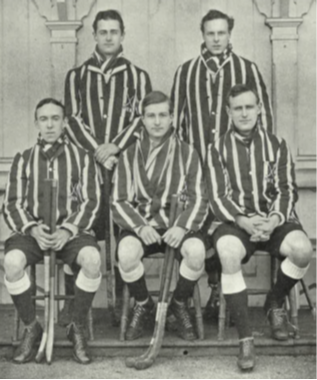
Donald Innes was one of the five Old Dragons to win Oxford hockey blues in 1911. All five of them are now in the Army.

1911 Hockey Blues

Standing: Donald Innes (Sgt. Motor Cycle Corps) and Patrick Duff (2nd Lieut. RFA in Gallipoli)

Sitting: John Brooks (2nd Lieut. Indian Army), Sholto Marcon (2nd Lieut. OBLI), Ronnie Poulton (Lieut. Royal Berks).


April 30th 1915

We have further news from Ronnie Poulton. No sooner are troops out of the trenches than they are put to hard work. It does seem right to call it “Rest.”

Saturday 24th April. “We came out after four days in last night, and immediately went off digging, after ¼ hour’s RWPP profilerest.

The whole thing as a war is an absolute farce. This is honest fact. We went up to part of the line near here, which has a gap of 200 yards in it. Here Territorial Engineers are building a magnificent breastwork and parados and Territorials supply working parties. The joke is we are 120 yards from the German trench and about 80 from the German working parties. And we make a hell of a row, laugh, talk, light pipes etc and sing and nobody fires a shot, except one old sniper who seems to fire high on purpose; and yet when the flares go up, we stand stock-still so as not to be seen!!”

The period of so-called rest being over, Ronnie Poulton returned to do another spell in the trenches on April 27th, but he was only there for a day before going back into reserve for three days.

Having told us that snipers were not a thing to worry about at night, I cannot help but feel they should not be underestimated. Snipers are an ever present threat, clearly:

Thursday 29th April. “It is quite absurd to see the quite immovable landscape, with no movement of any kind on it and yet to hear the most accurate shots on our parapet, shots which have killed two men dead in the last two days, who foolishly put their heads up carelessly in a low part of the parapet to look back. Don’t worry about me in this respect.”

This is easier said than done. Parents, family, schoolmasters on the touch line of any rugger match – we  are always more nervous than the players, who are wrapped up in the game.

* * * * * *

Readers of the Times yesterday will have seen the letter written by our neighbour Dr. JS Haldane to Lord Kitchener, in which he confirms that the gas used by the Germans on our troops at Ypres last week was almost certainly chlorine or bromine.

Having witnessed a post mortem at a Casualty Clearing Station at the Front, he has returned with one of the man’s lungs for further examination in his laboratory at his home, ‘Cherwell.’ He is now involved in experiments to find an effective respirator for the troops. Apparently, so his daughter Naomi tells us, the ideas given in the press for various home-made appliances are totally ineffective.

As for Dr Haldane’s son Jack, who was the first of my boys to win the top scholarship to Eton, he is now Lieut. JBS Haldane of the Black Watch, improvising bombs to lob into enemy lines, so I am told.

April 24th 1915

Ronnie Poulton has completed his recent spell in the front line and we can share another entry from his journal.

During this past tour of duty Ronnie was in charge of all repairs and improvements to the section of trenches for which his company was responsible. Platoon Commanders had to report to him by 3 p.m. daily with their suggestions. His day was then spent planning the next night’s work.

RWPP profileWednesday 21st April: “The work is the most important thing, as I am in charge of it, and my time is filled up with it – by day getting the work organised for the night. This has got better and better, and now I have a good system. Of course it is nearly all done at night. It is curious, at ‘stand to’, at about 8 p.m. to hear the sniping dying down, and then suddenly the ‘tap tap’ of the German party starting. Then we know we are safe, as there is a kind of mutual agreement not to fire on each other’s working and ration parties. So out we go and hardly a shot is fired.

The men betray the usual good humour at it all and are in perfect spirits, only betraying annoyance at the absence of biscuits, and the presence of biscuits (not Huntley and Palmers’!)

They have grown quite callous and you hear them whistling and shouting while working on the parapet, in the full moonlight. We did a good deal of work in our four days. My plan was to superintend till 12.00 or 12.30, then at times I was on duty at 4.00 a.m. or 8.00 a.m., so sleep was a bit short at the end. The sniper was active and we haven’t got him yet…”

There is a continual risk of being hit by a sniper’s bullet and much time and effort goes into trying to locate the position of German snipers.

“Sniping is all that goes on and in this at present they have an absolute superiority. We have constructed steel-plate loopholes but cannot find the brutes. When we do, we shall have them, as we have some wonderful shots. They got one of our men in the throat last night, but it is not a bad wound. The trouble is to locate the snipers. We reconnoitred to where we thought he was last night, but he wasn’t there…”

We trust that Ronnie will keep his head down.