May 25th 1915

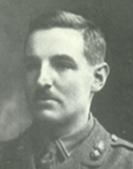
We have further news from Lieut. Jack Smyth (15th Sikhs), who has been in the thick of it at Ypres. It is remarkable to hear that he is the only officer in his regiment to have come through the war unscathed.

23/5/15. “We are in some support trenches now behind the firing line and I am writing this in a ruined farm, behind Jack Smythwhich we have made our headquarters; there are only six of us left and 190 men, so we don’t take up much room… 

We had the most extraordinary luck as a regiment up till the end of April, as, although we had had several officers wounded, we had not one killed, but during the last three weeks we have had six hit and out of these five were killed, which is real bad luck. Losing five officers makes an awful gap in a small community like ours, where we all mess together…

We struck the German 41 cm gun at Ypres for the first time. It makes a noise going through the air like an express train going through a station, and if it pitches anywhere within half-a-mile, you feel the end of the world has come. The situation there was perfectly extraordinary, as we were holding what they called the horse-shoe to protect Ypres (for sentimental reasons more than anything else) and so were shelled from all sides. It was a most extraordinary sight at night from our trench, as the German flares came from every side. We have just been in a very nasty bit of trench which was captured from the Huns, and we and the Huns were in the same trench with a barrier of earth in between. Most unpleasant!

A Corporal of the Shires made a grand remark the other day when the regiment was ordered to attack, ‘Now then No 3 Company, fall in for the thinning out parade.’

I am now the only one in the regiment who has been right through the show without being either wounded or invalided sick; the Quartermaster, who was the only other one, went down with measles last week!

We had dreadful bad luck with the weather last week, as the Huns did seem to be on the run, but then down came the rain and the ground became a swamp again and stopped the whole thing. I got out of my depth in a trench three days ago and had to swim!

I was most awfully sorry to hear of Ronnie Poulton’s death…

Well I must end up now, the best of luck to the OPS.”


May 23rd 1915

Who would have thought that childhood games of “forts” at the OPS would take on such significance in this time of  war? Treffry Thompson (RAMC) and his colleagues have been struggling considerably with the building of dug-outs – sometimes with disastrous results:

18/5/15. “Cold and foggy, which prevented any shelling. Went on improving trenches. Rain continued and ground Teffrey Thompsonvery wet. In afternoon started building sumptuous H.Q. dug-out with great beams for roof with magnificent table and fine brocaded chairs out of neighbouring chateau. My experience at OPS in fort-building in the School hedge was of untold value.

Just before dark, Capt O was in his dug-out and saw a bit of entrance beginning to fall in. He started to walk out, shouting ‘Hi! Who’s walking on the roof?’ It was supported by a large iron bedstead, which collapsed and broke his neck. I was at the other end of our bit of the trench seeing the sick men, and of course he was quite dead when I reached him.

Had hardly got back to our dug-out when they asked me to go and see a subaltern who had apparently gone mad. I found L, who was one of the few who had come safely through the bombardment on the 13th and he was completely off his head from the shock of hearing of O’s death, on top of the previous strain. Gave him some morphia and got him quiet and put him in a dug-out.

No sooner back in our own dug-out than I was told there was a man with a broken leg buried in another dug-out. Went along and we got him out of the mud, and getting hold of some pieces of wood, fixed up his leg.

After this series of collapsing dug-outs, we turned everybody out of any dug-out that wasn’t absolutely sound. After much agitation over telephone, we managed to get the injured and sick away to an ambulance, but this was no joke as it was pitch-dark and the ground quite sodden. Of course the Germans must needs start shelling the Halte, just as we were getting the men into the ambulance on the road. However nothing happened.”

May 15th 1915

Lieut. Treffry Thompson (RAMC) is currently attached to the 18th Hussars as their Medical Officer and can vouch for all the horrors currently being Teffrey Thompsonendured by our troops at Ypres.

May 13th 1915. “Marched in evening north of Ypres across Canal to Bryke, then guided by guides who didn’t know the way, through much barbed wire to Wieltje.

We stopped on road near trenches. Enemy’s flares very active. Somebody told us it would be just as well to get into the ditch as a machine gun covered the road. We did so and the machine gun started at once.

When it had finished, we took over trenches on each side of the road. We were disgusted at the rotten condition of the trenches, but we discovered the reason next day: it was very wet and mushy and we started to repair trenches, but found remains of Frenchmen in the mud, and couldn’t go any deeper. We got one dug-out built before dawn and the trenches repaired a bit. Started to go to sleep at dawn, but inferno of shell-fire started and lasted from 3.45 a.m. to 5 p.m.

At the very beginning the telephone dug-out was blown in, removing our luncheon basket and my box of cigars. Three very frightened telephonists suddenly tried to get into our dug-out.

The shelling was appalling. For hours on end the whole place rocked, and afterwards we heard that the trenches had been invisible owing to dust and smoke. Dozens of wounded began to come in to our part of the trench where ‘C’ squadron were. The Major went along to ‘A’ squadron and there was wounded and then killed.

‘A’ squadron retired, with their trenches blown in, across the open to some alleged trenches further back. These they could not find and had to advance again across the open to their blown-in trenches. There was a complete gap of 40 yards blown in and covered by a machine gun on the right of ‘C’ squadron, which made it impossible to get along to see anybody.

I had the dug-out and a portion of protected trench filled with wounded and when they got so thick that we couldn’t turn round, told them they had better take their chance and go. I pointed out the position where there was less shell-fire in the direction of Bryke and at the end of day heard that 100 had got through all right.

After about four hours, the German fire occasionally slackened and we expected an attack, but could only see a few Germans looking over their trenches. The shelling, chiefly groups of 4-6 exploding ‘crumps,’ continued to blow in our trenches, and about mid-day the Captain decided that we should move to the left where there was less shelling. He did not go, but some of us moved across the road to a support trench filled with East Lancs…

Starting down a communication trench I suddenly found myself on my hands at the other end, as a ‘crump’ seems to have gone off just behind me. I got across the road, but the man behind was caught by the machine gun through the chest, but we carried him down to the support trench, where I did him up and it took two grains of morphia to quieten him…

During all this shelling we could actually see the ‘crumps’ before they hit the ground. They looked just like pointed cricket balls, and really stand about 2.9 high and are 8.2 in diameter.

Towards evening, the shelling died down and I tried to find our dressing-station. Couldn’t find any trace, but heard that the Cavalry had been wiped out. Wandered back to chateau west of Ypres, got some more dressings, heard that remnant of the regiment had gone up again under one of the Captains, so bolted after them on a bike. Raining hard; wandered half the night trying to find them. Went back to chateau and slept. Three officers, practically untouched through this awful day, as a result of the nervous strain of the shelling, had the jumps so badly that they had to be sent sick.”


May 4th 1915

A number of Old Dragons are involved in the battle that has been going on in the Ypres area since April 22nd. Donald Innes enlisted immediately at the start of the war as a despatch rider in the Motor Cycle Corps:

Donald Innes

Sgt. D. Innes

May 1st 1915. “On one of my rides I came across Treffry Thompson OD at Hazebrouk; he seemed very fit. Since Ypres is at present the centre of interest, perhaps a short account of it would not be amiss… 

One’s first view of the Cathedral reminds one of Magdalen tower; and the cloisters attached are very like those there also. The town has been smashed up more or less in zones, just short of and just beyond the Cathedral: where the shells fell short or overshot it. I was there the night before the attack on Hill 60, and then the Cloth Hall did not seem so very badly damaged, but of course I don’t know what this other bombardment has done.

The inhabitants seem to take things very philosophically, and one got a limited but quite excellent dinner there in a more or less patched up café. Where the shops are absolutely smashed, the owners sell their goods in the street outside.

With regard to the actual fighting, one sees very little of it and it is just a matter of chance if one happens to be there at the time, the trenches acting as a kind of touch-line inside which we play; so I will leave the description of that to ODs who are in the thick of it. 

I saw a little of Neuve Chapelle, and for an infantry man a modern attack can only be described as ‘Hell let loose.’ I thanked God I was a Despatch Rider. Our troubles are rather neatly put by one of the D.Rs in what he called the D.R’s prayer:-

From holes, shells, and motor ‘bus

Good Lord deliver us.”

 * * * * * * *

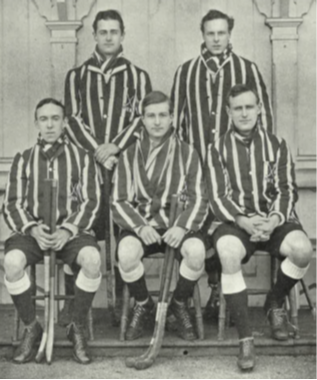
Donald Innes was one of the five Old Dragons to win Oxford hockey blues in 1911. All five of them are now in the Army.

1911 Hockey Blues

Standing: Donald Innes (Sgt. Motor Cycle Corps) and Patrick Duff (2nd Lieut. RFA in Gallipoli)

Sitting: John Brooks (2nd Lieut. Indian Army), Sholto Marcon (2nd Lieut. OBLI), Ronnie Poulton (Lieut. Royal Berks).


March 29th 1915

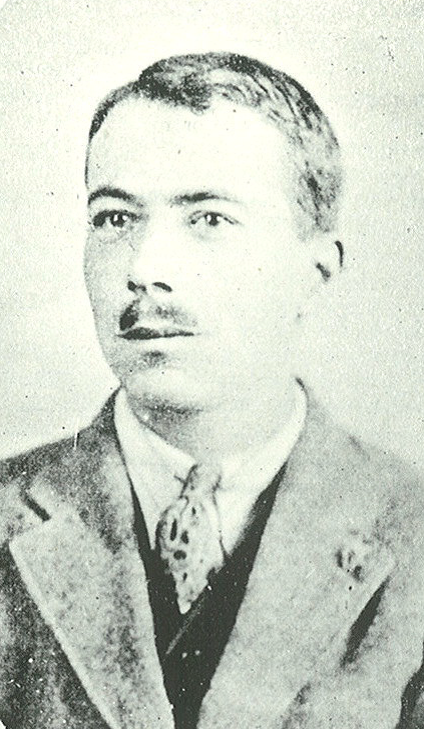
Further to Nevile West’s news (see March 22nd), we have now heard from Jack Smyth (Lieut., 15th Sikhs) that he was also involved in the Battle at Neuve Chapelle.

Jack Smyth

Lieut. J. Smyth (15th Sikhs)

24/3/15. “We have just returned from Neuve Chapelle (the name has been mentioned so much in the papers lately that I don’t think the censor can object to my putting it in here). I left my A.D.C. job as we were transferred to another Brigade and I have been with the regiment since the 8th.

We did seven days in the captured German trenches, and they were about the best we have ever been in; they had been in them about three months and had made them very strong and comfortable and had done themselves pretty well too as the empty wine bottles and cigar boxes showed.

They must have lost very heavily indeed, as there were rows of dead bodies in front of our trench from when they made a counter attack to try and get the place back and came under the fire of our machine-guns.

It was a relief having the trenches a good way apart, so that we could have patrols out at night and sleep comparatively comfortably, instead of the jumpy nights when the trenches are 50 and 80 yards apart, as we have been having lately.

The first night we were there one of our (Indian) scouts jumped on to one of their scouts and sat on his head and yelled for help and he was brought in; he tried to make out that our people had stolen his pipe from his pack, but as tobacco is pollution to our people he was deemed a liar by everybody present.

We brought in three of their wounded, who must have been out there for five or six days. They seem very callous about that sort of thing and never made an effort to bring them in, although they were nearer their trenches than ours more than a good deal.

They bombarded us fairly hard with artillery every day but without much result. On the evening of the 12th we were reduced to 5 officers: the C.O., three Company Commanders and myself, the other Company being commanded by a Native Officer. But our Adjutant has come out and several others and we now have got 14.

The men are very fit and very bucked about the whole show, which is about the biggest knock the Germans have had up this way.”


February 22nd 1915

Only ten years ago, Jack Smyth, aged 12, was recovering from a serious illness. For two years he had blown up like a balloon, whilst getting weaker and weaker. His recovery was almost as sudden as its onset. His nurse, thinking he was dying, decided to offer him whatever he would like to eat and for some reason he chose a steak. Although this surely cannot have been the only reason, it proved a turning point and by the Easter Term 1905 he was able to return to school.

After Repton and Sandhurst, Jack, who did not have the private means to consider a British regiment, joined the Indian Army. The bill for his kit, when he spent a year with the Green Howards in 1912, was beyond what he and his mother could afford, so I and a number of others stepped in to help.

Now he is with the 15th Sikhs, involved in the continuing trench warfare. We received two letters from him last week, dated the 11th and 15th February:

Jack Smyth

Lieut. Jack Smyth

15.2.15. “I am writing this in a German trench and am too filthy and muddy and disreputable for words. As I expect you saw in the papers the Indian Corps captured a German position the other day, and here we are holding on to it for all we are worth. It is more interesting here in a place where the Germans have been for about four months; the place is quite dry, a captured pump tells us the reason why; they did themselves pretty well as all the dug-outs are littered with old bottles of champagne etc., and photos of the Kaiser, and letters and food, etc. Our men rather fancy the German boots and I have one of their haversacks.

There are about 100 of their dead lying just outside my trench where they were discovered creeping up to try and recapture the place and were promptly laid out by a machine gun. 

I haven’t taken off my boots for five days and am a sight for the gods.”

Clearly, his kit is still a matter of concern for Jack!

His earlier letter tells a remarkable tale of good luck enjoyed by a friend of his.

“About five years ago, an old mullah in India gave him a silver charm, which he said would bring him luck and also save his life. He went home on leave the other day and was promptly married (I suppose that was the luck) and yesterday, from a good position behind a big tree, he was having a good look  at the German trenches, when a bullet came through the tree (not bullet proof) and hit the bottom button of his coat, smashing it to bits and winding him, but never penetrated his body. The charm, which he always wore and which was underneath his shirt, was squashed flat, but beyond a very sore tummy, he is none the worse and is now fairly convinced that he will see this show through all right.” 


January 4th 1915

This is the third letter we have received from Tyrrell Brooks (Capt. Duke of Cornwall’s Light Infantry) – see September 28th & October 29th for his previous ones. With some nine years’ experience in the Army, he has got to know “Tommy” pretty well.

“Dear Skipper,JBBrooks

A strange mixture of sentiment and pathos is Private Thomas Atkins. A splendid grouser when in clover, when really up against it he faces with equanimity the longest of days and most trying trench work.

In letter writing he uses the most pious and well rounded phrases which would delight the soul of a cleric and give him hope, and afterwards you will hear the same hero expressing to his friends his grievances in language that even a bargee would resent.

The glamour of the battlefield of the last century is conspicuous by its absence in this. The bayoneting of the German is not a daily occurrence, but when the chance comes it is taken and afterwards affords pleasurable thought and scope for writing home – as after all there is little to write about when you live in a trench for four days at a time, having shrapnel for breakfast, high explosive for lunch, and rifle fire when you should be having your evening glass of ale in the canteen.

Perhaps the great thing which buoys up T.A during the weary days in the trenches is “castle building.” By this I mean highly exaggerated thoughts of home, his best girl (they all have them) and of the time and reflected glory, consequent on the defeat of the enemy, that will be his when he gets there. And if he is wounded – well somebody else will take his place and he will become a ‘ERO.

His sense of humour allows us to name the various kind of shells he is daily in contact with. They are “Little Willies,” “Dirty Dicks,” “Black Marias,” and “Jack Johnstons,” according to their size.

Here is a good and true story. Just after Ypres, a troop train full of enthusiasts pulled up opposite a hospital one in a siding. Those in the troop train were longing to perform deeds of valour and longing for blood. Those in the hospital train had already shed much in the lowlands of Flanders. Those in the troop train were hanging out of the windows and trucks joking with each other. Suddenly the hospital train started slowly forward and a troop train enthusiast shouted out “Are we downhearted?” and the chorus answered “No” – but again he shouted “Are we downhearted?” and again the chorus bellowed “No.” This was more than a figure in the hospital train, swathed in bandages, could stand. Propping himself up he retorted “Ain’t you? Well you bloody soon will be!” which said, he returned to a prone position.

Remember Pte Thomas Atkins and the great work he is doing under conditions which are difficult, to put it very mildly, and wish him a speedy return to realize the “castles” that he built in the trenches.”

 *  *  *  *  *  *

Jack Smyth played Juliet in the 1906 production of Romeo and Juliet here at the OPS to good reviews and if this did not necessarily suggest a military future for him, the following year he played a very youthful Macduff in Macbeth and, as the reviewer noted,  “looked a sort of Sir Galahad in his armour, but he showed plenty of fire when his opportunity came in the final scenes.”

Coincidentally, now a 21 year old Lieutenant in the 15th Sikhs, he writes in a similar vein about the splendid British Tommy:Jack Smyth

“The British Tommy is simply magnificent… One in a regiment close to us the other day came up very pale, and saluted, and asked if he could go to the rear. ‘Whatever for?’ said his officer. ‘Well sir, I’ve been ‘it three times’ he said.

Before we came under fire for the first time I asked a sergeant who had been at Mons what it was like. ‘Perfect ‘ell, sir,’ he replied, and he wasn’t far wrong.”

December 21st 1914

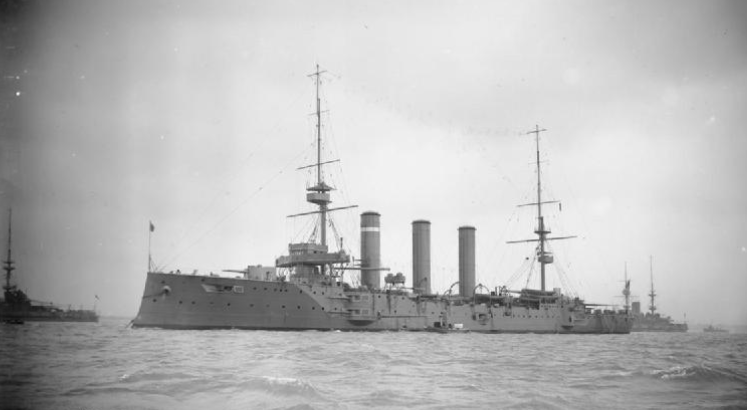
A number of Old Dragons are serving in the Royal Navy. Earlier this month an action was fought in the Falkland Islands by a British fleet under Vice Admiral Sturdee, who had been dispatched to intercept Admiral Spee’s East Asiatic squadron. The action that ensued is here recounted by an Old Dragon, Lieut. Desmond Stride, who was on HMS Cornwall.

HMS Cornwall

HMS Cornwall

“A flag-lieutenant in his pyjamas hurried off to tell Admiral Sturdee that they had sighted the enemy and he found the Admiral shaving. ‘You had better get into our clothes, and I will finish what I am doing,’ was the calm comment, ‘then we will have breakfast.’”

Thus fortified, the British ships, having now been observed by the German fleet, gave chase. The speed of the British Battle Cruisers proved too much and the Scharnhorst and Gneisenau turned to give battle. Both were sunk. Stride’s ship was responsible for the sinking of the Leipzig and “all the German ships were badly on fire before the end, and according to survivors, the Germans assisted – when all their ammunition was expended – in the sinking of their ships, by opening torpedo tubes etc.”

Stride was in charge of a 6” gun and was in action for about four hours. It was indeed a clear victory. Only one German ship escaped and whilst over 2,000 Germans were killed, there were only ten British casualties. Although HMS Cornwall sustained a number of hits, damage was slight.

“There was only one serious casualty on my ship. When the fight was over I asked my servant how things had gone. The man looked very grave. ‘Well, what is it?’ I asked. ‘It’s my poor canary; he’d dead. All the feathers were blown off, and the cage, for which I paid 2s 9d at Plymouth, is smashed to pieces. It was a beautiful cage, sir.’”

I sympathise with this loss. Desmond no doubt remembers my study, where two parrots, 27 small birds and 5 canaries enliven the atmosphere. A few of the small birds live loose, whilst Joey and Polly fly about the room – and occasionally devour or otherwise destroy papers of value, such as the boys’ poems or exam papers; they also nibble bits with great discrimination out of my best books.

 *  *  *  *  *  *

We have received another extract from the diary of Treffry Thompson (RAMC), who is still attached to the Royal Horse Artillery near Ypres. It is good to hear that he has been enjoying a period of rest and recreation too.

Treffry Thompson

Treffry Thompson

30/11/14. “Resting… A typical day is as follows. I wake lazily at 7.30 when my servant brings me coffee and hot water. Down and walk sedately up to Mess for comfortable breakfast. Smoke a pipe and look at papers. Start off at 9.15 on horseback to do morning rounds. Trot along canal through woods for 1½ miles. Woods very pleasant and many pheasants about. See the sick of C Battery, then go on to K down the road. Chat with officers and then go off for a short gallop across country to Ammunition Column… Trot back to lunch.

After lunch either the General or some of the Staff come and we go off to the woods with two borrowed 12-bores. We then spend the afternoon waking up pheasants in the more open parts of the woods and get, say, six brace. Back to a cosy tea and much chatting. Change, read papers, and write letters. At 7.30 an excellent dinner of pheasant, venison etc. Pipes and more reading and off to bed at 10. And this is War!”

*  *  *  *  *  *

Next term we will be putting on ‘Hamlet.’ During November, the two top forms read though the play in lessons. There was a certain amount of acting, the parts spread amongst the children and they have all been asked to learn passages for prep. Some of the more difficult passages I have explained to them, but the boys soon got the drift of the thing and gradually grasped the various scenes for themselves. I always prefer that they should form their own ideas, even if not quite accurate ones, than I should give them mine. ‘Clarendon Press’ notes, all philological and critical comments are rigidly avoided. I prefer the haphazard to ordered method.

All the parts were allocated before the holidays and by the start of term the boys are expected to know them absolutely pat. There will be three days for rehearsals and the play will be performed on January 16th in the Hall.

November 23rd 1914

The arrival of winter weather has put an end, at least for the time being, to the fighting at Ypres. Both sides have suffered most horribly and there have been times when British troops have risked their lives to help the enemy wounded. George Fletcher (Royal Welch Fusiliers) describes an incident in which he was involved.

George Fletcher

“We were fortunate in being able to rescue one wretched man. He was one of the advanced party in the charge, and had seven bullets in him. He stopped for a day in front of us shouting, but we were getting such a peppering from snipers all that day that we were not allowed to fetch him. At night I got two volunteers to come and fetch him, and just as we were getting out such a hail of bullets came that we nipped back.

I kept up a conversation (shouted) with him next day – he told me the Germans had been practically up to him in the night, but had refused to help him. I told him to hang on till night, and we would try and rescue him again. So at dusk I got two volunteers again, and we pulled him in successfully, and doctors say he will live in spite of his seven wounds. Funny thing, war.”

 * * * * * *

Whilst the war takes up the thoughts of us adults, it is important that life at the OPS continues as smoothly as possible for our young Dragons.

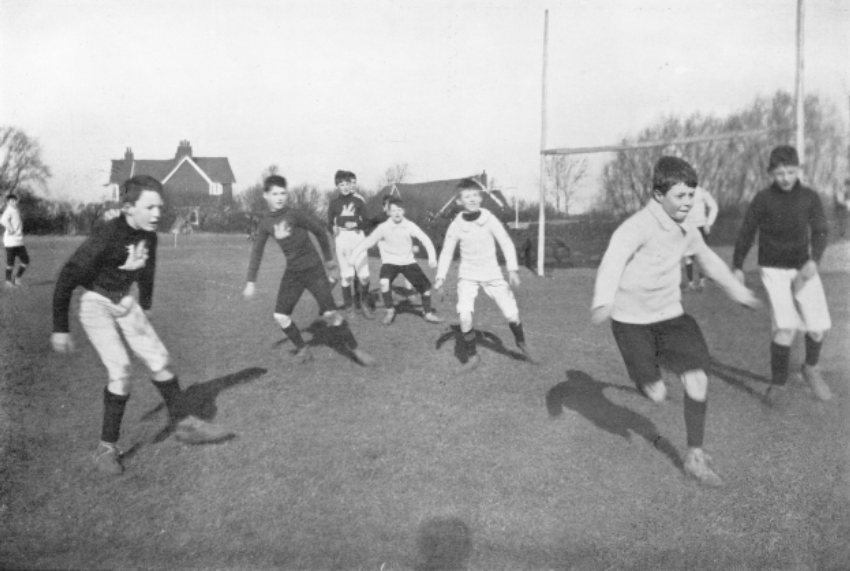
rugger

The beautiful weather which held for the first month of term made rugger impossible. In the first match, against Eagle House on November 4th, considering all things, although the team lost 0-22, they made a good show and look as they might develop into a good side.

I am not convinced of the desirability of keeping each boy to play in a particular place practically always. To know the game properly, a boy ought to be prepared to play half or forward or three-quarters as he may happen to be asked.

There seems to me nowadays a sort of prevalent fear of doing the wrong thing, and not enough initiative, not enough determination to get through and to score against the opponents…

I must say I think criticism of an individual’s play, sometimes very emphatic and loud-tongued, should be entirely abolished during the progress of the game; and nothing but encouragement allowed. Personally I know what the effect on myself would be if I were yelled at as a slacker or funk in the middle of a match!

Why, oh why do not Winchester, Charterhouse, Repton and Shrewsbury play rugby instead of the disgraced ‘soccer’? Malvern, Radley and Rossall have abandoned the professional game and joined the Rugger ranks…

 * * * * * *

The boys have sent stamps to the Base Hospital, and indeed have made a very large money collection considering their small incomes! The ‘Blue Dragon’ gramophone with its lovely old records and many new ones has delighted the inmates of Medical Ward V, where it is guarded jealously from the raids of other wards.

Hum Lynam

Hum Lynam

‘Hum’ has been almoner-in-chief and has installed and looked after Belgian refugees at the Lodge and elsewhere. He has also collected and forwarded sweaters, pipes, pencils and writing books, subscribed for by the boys, to various quarters, including HMS Colossus, HMS St. Vincent and HMS Russell.


We have had the following replies:

H.M.S. St Vincent

First Battle Squadron

November 20th 1914.

My Dear Dragons,

Pipes very much appreciated – now smoked by His Majesty’s Jollies.

Pipe 1
Who owned?                         


And the other one that might have been made by Krupp?

Pipe 2


It was a kind thought and entailing some sacrifice I’ve no doubt – parting with old friends – Censor allows no news.

William Fisher (Capt. R.N.)

H.M.S Russell

21/11/14

Dear Dragons,

A line to thank you all for sending us that generous supply of briar pipes. The men are no end pleased, and wish me to thank you for your kind thought for them. I only wish I could come and thank you all personally for them! But I shan’t be able to do that until they become Pipes of Peace.

 Lance Freyberg (Lieut-Commander R.N)

November 16th 1914

We have been notified of the death of another very dear Old Dragon.

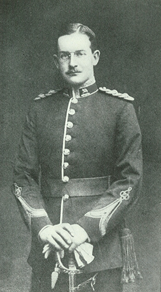
 Roderick Haigh 2

Lieut. Roderick Haigh (Queen’s Royal West Surrey Regiment)

Roderick has been killed; his crusade has come to an end. He was in the last charge of the 22nd Battalion at Klein Zillebeke (also known as Hill 60) near Ypres on the night of the 6th– 7th November, when the Brigade, only 700 strong, attacked and carried the German trenches, capturing three machine guns.

A private in his Regiment witnessed his death:

“We had the order to attack some trenches at dawn. I saw our Adjutant (Lieut. Haigh) cheering the men. We had only advanced a few yards when the enemy saw us and fired ‘Rapid Fire’ at us, and then we charged through a terrible hail of bullets, and got the first line of trenches.

Then Mr Haigh gave the order to advance, which we did, quick; and we took another trench, and then were told to get ready again, and we took the last trench; but when we got into it we found it was a running stream. The Adjutant with myself and 14 others got into this ditch only to find that the Germans were only 10 to 15 yards away, strongly entrenched.

We were firing point-blank range at each other, and all the time the Adjutant was standing up in the trench, head and shoulders showing. I actually stopped firing to look at him and admire him. He was using his revolver with great effect, and kept saying to encourage us, ‘That’s another one I hit.’ Oh, he was a cool man.

The Lance-Corporal went back for reinforcements, but couldn’t return. We kept firing for half-an-hour afterwards; then the brave Adjutant was shot through the temple. He died a noble death. I found myself alone, the only one of the fifteen alive, and I made a dash for it, and never got hit, though I had three bullets in my pack close to my neck.”

One of his tutors when at Corpus Christi writes:

“When the war broke out, he was recalled with his battalion from South Africa, and ordered to the front.  I know that he went fully realising the possibility that lay before him, but counting it the highest honour which can befall a soldier, to be allowed to give his life for his country and his king.  For him, therefore, we must not grieve.  Almost ever since I heard of his death, Shakespeare’s glorious words have been beating in my brain:

    ‘Your son, my lord, has paid a soldier’s debt.’…
    ‘Had he his hurts before?’
    ‘Ay, on the front.’
    ‘Why then, God’s soldier he be!
    Had I as many sons as I have hairs,
    I would not wish them to a fairer death.’

May his memory and example long continue to inspire those who knew him.”

Roderick’s sister was notified of his death on November 11th by way of a telegram from the War Office:

Haigh telegram 2

Lieut CR Haigh Queens Reg’t was killed in action 7 November  no further details – Lord Kitchener expresses his sympathy.

*  *  *  *  *  *

Teffrey ThompsonTreffry Thompson is not only an Old Dragon but a sailing companion. Some of you may have read of our voyages together in the ‘Log of the Blue Dragon.’ He is kindly sending us extracts from the diary he is keeping.

Having been a casualty house surgeon at the Radcliffe Infirmary in Oxford, he joined the RAMC. At present he is attached to the headquarters of XV Brigade with the Royal Horse Artillery (RHA). He writes of the battle which has been going on at Ypres since mid October.

“It might interest you to know what sort of things the Germans fling into Ypres. One of the RAMC men was walking outside a large house on the outskirts of the town, which had been taken over for a hospital, when a large shell burst some distance away, and the flat base only of the shell came back and hit him on the foot. This flat base was 16 inches in diameter and weighed 93 lbs., so that the whole shell probably weighed about 800-900 lbs.

These evidently come from large howitzers a very long distance off, as one never hears the bang of the gun, but suddenly a rushing noise, just like that of a train in a tunnel, ending in a mighty crash, which even 3-400 yards away shakes the ground and trees, and when they fall only 50 yards away, as a couple did this morning, they make the whole house rock.

One great advantage here at present is that the ground is very soft; so that the shell buries itself about 12 feet  (down) before it explodes, so that most of the force is spent hurling large sods and chunks of shell into the air; one can be quite close comparatively without real danger. It is anywhere from 100-150 yards away that one may get hit by the fragments.