January 5th 1918

The battle at Cambrai, which was launched on November 20th 1917 with over 400 tanks, was reported in our newspapers as a great success.

The role of the cavalry has been a small one in this war, but it was hoped that they might have played a significant part if a breakthrough could be achieved. Capt. Reggie Carr-White (Indian Army), who was in reserve with Hodson’s Horse, found himself in the thick of the action when on November 30th there was a German counter-attack, his breakfast being rudely interrupted:

“An orderly came in with a message telling us to ‘stand to.’ Our horses were out at exercise, and we didn’t know where they had gone to… Meanwhile another message came in, telling us to move at once. . So we all hustled about and packed our things; in the meantime the horses came in and we moved off within the hour…

Nobody knew why we were being moved – the optimists, like myself, thought that we had broken the German line; and the pessimists thought the opposite had happened.”

The closer they got to the action, the clearer it became that the pessimists were right.

“We trotted about another six miles and then halted again, and watched a fine but very sad spectacle. We were in a valley, and about 500 yards in front of us was a low ridge. Along the top of this a British Cavalry regiment was galloping, with German crumps bursting in amongst them. Many of the troops got direct hits on them, and one could see a troop galloping along and suddenly it would practically disappear as a shell burst in it, then a second or two later one would see a few of them straggling forward and a small mound left behind. It made me feel a bit sick. But not a man checked, and all galloped steadily on…

My squadron was the rear squadron of the regiment, and I was about 100 yards behind B squadron, whom I saw trotting along quietly through a gap in the wire in front, and disappearing over the ridge. As I came to the gap and topped the ridge, an extraordinary sight met my eyes: galloping horses everywhere, many of them riderless, and there were many dead horses and men on the ground. Into this medley the Germans were putting crump after crump. B squadron was retiring at a slow gallop and in perfect formation…”

Reggie was told to retire with his squadron and find another way round, to avoid the artillery fire. It was a very confused situation, under shell fire, with people from numerous regiments and “tanks barging about.

They came back to a British-held trench. Reggie was possibly understating it when he said,

“It must have surprised them to have two squadrons of cavalry jumping over their heads.”

An alternative route was taken and they eventually found their way to the top of a low ridge where the rest of the regiment were digging in, alongside the Guards who successfully attacked and took Gouzancourt.

Digging in meant it was time to send the horses back and for the cavalry to become infantry, ready for another German attack.  There were still some British tanks involved in the action, although being a cavalry man, Reggie clearly has mixed feelings about this new form of combat.

“Just then several of our tanks rolled up and seemed uncertain where they were. It was pathetic how perplexed those tanks looked, nosing about liked puzzled rhinoceroses and they made us feel quite sorry for them… They then seemed to become inspired and waddled off, one after the other, towards the Germans.”

But there is no doubt in his mind that those who operate these tanks are brave men.

“One may make jokes about them, but in my opinion the fellows inside are the bravest fellows on earth. Shell after shell burst all round them, and finally of course, several got direct hits on them, and before long four of them were burning like great bonfires. Later in the day I met one of the officers, who had been in one. He told me all the crew in his had been killed and he was very cut about himself.

The Guards and a regiment of Indian cavalry attacked Gauche Wood, dismounted; they followed behind the tanks and took the wood fairly easily. In places they got in with the bayonet.”

From the map it is clear that the German counter-attack had made deep inroads, before being repulsed by our troops to the line shown, just west of Villers-Guislain.

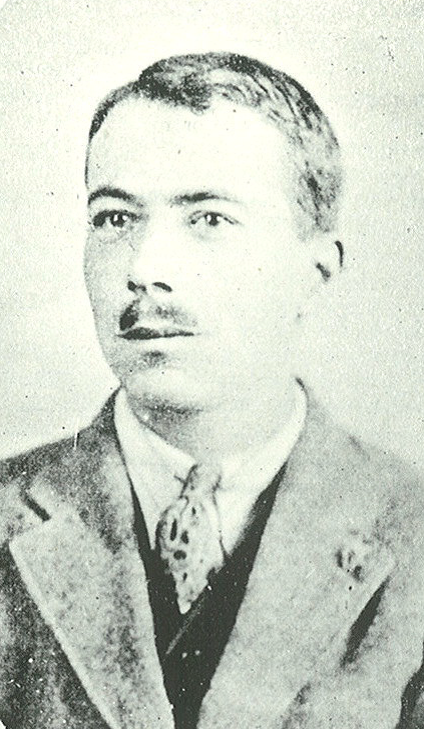
 

December 19th 1917

2nd Lieut. Willie Wells-Cole (Lincs)

Willie went missing in an attack on the first day of the 3rd battle at Ypres (July 31st) and, it has to be said, we did fear the worst even if we did not want to give up hope.

Word has now came through to the family from an officer, 2nd Lieut. Timpson, who is a Prisoner of War in Heidelberg, that Willie “was cut off and all his men captured. He was shot through the head and instantly killed. There are men here who were with him, though I was not.”

This is consistent with what another officer from his regiment has written: “…our company was protecting the flank of the battalion on our left. His was the leading platoon, and going a little beyond their objective… the whole lot were cut off.” 

We share with the family the belief that this is the end of the matter. Sadly, however, this is not the view of the authorities, who want signed statements from eye witnesses before providing next of kin with an official notification.

It may be many months yet before the family can wind up Willie’s affairs.


December 11th 1917

This is the final instalment from Capt. Treffry Thompson‘s diary, covering the retreat after the Battle of Caporetto. The train eventually was able to speed up to take them across the River Piave to safety.

His final entry tells the story of how the Lieut.- Quartermaster had tried to rescue as much of their kit from the advancing enemy:

2/11/17 “At this point the Lieut.-Quartermaster turned up…

He said that he tried in vain to save our kits and ordnance, which he could easily have done if he could only have got lorries – he was promised lorries by Italian officers but none arrived – finally he bagged an old farm cart and an older horse and made a harness of belts and slings and straps. He opened all our kits and got out all valuable stuff and packed it on the cart.

He had with him an RAMC corporal with D’s motor-bike and one or two ASC men – they set fire to all the rest of the kit and stores… and they started off for the west – when they left the whole place was in flames and being shelled and bombed.

They got about six miles when the horse died – they harnessed themselves into it and the cart broke down – finally they had to leave everything as they were being sniped and came on as they were, riding a borrowed push-bike and harnessed up to the motor-bike.”

A gallant effort!


December 3rd 1917

With the Italian army struggling to hold the line at the River Tagliamento, crossed the previous day by Capt. Treffry Thompson (RAMC) and his men, Treffry needed to get them still further back if they were not to be caught up in the fighting.

This, the fourth day of the retreat, was to prove to be the most difficult for men tired from the march and extremely hungry.

30/10/17 “A roll call proved that we had got all the men across the river.

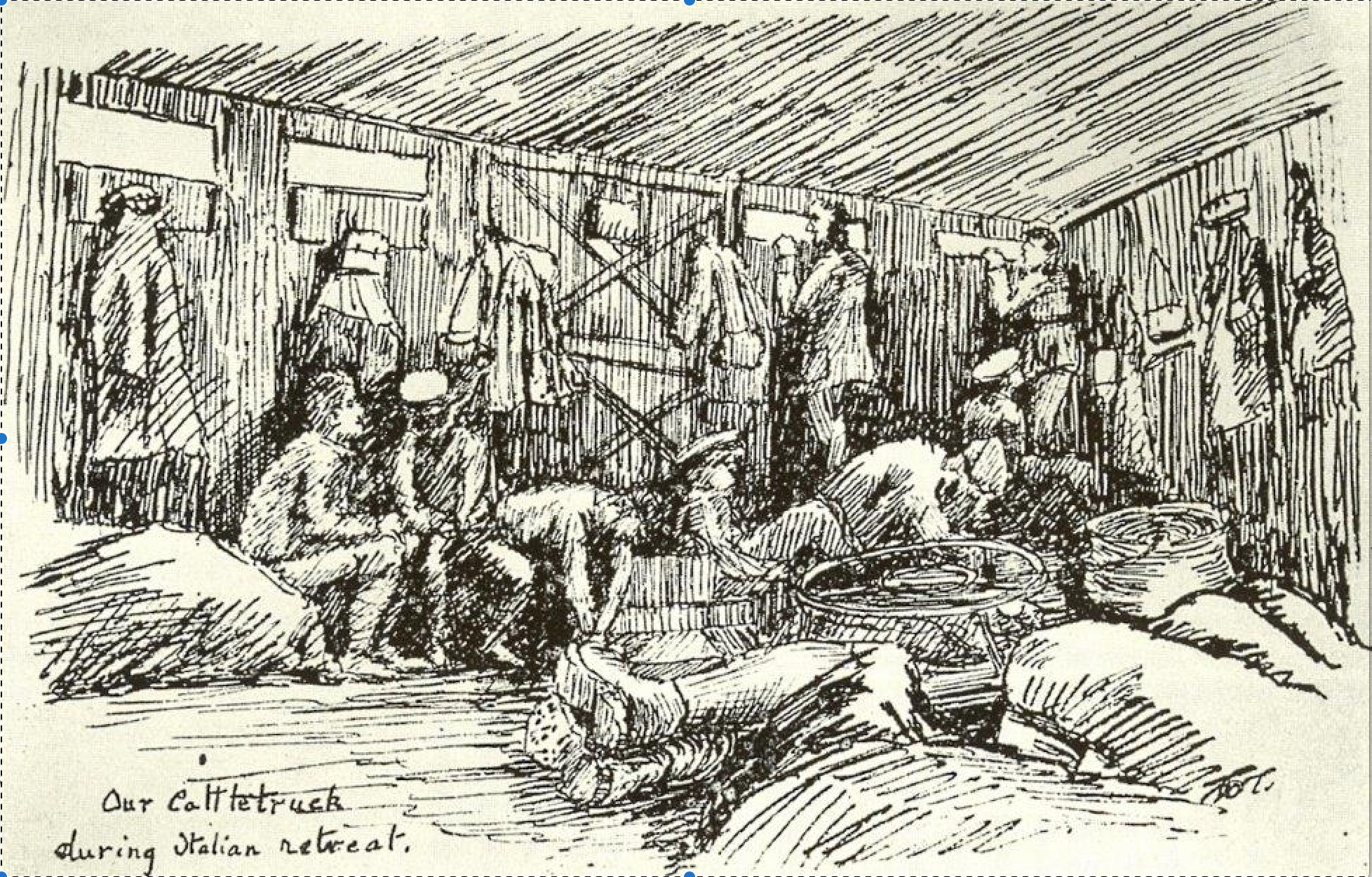
The Italian RTO’s Corporal Major decided, as the train that did come in was packed, that we had better try to secure some wagons which were a long way out of the station, but would eventually go on to a train. So we walked out to about 2 kilometres and found part of a train with five horse trucks already pretty well filled with Italian soldiers.

The Corporal Major opened the door of each and shouted, “This train goes to Udine,” (The Germans were in Udine by that time) and those trucks were empty in a moment, so we all got in. We had 6 officers and 28 men in ours, 20 patients and 8 men in another, and so on, and then we went to sleep just as it commenced to pour with rain once more.

A drawing by Treffry Thompson

We woke about 8 or 9 to find the train had gone about three miles and that now there was a solid line of trains buffer to buffer at least 5-6 miles long, actual movements being limited to spurts of 100-400 yards, perhaps once an hour….

The railway track was this hurrying mass of soldiery, without equipment and fighting mad for food, and refugees clinging desperately to their little all – little kiddy girls struggling along barefooted, often bleeding from broken glass, carrying some treasured possession – old women staggering under bundles of clothing – and mothers clutching a babe, or leading a couple of kids or crying wildly up and down the trains for some child which had got lost in the crush, while along the embankments of the railway and roads were the gleaming skeletons of mules and horses, in places three deep.

If a mule or a horse died, within half-an-hour it would be nothing but clean picked bones, so wild was everyone for food. The rain poured over everything.

We decided it was better to stay on the train where we had shelter and warmth, as the trains were bound to move down slowly and it was easier to starve in the train without collapse, than on the march when it would mean men getting left behind.

Finally, towards evening things began to look desperate and we started to forage in various directions. D and B managed to pick up nearly a sandbag full of macaroni where it had been spilled under a truck about three trains up the line. I achieved about 3-4 pounds of meat off the remnants of a horse I found. One truck made a meal off defunct mule.”

A couple of them went foraging to a farm and came back with two chickens, two ducks, about 40 lbs of hot polenta pudding and a sack of maize.

“Meanwhile we had got fires going in each truck – on piles of stones in tin helmets or old buckets and we had all those birds plucked, cleaned and cooked in no time. It was great sport, all sitting round, plucking hens. The revival of spirit was extraordinary and Rici sang to us from Il Trovatore etc.”


November 30th 1917

Having walked 20-22 miles the previous day, Capt. Treffry Thompson (RAMC) and his men still had some way to go to reach safety, and they were not the only ones on the road:

29/10/17 “Masses of 2nd Army pouring past us and road filled for miles with guns, limbers and army wagons; lorries, cars, ambulances and wagons, hand-carts with a family’s entire possessions pushed by the women-folk, farm carts drawn by magnificent pairs of oxen laden with everything from copper water pails to canary cages, with the younger members of the family perched on top, and possibly a brace of geese or ducks with them; motor bikes with or without side-cars, and finally the humble push bike or the wheel-barrow, also laden with some treasured possession. The whole jumbled into a slowly, very slowly moving mass…”   

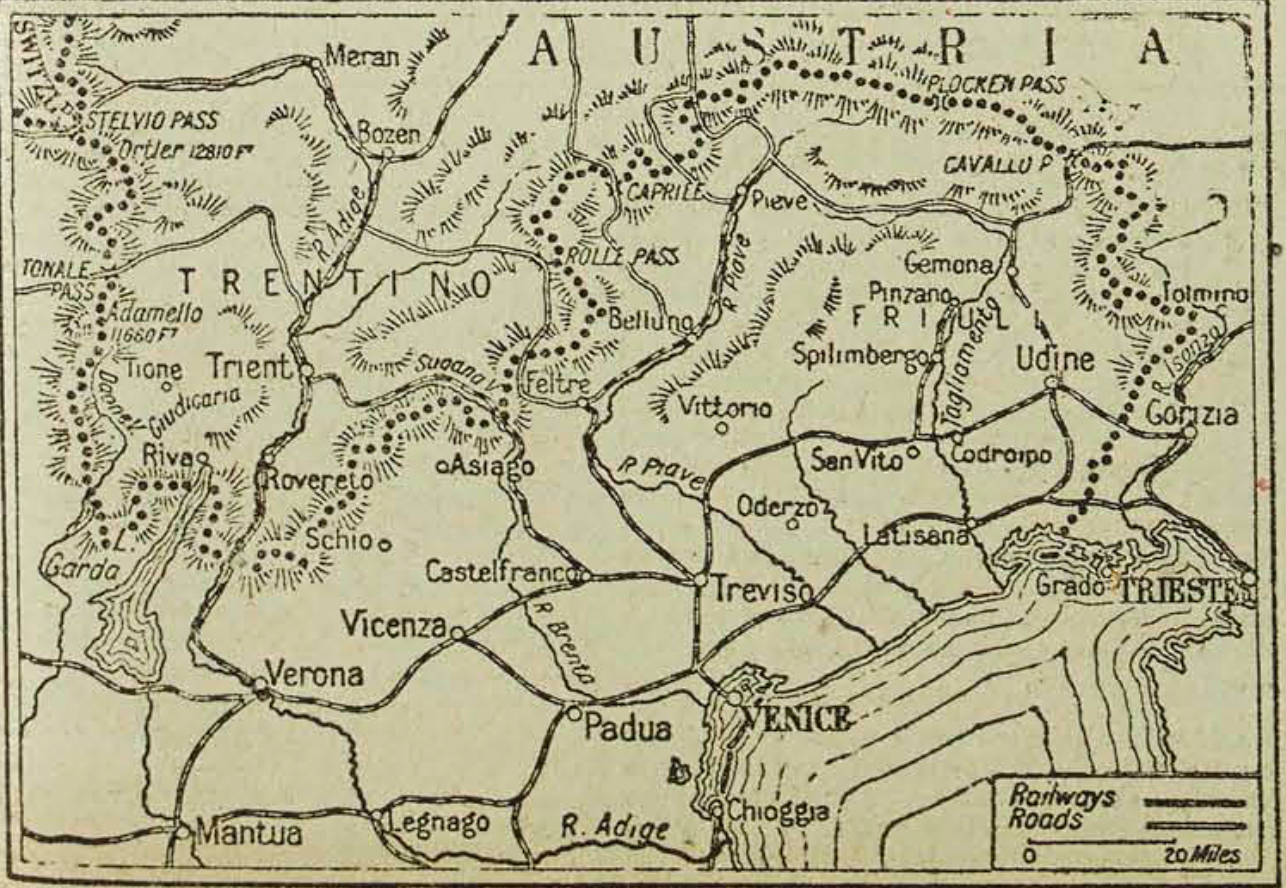
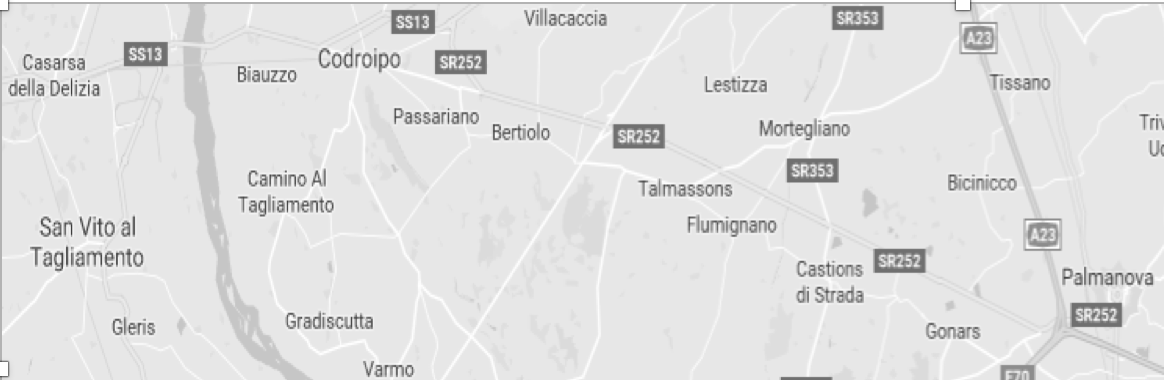
On reaching Codroipo, they were told to make for a bridge over the River Tagliamento – another 4 miles away.

“The river seemed miles away, but eventually we reached it about sunset, and then became wedged into a solid mass of soldiery frantic to get across the bridge and all jammed at the entrance.”

When Treffry finally arrived at the bridge, he had something of a fright:

“Between the rails it was open to the flooded Tagliamento forty feet below, since the bridge was an open one with the rails only being carried across on the sleepers, which merely rested on the open framework of the bridge. We moved on, foot by foot, to the entrance of the bridge, the crush becoming terrific…

I found myself suddenly shot forward and looking right down between the open rails. I grabbed the fellow behind me and, as he did not want to come too, he grabbed the fellow behind him, so we all swayed on to the gangway once more.”

After that they managed to drag themselves a further 3-4 km to the railway station at Carsarsa (just north of San Vito on the map) where the night was spent huddled together beside a siding. There was no food and the trains were all full. They can have got little sleep that night.

“Very cold, men huddled together with haversacks as pillows, but only for a few moments as it was too cold.”

November 28th 1917

This is the second entry from the diary of Capt. Treffry Thompson (RAMC) describing his experiences on the retreat, the start of which I shared with you on November 26th.

28/10/17  “The patients, who were lying in the ordnance sheds, well supplied with blankets, were now ordered to be evacuated through St. Georgia. Only eight ambulances available, but all worst cases sent under G. They eventually failed to get a train at St. Georgia and had to proceed to Postoguaro and were 13 hours in the ambulances.” 

With these patients off his hands, Treffry turned his thoughts to his group:

“Being allowed free run of ordnance stores, as it was going to be fired shortly, we picked what we wanted… While we were in this store a huge fire started on opposite side of town covering whole place with dense black smoke, and we were all ordered out at a minute’s notice from the store and town….

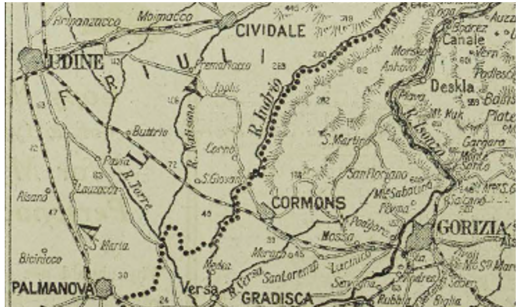
We found a seething conglomerate mass pouring through the Udine gate and up the westerly road to Codroipe.

Orders were then received to march from Palmanova to Codroipe in order to cross the River Tagliamento and find what they hoped would be safety.

“We reformed officers, personnel, Italian interpreter, Rici (an Italian opera singer attached to the hospital), 25 walking patients and a few others…” 

At this point an AOC officer, claiming to know the quickest way to the bridge over the Tagliamento, promptly marched them round Palmanova and a further six miles south before heading in the right direction.

“B and I brought up the rear, urging on the stragglers, which was a pretty heartrending job. The men began to shed their kits into the ditches and frequent halts were necessary. Rici the singer was very lame, but stuck to us and an enormous pack of kit…

We finally reached Gonas about 1 p.m., with the men very done, as they had then marched 16-17 miles and had had no rest since the day before and no food since the evening before…

We got the men some apples and pears and temporary shelter in an evacuated hospital. We shared a small bit of bully given by an Italian officer between the six of us. It was decided to push on to the next village at least, as there was no food in Gonas and the civilians were evacuating.”

At the next village there they found a larger evacuated hospital for the night.

“Got the men some food, first of the day – one tin of sardines between three, and half a loaf of bread per man…

Slept like logs, having done some 20-22 miles.”


November 26th 1917

There has been much in the papers in recent weeks regarding the Italian Campaign. The advance of the Austro-Hungarian and German forces which has threatened Venice has, we hope, now been checked. Currently, Italian forces are struggling manfully to hold the line on the River Piave.

This follows the defeat of the Italian forces at the Battle of Caporetto, after which there was a general withdrawal in which Capt. Treffry Thompson, who has been with the Croce Rossa Britannica (British Red Cross) in Italy since the summer, was caught up.  He has written from the safety of Torino about the retreat he has endured with the Italian forces.

“I have had a fairly exciting time during the last fortnight. We got away all right but were reduced to eating anything we could get, even to the extent of bits off the bones of defunct mules.

At present I am ‘in contumacia’ for five days, which being interpreted means quarantine, as all those coming from that part of the front are put in quarantine by the Italian authorities…

My entire kit has gone in flames, including my sketch book and photos and some rather nice local curiosities…”

Treffry has also kindly sent us entries from the diary he kept throughout this period. His adventure starts in Versa, which is just west of Gorizia.

27/10/17 “On the road in the middle of a mass of retreating troops I saw the latest thing in Paris costumes, furs, high heels and silk stockings, walking along the road.

We received orders that conveyances would be supplied to evacuate hospital on Monday morning. Changed into slacks. Roast ducks for dinner. Versa street a solid mass of moving troops and vehicles of all kinds.

After dinner ordered to move at once and evacuate via Palmanova where our Ordnance Stores were situated and there was a railway station. Changed and packed. 21 mule carts available. Hospital equipment in the shape of bedding etc sent off. Began to pour with rain; ambulances arrived bit by bit, and finally five lorries.

All patients and greater part of hospital stores and valuable equipment was got away to Palmanova. B and I marched personnel to Palmanova and reached Ordnance Depot, where the patients had arrived, about 4 a.m.”

Treffry’s account is a long and detailed one, so I am stopping at this point. It will be continued over the coming days.

August 13th 1917

With the casualty lists growing to proportions not seen since the Somme battle last year, the news of the death of Alan Jenks is quickly followed by news that 2nd Lieut. William Wells-Cole (Lincolnshires) is missing.

Willie’s regiment were involved in the opening day’s attack on July 31st near Wytschaete. He and his company were not seen again after putting in their attack.

As a boy, Willie always refused to give in or to own himself beaten and it is difficult to imagine him having being taken prisoner.


May 18th 1917

Young Dickie Wallace (aged 8 and in Form 1a) has shown me a letter he has just received from his uncle, Sous-Lieut. Noel Sergent (French Artillery), describing how he survived a torpedo attack on his way back to France.

13/5/17 “I left Salonika on Easter Sunday at 5 in the evening on a rotten old barge of 8000 tons, which could only go about 12 miles an hour. We called at Athens and Milos and on April 16th, while we were all having a snooze after lunch, we were torpedoed; we all went up on deck to see what was happening and we were told to put the boats and rafts out as soon as possible, as the ship would go down rapidly. So I went to my raft, which was forward, and found there was no time to spare, so we got her into the water.

In the meanwhile, the ship was sinking rapidly by the bows and when the bows went under, our raft was chucked up on to the deck and we all let go for fear of being crushed against some part, as the raft was bowled over and over by the waves.

I was washed down into the hold of the sinking ship by a big wave and drank and drank and drank, and all became dark round me. I thought it was the end and I remember saying to myself, ‘I’ve wondered how my end would come and this is it.’

In the meantime I did what I could to get to the surface and, as I got a glimmer of light, I made an effort and reached the surface and clutched at some boards that were floating about, and managed to keep up with one of these under each arm till I got my breath…

…The raft, which had presumably been wandering about on the deck, came near me and I gave two or three good strokes between waves and hung on to one of the ropes. But the backside of the old ship seemed to be right over the top of us and we couldn’t get the raft off the deck, as the waves kept shoving us back again…

As luck would have it, the ship sank down gradually, the funnel just missed us and the wash of the ship swept everything off the deck and the ship glided down just in front of us. There was no suction to speak of, so I was helped on to the raft where I was sick twice, and 3½ hours later we were picked up by a French torpedo boat…

There were 45 men drowned, chiefly owing to rough seas, too much clothing and tummy aches – as you know you mustn’t bathe (if you can help it) directly after a meal.

I was seriously handicapped by having on at the time a pair of heavy English football boots, which I had specially had out from England, and also a large artilleryman’s ‘Capote’ (a heavy coat with large cape attached to it).

Thank God I had learnt to swim under water, or you would never have had this letter…

Your loving uncle,

Noles.”

December 15th 1916

In the course of the last four months a number of our gallant Old Boys have been honoured and, as the end of another term approaches, they should be recorded on these pages:

Victoria Cross (VC)

Capt. William Leefe Robinson (RFC), “for conspicuous bravery. He attacked an enemy airship under circumstances of great difficulty and danger, and sent it crashing to the ground as a flaming wreck. He had been in the air for more than two hours and had previously attacked another airship during his flight.”

Distinguished Service Order (DSO)

Capt. Harry Maule (North Lancs) has been awarded the DSO “for conspicuous gallantry when leading his company during operations. During several days’ fighting he set a fine example of cheerfulness and cool courage to those around him. He was three times knocked down by the blast of shells.” (Edinburgh Gazette, Sept. 28th 1916)

Major Ernest Knox (Sikhs) in Mesopotamia.

Major James Romanes (Royal Scots). “For conspicuous gallantry in action. He led his battalion with the greatest courage and initiative. He set a splendid example throughout the operations.” (London Gazette, Nov. 25th 1916)

Military Cross (MC)

2nd Lieut. Stopford Jacks (RFA). “He, assisted by a sergeant, organised a party to extinguish a fire in a bomb store. Although burnt in several places, he continued at the work until the fire was extinguished.” (Edinburgh Gazette, Dec. 13th 1916)

2nd Lieut. Budge Pellatt (Royal Irish). “When a Platoon was required from his company to replace casualties in the front line, he at once volunteered and led his men forward with the greatest determination, though suffering heavy casualties.”

2nd Lieut. Northcote Spicer (RFA). “For conspicuous gallantry and devotion to duty in registering all batteries of the artillery brigade from the advanced lines prior to attack. He was severely wounded, chiefly from having to signal by flag, which was observed by the enemy.” (London Gazette, Oct. 20th 1916)

French Honours

‘The Times’ (Sept 16th) noted that Commodore Reginald Tyrwhitt had been made Grand Officier of the Legion of Honour.

2nd Lieut. Trevor Hoey (OBLI) has been awarded the Croix de Guerre decoration by the French Commander on the Salonika front for distinguished conduct, referred to in the Army Orders as follows:

“When all the other officers were placed hors de combat, he took command and led the final charge against the Bulgarian position, which was brilliantly carried at the point of the bayonet.”

Mentioned in Despatches

2nd Lieut. FRG Duckworth (RFA) in Salonika, Capt. WW Fisher (RN) & Cdr GH Freyberg (RN) at Jutland, Maj. EF Knox (36th Sikhs) – for the second time, Capt. RJK Mott (Staff) in Salonika, Lieut. JC Slessor (RFC) in Egypt, and Maj. RD Whigham (King’s Own Scottish Borderers) – for the second time.

It is difficult to express just how proud we are when our Old Boys distinguish themselves so.