December 5th 1916

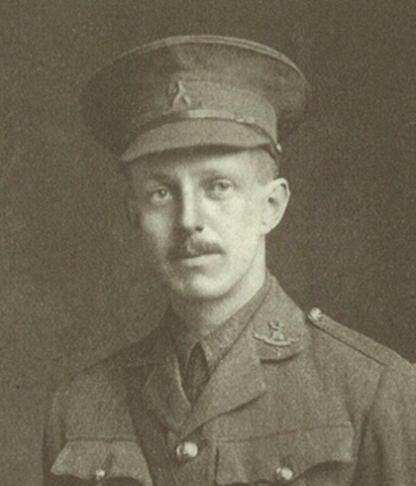
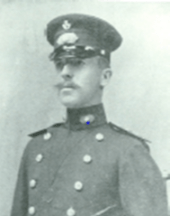
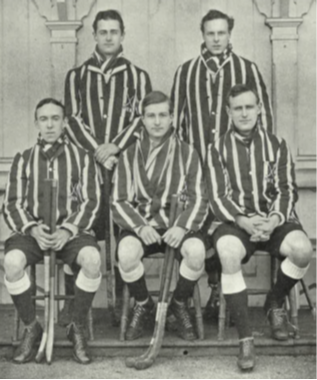
Lieut. Jack Gamlen (OBLI) was last in touch back in October, to tell us the story of his regiment’s involvement in the Somme battle in August. He said then that the Somme trenches were “very horrible.” His latest letter tells that, for the time being at least, he has escaped them:

23.11.16. “When you have been wet through for a week, have just come out of the trenches and are standing in the main street of a horrible and historic village, looking through glasses at the German lines, it is pleasant suddenly to have your elbow jogged by your Commanding Officer and to be told that you are to report forthwith at the Brigade Headquarters. Every so often a subaltern is detailed for attachment for instruction in staff duties…

As I approached Brigade Headquarters, I remembered that I had neither washed nor shaved for a week and felt very much ashamed of my appearance…

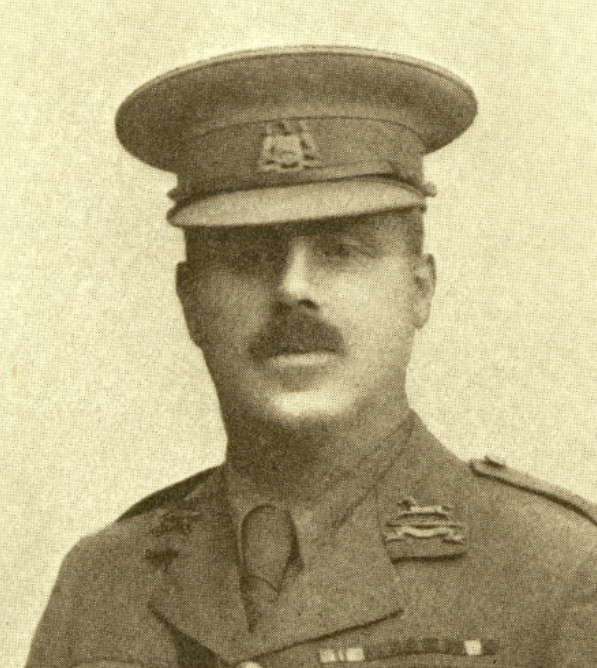
I was conducted into the presence of the Brigadier, a young and very handsome man with many medals. He was reading the ‘Times’ and told me to sit down and eat.

After a pause he put down his newspaper, looked long at me and in a mild, tired voice said, ‘Soaked through I suppose!’

‘Yes, sir.’

‘And the men?’

‘Soaked through all the time, Sir.’

Then he gave a very refined groan and went on reading the paper.

It was not long before I learnt that this Brigadier was as ready to be soaked through as any of the men, but, at the time, he seemed an exquisite being, remote from war, and mud, and hardship.

I made myself presentable by lunch, when we were joined by the OC Machine Gun Company, no less a person than L Grundy OD. He is my junior by many years and we had never met before. Now we meet nearly every day, but have not yet found time to talk much about the School…

By night I was mostly at Headquarters, but by day I often went out with the Brigadier on his visits to the various Battalion Headquarters. We were frequently shelled and once or twice had quite narrow escapes, but the Brigadier’s personality is such that I think no shell would dare to come too close to him…

My chief job was to write the daily Brigade Intelligence Report, which goes on to the Division. To do so sometimes made me shiver at the cold-bloodedness of my task. It is one thing to put down, ‘The right-half Battalion sent out a patrol between 2 and 4 a.m. which did so and so,’ and a very different thing to go on patrol oneself. The same is true of ration-carrying parties. How well I know them! One must see the game oneself in order to realize how much hardship, danger and often heroism, is compressed into six cold lines of an Intelligence Report.”


August 26th 1916


Benham, Frank

Captain Frank Benham (RFA)

Frank has died in Queen Alexandra’s Hospital, Millbank, London.

He received wounds to the right side of the head, the neck and shoulder on August 5th. He was able to write three short communications to his wife on arrival at the No. 2 Stationary Hospital at Abbeville on the 8th and it was thought that he was being transferred to England on August 11th.

There was considerable confusion as to his whereabouts, until he sent a telegram to his wife saying he had arrived in Southampton on August 20th. The following day he was transferred to Queen Alexandra’s.

He had in fact spent the week following the 11th at the No.2 General Hospital at Havre, it having been decided that he was too exhausted to continue to England. On the 14th he suffered a minor haemorrhage from the neck wound. It stopped quite quickly, although the cause of it remained unexplained.

On August 22nd, Frank suffered another haemorrhage and underwent an unsuccessful operation to save him.

His wife was at his side when he died.

August 13th 1916

Edmund GayCaptain Edmund Gay (Norfolk Regiment) was declared missing a year ago.

The Daily Telegraph reported about ten days ago that our Government understands that there are only nineteen officers and 359 other ranks known still to be in Turkish hands as Prisoners of War.

With regards the 290 officers (amongst whom Edmund is numbered) and 9,700 other ranks still missing, they feel that there are no longer any grounds for hoping they might be prisoners,

“and therefore it was consequently decided that the missing officers and men not accounted for must be officially accepted as dead. Effect is being given to this decision after due consideration of the circumstances of each individual case.”

There has still been no official confirmation of his death given to the family however, and until such time we will continue to list him as “missing.”

* * * * * * *

Benham, FrankCaptain Frank Benham (RFA) was wounded by a German shell hitting his dug-out on August 5th. At the time he was in charge of a battery at Mametz Wood on the Somme.

On August 8th he was strong enough to be able to write to inform his wife of his situation and the matron on his ward has also written to say she hopes he will be strong enough to return to England shortly.


July 29th 1916


DW Brown

Capt. David Westcott Brown (Leicestershire Regiment)

It has now been confirmed that David was killed in the fighting for Bazentin le Petit on July 14th. Although his body has not been found, a Sergeant reported seeing it.

Like many, David realised in the spring that the summer months ahead would see the launching of a new offensive. Foreseeing the high number of casualties amongst officers, he felt the need to prepare himself – and his family. He wrote to his cousin Lillian in May:

“…. I am writing like this because summer is here, and I don’t think our present peacefulness can go on much longer. People at home are beginning to wonder what they pay us for; and I think Death must come to many of us, if not to most (I am talking of officers now) before very long: and, if it does come to me, I don’t want you to feel it as a shock, and I don’t want you or anyone to grieve.

You know it is rather an honour to die now, to die for all that we hold precious, for our country, to die that we may live, and to die with so many better men.

I don’t want to die. I want to live and tell how I was in the War, how I was a fighter in it, not merely a server; but, if I do get killed, I want you and everyone to know that I knew of the possibility, that I was ready for it, and facing it, and not shirking and dodging the thought of it. It seems to me that for a man who is, if not ready or willing to die, at least aware of the presence of death, and looking it in the face not caring or wondering what lies beyond, Death has lost its power. When you cease to fear Death you have conquered it, and Death has become only a gate, no harder to pass through than the door of a room.

Am I just being morbid? I hope not; because I feel somewhat that should the worst happen it may help Mother and Dad to know that I was not caught by surprise, not realising what I was in for…”

David also wrote a poem around this time, when still behind the lines:

Two Voices
“The roads are all torn” ; “but the sun’s in the sky,”
“The houses are waste” ; “but the day is all fair,”
“There’s death in the air” ; “and the larks are on high,”
“Though we die – ” ; “it is spring-time, what do we care?”
“The gardens are rank” ; “but the grass is still green,”
“The orchards are shot-torn” ; “there’s a bloom on the trees,”
“There’s war all around” ; “yet is nature serene,”
“There’s danger” ; “we’ll bear it, fanned by the breeze.”
“Some are wounded” ; “they rest, and their glory is known,”
“Some are killed” ; “there’s peace for them under the sod,”
“Men’s homes are in peril” ; “their souls are their own,”
“The bullets are near us” ; “not nearer than God.”

David was a cousin of Percy Campbell (one of the first OPS casualties) and the godfather of a current young Dragon, Per Mallalieu.

He won a scholarship to Marlborough and then went to Balliol to read ‘Greats’, when war broke out and he joined up.

July 27th 1916

Whilst we have learnt much from the newspapers about the ‘Big Push’ on the Somme, it is not the same as hearing from someone in the thick of things. Capt. Leslie Grundy (late of York & Lancaster Regiment, now serving with 90th Machine Gun Company) has found the time to provide us with a first-hand account of the events of July 1st.

He was involved in the attack on Montauban at the southern end of the battlefield. (Here the preliminary bombardment was clearly more effective than further north and casualties considerably fewer).
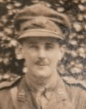
grundy-glo“We had done all the practising for the last fortnight and were now waiting in the assembly trenches. For us, these consisted of a few small trenches cut in a hollow between two woods about 700 yards behind our front line. We had arrived in these trenches late the night before, and had passed a very cold night indeed. Consequently we were all awake when dawn broke.

The guns had been keeping up a pretty heavy bombardment throughout the night, increasing in intensity every minute. The fringe of the wood behind us (curiously enough called ‘Oxford Copse’) was lined with 18-pounders, who were firing over our heads. As they were only 150 yards away, the noise was deafening.

Although we had not been given the time for ‘Zero,’ we judged it was near enough for us to issue the rum, so an issue of two jars among 150 men was made at 5 o’clock. We got word from Brigade Headquarters that Zero was to be at 7.30.

About this time a heavy ground mist appeared and for some time it looked as if the attack would have to be postponed. As it was near to 7.30 the Company Commander and I went over to a small piece of rising ground that was in front of us to watch the first wave go over the top. Over it went at 7.30 exactly, and as far as we could see there was only one casualty and it did not sound as if there was very much hostile rifle fire…

At 8.30 I went forward with my servant, and the two other sections followed 50 yards behind, interval 100 yards, but owing to the weight of our loads we fell behind our appointed place and found ourselves mixed up with some engineers. This ground was made up later on, while waiting for our artillery to lift.

When about 100 yards off our original front line, we saw that the enemy was putting up a barrage in No-man’s-land and a lot of our infantry were knocked out going through. When we got right up to this barrage we made a dash and, as far as I could make out, lost very few men. One of the section officers, however, was wounded rather badly in the back.

We found the Boche wire, when we got up to it, had been blown to pieces by our artillery fire and the trenches themselves had suffered so terribly that it was difficult to tell in what direction they ran. I had my first rest here; it was a hot day, and the packs were beginning to tell on us.

As it looked as if the Boches were shortening their range, we thought it best not to make too long a stay at this spot and therefore pushed on as far as the Glatz Redoubt. In a few minutes No. 2 section came up; so far they had only lost three men.

At this point a party of about 30 Boche prisoners were marched past; all of them apparently in great fear of their lives! They had all, seemingly, been very much shaken by our bombardment, and in the trench we were occupying there were many of them lying badly wounded. After a few minutes we mounted our guns and opened fire on the Boches to the left of Montauban, as the Brigade there did not seem to have attained its objective.

All this time our heavy artillery had been keeping up an intense bombardment on Montauban, and we could see our infantry waiting in the open in long line, ready to go in when the artillery fire lifted. Later there seemed to be some slackening of the fire and our troops immediately went forward. The whole thing was done as if on parade. They went over at a steady walk, keeping their dressing all the time. As far as we could see, there was no hostile rifle fire from Montauban at all and, as yet, no shell fire was falling on them.

I then decided that this would be the time to get our machine-guns into Montauban, so we went forward…

The whole place was literally blown to pieces, and it was with great difficulty we discovered where the roads had been. However, somehow or other, we managed to get both sections to A. Keep, where we found some men already busily consolidating. We had only been there a few minutes when a Boche machine-gun started traversing the village…

Just before dusk there seemed to be a small attack, but it was easily dispersed by rifle and machine-gun fire. All that night we fired at all small parties of Boches who could be plainly seen, and as it grew light we heard the sound of bombs exploding and found the Boches were bombing Montauban Alley from the other end.

About 7 o’clock the bursting bombs seemed to be very close to one another and… about 30 of our men jumped out of the trench and started to retire towards us in Montauban. Immediately on seeing this, the Boches jumped out of their trenches and started firing on them. We turned two machine-guns on the Boches and wiped the party completely out, but not before they had accounted for all our men.

The wounded in our trench were coming into the dug-out at an alarming rate and soon it became evident that the only people holding the keep were the machine gunners, and we had only two men per gun. As the bombing attack seemed to be developing, the Company Commander sent a message back for an artillery barrage. In a short space of time our shells started to come over, bursting in the valley in front of Montauban…

After this, the attack seemed to fizzle out. Several Boche snipers however, had managed to get into position in the diagonal trench leading from Montauban Alley to Montauban. They managed to cover all the exits from C Keep and they got a number of our walking wounded, who were trying to get back.

The shelling was fairly heavy throughout the day, but there were no more infantry attacks…”

That evening Leslie and his men were relieved and here at least undoubted success was achieved.


July 20th 1916

DW Brown 2The length of the lists of those who have become casualties in the newspaper this morning is truly horrifying, and now we have heard that Capt. David Brown (Leics Regiment) has been reported as “wounded and missing” since July 14th.

His father understands that David went out with a sergeant to reconnoitre prior to an attack. The sergeant was subsequently found dead but there was no sign of David.

Further information is awaited.

* * * * * * *

One of the hardest hit regiments on July 1st was the Leeds Pals Battalion (West Yorks). Their commanding officer, Lieut. Col. Stuart Taylor, was not with them as he is recovering from wounds he received in an earlier encounter with the enemy in May.

He has written from the Queen Alexandra’s Hospital in London to the Yorkshire Evening Post:

Stuart Taylor 2“I mourn the loss of tried comrades and dear friends with whom I have been closely associated day and night, in sunshine and storm, for the past fourteen months. But with my sorrow is mingled an immense pride, a great gladness, as I hear from all sources of the magnificent bearing and heroic conduct of our dear lads, who have cheerfully given their lives for their King and country.

The tidings of their gallant conduct and courageous deeds causes me no surprise, as I well knew how splendidly they would stand the test when the supreme call was made upon them.

To those who are left behind to mourn their loss, may God grant consolation in the sure knowledge of their dear ones’ valiant deaths. For the wounded I pray earnestly for a speedy return to health and strength.

For myself, my only wish is that I had been able to be with the battalion in their great and glorious attack.”

On July 1st, 233 of his men lost their lives. In addition, 15 of his 24 officers were killed (and the rest were wounded).

May 7th 1916

William Esson

Major William Esson (Royal Marines Light Infantry) 

Lance Freyberg

Lieut-Commander Lance Freyberg (RN)

On 27th April 1916, off the port of Malta, HMS Russell struck two mines laid by a German U-boat and sank. 27 Officers and 98 ratings were lost, including two Old Dragons, William Esson and Lance Freyberg.

HMS Russell

HMS Russell

HMS Russell was flying the flag of Admiral Fremantle, who was amongst the 702 saved. He has written from Malta to say of William Esson, “His cabin was immediately over where the mine struck us. We were hit only four miles from the entrance to Malta Harbour. At that time all the officers, except those actually on duty, were in their cabins, and it is for that reason that we lost such a very large proportion of officers. The great majority of the people on the deck below the main deck, including your husband and five lieutenants (this must include Lance Freyburg) were never seen after the explosion, indeed there are now alive only two men who were in that part of the ship… ”

Whilst 24 officers together with the Captain and Admiral were saved, 27 were killed – almost 50%.

The degree of grief currently the lot of the Esson family can only be understood when one remembers that William Esson’s sister Margaret is the wife of Capt. Edmund Gay (Norfolks), who has been “missing” since last August.

Of Lance Freyberg, Captain Bowden-Smith wrote, “He was asleep in his cabin at the time (5.30 a.m). The explosion took place immediately under his cabin and I think he must have been killed instantaneously and did not suffer. I am afraid that all his belongings went down with the ship. Nothing was saved.”

Clearly, William’s and Lance’s cabins were in very close proximity and it is some small comfort that two Old Dragons should be together, comrades in life and death.

HMS Russell was one of the ships for which our boys supplied the crew with pipes in November 1914. Lance wrote a charming letter back to them. It is a great sadness that the pipes have not become pipes of peace, as he had hoped.


August 25th 1915

We have further news of the recent developments on the Gallipoli Front, where some twenty Old Boys of the OPS are currently serving.

Unfortunately, it seems that the troops who landed at Suvla Bay have not advanced very far inland and there has been a fierce counter-attack by the Turk. Major Geoffrey Mott (South Lancs Regiment) was in the Anzac sector at the time of the Suvla Bay landings and here describes part of the battle and the Turkish counter-attack at Chunuk Bair on August 10th.

Maj. GR Mott

Major GR Mott

“I will tell you of the great Turk counter-attack of the 10th August which dashed itself against us for nigh on six hours, or, at least I should say, of that sector of it which came within my vision.

On my right, and below me, was a trench full of little Gurkhas huddled together, their bayonets gleaming in the sunlight; down on my left, across the gully and some 80 yards away was the trench we had withdrawn to the day previous. Immediately on my left, but in the scrub, lay a sentry – a volunteer for this perilous duty – keeping vigil on the gully below and connecting us with the trench beyond it. A great lad this, but, alas, to him of as to many of his spleen, came a soldier’s death ere the action closed.

Like waves advancing on the sea shore, great lines of Turks with shouts of ‘Allah!’ surged continuously over the crest, only to be cut down by shrapnel from the battleships and the fire of machine-guns sweeping up the gullies from well-concealed positions on ragged little knolls to our rear. To see these brave men, ay and fair fighters too, being literally cut down like corn before the reaper, was a sight indeed. Never have I seen greater pluck than that displayed by the Turk, particularly on this day.

Besides these masses advancing, I observed men running down singly from various directions and collecting behind bushes, which must have been concealed from the view of our machine-guns and other trenches, for no fire appeared to be directed at them. Partly on these, therefore, and also on individuals taking up sniper posts, I directed my aim, and how many rounds I fired during all those hours I should be sorry to count. By my side lay a man who passed me ammunition and my field glasses as required – fresh rifles were handed on to me as each one got too hot to hold, and another man kept record of my score.

The strike of the bullet was easily visible on that sandy soil, and the range thus quickly found in each instance. Perhaps the most interesting and important target taken on was a machine-gun detachment getting their gun into a cleverly concealed position, yet visible enough from my post. The range was but 150 yards, and the officer in charge clearly a German; I picked him off with my second shot, and shortly after, two of his gunners, and then opened rapid fire on the remainder, which must have dispersed them as that gun never came into action, at least not from that position or anywhere near it.

With regard to the bushes, I let a dozen Turks or so bunch together behind them before pouring in the contents of my magazine, or sometimes two; this had the effect of making a few men bolt in all directions to get clear of such false cover, but how many I hit in this way it would be impossible to say, and not one could be fairly included in the ‘bag.’

At the end of the six hours this had amounted to 47, not including the German officer – a fair day’s work, though very trifling, of course, in comparison with the wholesale slaughter effected by our guns and machine-guns whose handiwork would beggar description, for the Turkish dead must have amounted to thousands.”


June 24th 1915

Nevile West

Nevile West has been awarded the Military Cross.

In today’s edition of ‘The London Gazette’:

“Second Lieutenant (temporary Lieutenant) Nevile West, 2nd Battalion, Princess Charlotte of Wales’s (Royal Berkshire Regiment).

For conspicuous gallantry on the 9th May 1915, near Rouges Bancs. When the leading line of his battalion was unable to advance, all the officers having been shot, he rushed forward and attempted to lead the men on. He was almost immediately shot down, but, picking himself up, he went forward again till he was hit a second time.”

Nevile last wrote to us in March (see March 22nd) following the Battle of Neuve Chapelle, describing the loneliness of leadership thrust upon him in a similar situation.

Having visited us at the OPS recently, we are happy to report that Nevile is making a good recovery from his wounds.

May 4th 1915

A number of Old Dragons are involved in the battle that has been going on in the Ypres area since April 22nd. Donald Innes enlisted immediately at the start of the war as a despatch rider in the Motor Cycle Corps:

Donald Innes

Sgt. D. Innes

May 1st 1915. “On one of my rides I came across Treffry Thompson OD at Hazebrouk; he seemed very fit. Since Ypres is at present the centre of interest, perhaps a short account of it would not be amiss… 

One’s first view of the Cathedral reminds one of Magdalen tower; and the cloisters attached are very like those there also. The town has been smashed up more or less in zones, just short of and just beyond the Cathedral: where the shells fell short or overshot it. I was there the night before the attack on Hill 60, and then the Cloth Hall did not seem so very badly damaged, but of course I don’t know what this other bombardment has done.

The inhabitants seem to take things very philosophically, and one got a limited but quite excellent dinner there in a more or less patched up café. Where the shops are absolutely smashed, the owners sell their goods in the street outside.

With regard to the actual fighting, one sees very little of it and it is just a matter of chance if one happens to be there at the time, the trenches acting as a kind of touch-line inside which we play; so I will leave the description of that to ODs who are in the thick of it. 

I saw a little of Neuve Chapelle, and for an infantry man a modern attack can only be described as ‘Hell let loose.’ I thanked God I was a Despatch Rider. Our troubles are rather neatly put by one of the D.Rs in what he called the D.R’s prayer:-

From holes, shells, and motor ‘bus

Good Lord deliver us.”

 * * * * * * *

Donald Innes was one of the five Old Dragons to win Oxford hockey blues in 1911. All five of them are now in the Army.

1911 Hockey Blues

Standing: Donald Innes (Sgt. Motor Cycle Corps) and Patrick Duff (2nd Lieut. RFA in Gallipoli)

Sitting: John Brooks (2nd Lieut. Indian Army), Sholto Marcon (2nd Lieut. OBLI), Ronnie Poulton (Lieut. Royal Berks).