July 7th 1916

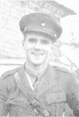
A letter has made its way from Lieut. Jack Smyth VC (15th Sikhs) in Peshawar in India.

Jack Smyth26/6/16. “I am so glad May 18th turned out a good day and the boys enjoyed the whole holiday. I do indeed hope I shall be able to spend it with you next year.

I am up doing a signalling course in a little hill station, but it gets most unpleasantly hot here in the middle of the day, especially as we are only in tents…

This course lasts three months, at the end of which time we shall be tapping out the Morse Code in our sleep and sending messages at table with our knives and forks and otherwise getting really ‘signalling mad.’

We waive flags from 7-8 a.m., starting easily and finally working up till we are sending almost the whole hour without a pause and everyone has muscles in his forearms like a blacksmith.

Breakfast at 8 and then we sit on the top of the hill in pairs and read messages in Helio, Morse and Semaphore till 11 a.m., by which time the rocks had got so hot that one can hardly sit on them. There is then a stampede to the Mess to get a long iced drink safely by one’s side before the lecture commences. This goes on till 12 and keeping awake is the hardest thing I have ever known.

We then take pencil and paper and write down while the Instructor sends us telephone messages till 1 p.m. Lunch, and then we write up any notes we have made, get into pyjamas and sleep till 4 p.m., when three days a week I play polo and the other days tennis…

There is only one ground here and we have to play at 4.30 p.m. (very hot then) so that the men can get their games afterwards. As soon as the last chukker is over, the polo posts are rooted up and half the ground converted into a hockey ground and half into a soccer ground and the men get two inter-company league matches in on each ground before it gets dark.

It is the only flat bit of ground in the place, and when the soccer and hockey are fairly underway and the officers’ tennis courts and squash courts in one corner are going strong, the whole place is covered with flying figures ‘strafing’ various sorts and sizes of balls with different kinds of weapons.”

All so very different when compared with what our troops are currently facing in France at the moment, but it is good to know that Jack, who has surely already done his bit, is safe and well.
June 28th 1916

A report on the Summer Term at the OPS is long overdue.

A mumps scare put us into quarantine for the first month, but since then all has been well and we have been able to play cricket matches against other schools. The weather was lovely at the beginning, even if it is execrable at present. Some people call cold and rain healthy. It may be so, but it is not pleasant.

* * * * * * *

We have had two grand whole holidays. About 50 boys and girls went in a char-à-banc to Stokenchurch Woods on May 18th – V.C. Day, marking Jack Smyth‘s deeds of valour – and a more delightful day could not have been spent. Others went to Frilford and enjoyed golf with Mr Vassall.

* * * * * * *

I discovered that the school car could be put to a better use and as a result the Ford was sent to Rochdale at the beginning of June and a ‘Scott’ Ambulance body was built on the Ford chassis.

Since then it has been in constant use in taking wounded soldiers to and from the station and various hospitals, and in taking the men for country drives. It accommodates two stretcher cases very comfortably and often has carried six or seven sitting patients.  These patients were refreshed on their short journeys by bunches of grapes, kindly provided by money raised by the boys and their families.

* * * * * * *

We invited over a hundred wounded soldiers to attend our production of ‘The Gondoliers.’ They came limping in, some on sticks, some on crutches. Some in chairs and some on stretchers, but one and all meant to have a good time, and the Dragons in charge saw to it that they had it. What the doctors said the next day about the effects of too many cigarettes and too many other good things does not concern us here.

One thing that confused the soldiers was the fact that the female parts were also being played by boys. In short, nothing would persuade Tommy that black was white, and when he saw 3 or 4 girls, and very pretty ones too, girls they were – and he did not believe for one moment they were boys.

The actors themselves got a little mixed sometimes, and once one of them earnestly assured us that he would make a “dutiful husband, I mean wife.”

This made Tommy think a little, and one of the staff had the great idea of getting the ‘boy-girls’ amongst the wounded, and parting the golden and raven locks to show the unbelievers the unmistakable hairy heads of Dragons beneath.

On the way from the green room, one of the damsels tripped, and what he (she) said, made one soldier remark, “Well, that one’s a boy anyhow!”

February 23rd 1916

With magazines such as our Draconian making their way to front line trenches, some thought has to be given to security.

We are requested by the Director of Military Intelligence at the War Office to state that the matter contained in any War Article or Letter in the Draconian is to be treated as confidential, and that no extracts from them may be sent for publication to the newspapers.

* * * * * * * *

It is good to know that magazines, such as our own Draconian, are well received by our old boys. Capt. Maurice Jacks (KRRC) writes from Northern France:

jacks-ml3“In a stray ‘Oxford Chronicle’ which found its way to this dreary corner of Northern France the other day I read an account of ‘The Tempest’ and a letter from the Skipper about the bad state of the roads. These two led my thoughts to the ‘School House afar’ and hence this letter. My ‘Draconian’ has not turned up yet; but I can’t get on without it and have written for a copy from home.”

The Draconian has certainly made its way to General Headquarters where Major Cecil Lucas (RHA) and friends “simply devoured every word… and look forward to every number like anything.”

Capt. Charlie Childe (Gloucestershire Regiment), on reading what he had written in the first months of the War, now finds that he sees things differently:

Charlie Childe“I have just had the ‘Draconian’ and was very glad to get it. I’m afraid some of my letters now display a rather green and enthusiastic spirit. In fact I rather wonder at myself in the first days of August and September as a fierce hero! I see I said I didn’t mind shells. However, I am not ashamed to admit that familiarity doesn’t breed contempt. Jack Smyth quite agreed with me in this when I saw him last, so that is enough to go by…”

Lieut. Jack Smyth VC (15th Ludhiana Sikhs) has received his Draconian in Egypt:

Jack Smyth“I wrapped myself up in two blankets in  a deck chair yesterday evening and read the ‘Draconian’ from start to finish.

Charlie Childe’s letters interested me a great deal, as I have been practically in all the places he mentions.”


December 31st 1915

Christmas for our gallant old boys, stationed in numerous theatres of war, has varied considerably.

Capt. Geoffrey Carpenter (Uganda Medical Service) is currently somewhere in the vicinity of Kabale in Uganda:

“Xmas Day passed without any excitement and our mess managed to put up quite a decent dinner. Tinned tomato soup, herrings and jugged hare, a guinea-fowl (shot with a rifle) to take turkey’s place – they are as good eating as any bird I know.”

Capt. Charlie Childe (Gloucestershire Regiment), in a billet near Richebourg St. Vaast, on the other hand, has had no relief from the day-to-day realities of the war:

Charlie Childe“From 5 p.m. on Christmas Eve till 5 p.m. on Christmas Day all our batteries had more or less carte blanche and all started blazing away at midnight.

I went in on Christmas Day after tea and there was a great deal of whizz-banging and salvoes of shrapnel all night. I was quite pleased when I got back to my dug-out, as it was rather a poor game wandering about over the open in the pitch dark, and wet, with all this hatred breaking out from time to time.”

Lieut. Jack Smyth (15th Ludhiana Sikhs) is now in Egypt, defending Alexandria from attack by the German-supported Sennussi tribe. No Christmas spirit to be found there either:

Jack Smyth“I spent the most exciting Christmas Day and the coldest Christmas night I have ever spent in my life; the whole day was spent in an attack on the Sennussi position. I was doing Adjutant duties and as I had only a few days before come out of hospital in Alexandria, I was almost dead, not counting the additional ‘almosts’ from bullets…

I should love to have been able to get back to Oxford for Xmas, but must not think of such things till the war is over…”

2nd Lieut. Maurice Jacks (King’s Royal Rifle Corps), whose location is given simply as “this dreary corner of North France” has ascertained that the Boche may be suffering somewhat worse than our troops:

“A deserter came in the other day and to his amazement the men gave him cigarettes and tea, and Headquarters a dinner; he was feted all round, but we could not let him off without displaying a little ‘frightfulness’ and the whole battalion having just had a Xmas dinner of goose and plum pudding, we asked him, ‘I suppose you had goose and plum pudding on Xmas Day. We all did!’

He threw up his hands in amazement and was green with envy; he apparently had not even had a sausage!”

Lastly, my daughter, Kit Marshall (St. Leonard’s School YMCA hut, Camp 18, Harfleur Valley, near Havre) has been helping entertain those Tommies behind the lines, who were able to celebrate in some style:

KIt Lynam portrait“This morning we were all taken to the Irishmen’s and RFA dining halls to see their Christmas dinner and the decorations. They had turkey, geese, plum puddings, some given by the Ulster women, and beer.

Then at 3 p.m. we went to their concert. The men from both dining halls crammed into one… and they all joined in the choruses – ‘The little Grey Home’, ‘The Sunshine of Your Smile’, ‘Ragtime Cowboy Joe’ etc.

The pianist was splendid, played anything in any key; the voices were somewhat husky, the result of a huge dinner and a very smoky atmosphere. They had been given churchwarden pipes, too, by the Ulster women and the scene was most picturesque – all these men standing and sitting under the elaborate wreaths of different coloured paper and evergreens, all singing lustily.

Now I am sitting in the pay-box, having a slack time, as most of the men are down dancing in the lower Hut. All those under 5 ft. 6 ins. are decorated with ribbons, which shows that they are ladies…”

For these men, Kit’s old school (after the OPS of course!), St Leonard’s, provided Christmas presents:

…The men came up to the platform, each in turn, and dipped into a huge bran-pie for a present… 1,465 presents were given away and still some did not get any. They were awfully pleased with the things they got: wallets, handkerchiefs, socks, pocket-books, knives, pipes, purses, cigarette cases, cases for matchboxes etc etc. The School and Seniors gave the money, about £68, and Miss Grant chose and sent all the presents.”


October 29th 1915

It is good to learn that Major Charles Mayhew (RMLI) – whose father is the chaplain here at Wadham College – has received his copy of the school magazine safely, even though he is so far away in the Dardanelles:

Suvla Bay 5/10/15. “I have been reading with great interest the experiences of various ODs in the Great War, as set forth in the last copy of the Draconian and I feel I must congratulate the Skipper and say how great an honour I feel it is to have once been a member of the School that supplied the hero of quite one of the bravest deeds in the whole war. I refer of course to Jack Smyth…

I thought it might interest you to hear something of the Naval side of the Dardanelles campaign, as far as is possible…

The chief work of the Navy lies in making all arrangements for and superintending the landing of troops detailed for the operation and in covering the landing with their guns… After the landing has been effected, the next duty is to supervise the landing of various stores…

A secondary duty is to keep down the fire, as far as possible, of the Turkish guns whenever they start shelling the beaches or the transports and store-ships in the Bay. This in theory sounds fairly simple, as the ships’ guns easily outrange all the guns that can be brought against us, but their guns are all in such well concealed positions behind hills or other natural features, that it is only by the aid of observation officers in aeroplanes fitted with wireless, that we can be spotted on to them.

We usually get up a game of hockey on the quarterdeck in the evenings, which makes up in vigour what it lacks in science and observance of the rules, and causes more casualties among officers than all the shelling…

The other evening, just after dark, a tremendous bombardment started all round our lines and the sight of the shrapnel and star-shells bursting, with the noise of the continuous rattle of maxims and rifle firing, was most awe-inspiring and we thought that the Turks must be making a most determined night attack, but the real explanation was that our men in the trenches had just heard the good news from the Western Front, and a Scotch regiment started playing the bagpipes and cheering lustily, which so alarmed the Turks that they started all down the line, loosing off anything that came to hand.”

* * * * * * *

The last letter we received from Jack Smyth was at the end of September. He is now in Egypt and is enjoying a rather safer existence:

“The climate here is perfect and there is very good tennis and boating and bathing in the salt lakes, so that we have almost forgotten about the war…”

He tells us that is hoping to return to more active service before too long in France, or possibly in the Dardanelles.


September 4th 1915

Charlie Childe was reading Medicine at Pembroke College, Cambridge, when the war broke out. Having got a commission in the 8th Gloucestershire Regiment as a 2nd Lieutenant, he has achieved rapid promotion, from a full Lieutenant now to the rank of Captain.

His life on the Western Front, as described below, is distinctly preferable to that described recently by our Old Dragons in Gallipoli.

Charlie Childe

Capt. CM Childe

6/8/15. “I can’t plead the excuse of being at war for not having written before…  for my part, I live, eat, sleep and feed in perfect comfort and feel no more uncivilised than at a garden party at home.

One day Jack Smyth turned up to lunch here. His regiment was then in the trenches quite near. However, the trenches are on the reverse slope of a hill, so once out you can get on a horse or motor-bike, or your flat feet and go wherever you like. He chose the motor-bike, lunch here, and an afternoon’s shopping in a town quite handy; then in the evening he went back and took on the role of cannon-fodder for a bit during the evening ‘hate’ period.

Another rum thing: the trenches are close together and so each evening the various regimental transports on either side come along with supplies, and the only available roads are well known to both sides. Consequently neither side shells the opposing transport coming up, because it’s a case of both or neither being knocked out, and ‘live and let live’ is more satisfactory when possible.

Then there is long corn between the trenches, and so you can get out and sit about, if you feel inclined, quite happily. Apparently it has been done, but Jack wasn’t for it himself.

Tomorrow the Padre and I are lunching in the town. A pal of his in command of a motor-ambulance is calling for us and bringing me back in time for an afternoon’s parade.

We bathe in the river before breakfast – the whole section, 65 strong – and again after lunch, and generally go for a ride in the evening.

The bathing has apparently offended some august swell’s senses, as an Army Order now insists on pants. The Padre is a very good sort and has a pair of very shrunken and minute ones which he uses for diving in. He keeps them on the bank to put on when he gets out again, and so the order is complied with.”

By a strange coincidence, we have been informed that by the wish of the Curators of the Parks (here in Oxford) all those who bathe in the river after 8 a.m. will, for the future, be required to wear bathing costumes.

July 14th 1915

What a great day of celebration yesterday was!

Jack Smyth, having been invested with the Victoria Cross by His Majesty, travelled straight to Oxford and his old school.

JS in School photo 1915

Young Cyril Harvey, who made the short speech referred to below, has written up the events of the day for the magazine:

At nine o’clock on Tuesday 13th July, the school photograph was taken, and Jack Smyth was photographed with us. When the business was over we went into the Hall and sang a hymn. It was then the embarrassing duty of one of the boys to make a short (extremely short) speech, and he felt much more comfortable after it was finished.

Jack Smyth was then requested to tell us exactly how he won the VC. He climbed on to the platform to the accompaniment of thunderous cheers, and drew a map and explained all about it. In conclusion he said, “Needless to say, this is the first and last time I am ever going to say anything about this, and I would not have done so today unless I had been bullied into it by G.C.” *   At this we nearly took the roof off with shouting.

Jack Smyth got down from his perch, and standing between the parallel bars produced his Victoria Cross, while the whole school filed by, one by one, to examine it. 

JS VC

Jack Smyth’s VC, dated 18 May 1915

He wound up by asking the Skipper for a whole holiday. After more cheering, Jack Smyth stepped boldly from the school buildings to face an enormous body of photographers. This latter ordeal ended the morning’s proceedings. In the afternoon we played a most exciting cricket match against Jack Smyth’s team.  

Dragon Cricket Club Innings:

C. Owen b. HM Smyth                          19

H. Gaskell b. Mrs Wallace                      7

C. Harvey lbw b. Mrs Wallace              57

R. Potts c. Childe b. Skipper                   7

J. Lynam c. JG Smyth b. Childe            14

F. Hudson b. HM Smyth                         8

B. Mallalieu b. Mrs Wallace                    0

H. Hall run out                                         7

A. Owen not out                                      2

Extras                                               21

                                                               147

 Jack Smyth XII’s Innings:

Lt. FG Drew lbw b. Harvey                    30

Capt. C. Childe st. Lynam b. Potts         0

Skipper b. H. Hall                                    8

Hum b. Potts                                           1

2nd Lt. G Rowell b. Harvey                    0

HM Smyth b. Harvey                            54

Mrs. Wallace run out                             0

Miss Fisher not out                                1

Dick Wallace c. Prichard b. Harvey       0

Maj. Proudfoot b. Owen                      11

G. Nugent run out                                  0

Lt. JG Smyth VC retired                        51

Extras                                               7

                                                      126

It is doubtful which was the most enjoyed, his innings, or winning the match, or the subsequent bathe with him (his first since he swam the stream with his bombs) and several members of his eleven.”

It should be noted that seven of Jack’s team are Old Dragons: my brother Hum, Greville Drew, Charlie Childe, G Rowell, Harry Smyth, Mrs Wallace and of course Jack himself). * “G.C” is of course my colleague and editor of the ‘Draconian,’ Mr G.C. Vassall, known to all as ‘Cheese.’

June 29th 1915

The London Gazette – June 29th 1915

Jack Smyth

We read that His Majesty the King has been graciously pleased to approve of the grant of the Victoria Cross to Jack Smyth!

“Lieutenant John George Smyth, 15th Ludhiana Sikhs, Indian Army.

For most conspicuous bravery near Richebourg L’Avoue on 18th May, 1915.

With a bombing party of 10 men, who voluntarily undertook this duty, he conveyed a supply of 96 bombs to within 20 yards of the enemy’s position over exceptionally dangerous ground, after the attempts of two other parties had failed.

Lieutenant Smyth succeeded in taking the bombs to the desired position with the aid of two of his men (the other eight having been killed or wounded), and to effect his purpose he had to swim a stream, being exposed the whole time to howitzer, shrapnel, machine gun and rifle fire.”

Little of this could we deduce from Jack’s last letter (see May 25th). We will await further details regarding this splendid achievement over the coming days…

May 25th 1915

We have further news from Lieut. Jack Smyth (15th Sikhs), who has been in the thick of it at Ypres. It is remarkable to hear that he is the only officer in his regiment to have come through the war unscathed.

23/5/15. “We are in some support trenches now behind the firing line and I am writing this in a ruined farm, behind Jack Smythwhich we have made our headquarters; there are only six of us left and 190 men, so we don’t take up much room… 

We had the most extraordinary luck as a regiment up till the end of April, as, although we had had several officers wounded, we had not one killed, but during the last three weeks we have had six hit and out of these five were killed, which is real bad luck. Losing five officers makes an awful gap in a small community like ours, where we all mess together…

We struck the German 41 cm gun at Ypres for the first time. It makes a noise going through the air like an express train going through a station, and if it pitches anywhere within half-a-mile, you feel the end of the world has come. The situation there was perfectly extraordinary, as we were holding what they called the horse-shoe to protect Ypres (for sentimental reasons more than anything else) and so were shelled from all sides. It was a most extraordinary sight at night from our trench, as the German flares came from every side. We have just been in a very nasty bit of trench which was captured from the Huns, and we and the Huns were in the same trench with a barrier of earth in between. Most unpleasant!

A Corporal of the Shires made a grand remark the other day when the regiment was ordered to attack, ‘Now then No 3 Company, fall in for the thinning out parade.’

I am now the only one in the regiment who has been right through the show without being either wounded or invalided sick; the Quartermaster, who was the only other one, went down with measles last week!

We had dreadful bad luck with the weather last week, as the Huns did seem to be on the run, but then down came the rain and the ground became a swamp again and stopped the whole thing. I got out of my depth in a trench three days ago and had to swim!

I was most awfully sorry to hear of Ronnie Poulton’s death…

Well I must end up now, the best of luck to the OPS.”


March 29th 1915

Further to Nevile West’s news (see March 22nd), we have now heard from Jack Smyth (Lieut., 15th Sikhs) that he was also involved in the Battle at Neuve Chapelle.

Jack Smyth

Lieut. J. Smyth (15th Sikhs)

24/3/15. “We have just returned from Neuve Chapelle (the name has been mentioned so much in the papers lately that I don’t think the censor can object to my putting it in here). I left my A.D.C. job as we were transferred to another Brigade and I have been with the regiment since the 8th.

We did seven days in the captured German trenches, and they were about the best we have ever been in; they had been in them about three months and had made them very strong and comfortable and had done themselves pretty well too as the empty wine bottles and cigar boxes showed.

They must have lost very heavily indeed, as there were rows of dead bodies in front of our trench from when they made a counter attack to try and get the place back and came under the fire of our machine-guns.

It was a relief having the trenches a good way apart, so that we could have patrols out at night and sleep comparatively comfortably, instead of the jumpy nights when the trenches are 50 and 80 yards apart, as we have been having lately.

The first night we were there one of our (Indian) scouts jumped on to one of their scouts and sat on his head and yelled for help and he was brought in; he tried to make out that our people had stolen his pipe from his pack, but as tobacco is pollution to our people he was deemed a liar by everybody present.

We brought in three of their wounded, who must have been out there for five or six days. They seem very callous about that sort of thing and never made an effort to bring them in, although they were nearer their trenches than ours more than a good deal.

They bombarded us fairly hard with artillery every day but without much result. On the evening of the 12th we were reduced to 5 officers: the C.O., three Company Commanders and myself, the other Company being commanded by a Native Officer. But our Adjutant has come out and several others and we now have got 14.

The men are very fit and very bucked about the whole show, which is about the biggest knock the Germans have had up this way.”