March 17th 1924

Victor Sergent, whose death we recently reported, was a double international, playing for France at both cricket (1906-7) and association football (five times between 1907-13).


The Championship-winning Stad Raphaëlois XI of 1912

The Sergent brothers together with Lindsay (Pug) Wallace (who married their sister, Deta) played in the team that won the French Championship of 1912 – see above: Victor (standing, 2nd left), Noel (kneeling, left), Lindsay Wallace (kneeling, centre) and Dick (sitting, 2nd right).

‘The Draconian’ of August 1912 recorded their success thus:

The Stad Raphaëlois, the team that won the Championship of France at Association Football, contained 4 ODs. Victor Sergent (captain and full back), Noel Sergent (right half), Dick Sergent (inside left) and Lindsay Wallace (centre half). All four played in the final and the semi-final, winning the final after two hours play by 2-1 against the Association Sportive Française. Apropos of this, soon after the final, Victor Sergent was elected a conseiller municipal of St Raphaël at the head of the poll…

Les Sergents de Saint-Raphaël, Le Matin le 29 avril 1912 (Victor, Noel, Dick and Lindsay Wallace)

On receiving the news of his death, the Town Council of St Raphaël decided to honour Victor’s memory by changing the name of their football field and calling it ‘Stade Victor Sergent’.


March 11th 1924

Victor Sergent (1886-1923)

Rather belatedly (for which apologies),  we announce the sad news that Victor died on December 28th 1923.

Victor, who was at the OPS (1894-1900), was one of three brothers (with Noel and Dick) and a sister (Deta), all of whom joined the school from their family home in France. On leaving the OPS Victor went on to Winchester as a Scholar, where he shone both academically and as an athlete.

On leaving Winchester, Victor opted to finish his education in France, rather than go up to Oxford.

GC Vassall, our editor, writes in the up-coming edition of ‘The Draconian’:

He went first to the Lycée Saint Louis in Paris, and afterwards to the École de la Rue Violet, where he studied engineering… he also played soccer for the Racing Club de France, and was in the side which won the French Cup. At this time he played for France on many occasions…

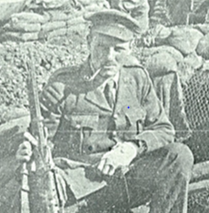
Sgt VLB Sergent (ASC)

Victor was in England when war broke out. He joined up with the MT in England and was at Bury St. Edmunds for a time, with the rank of sergeant [making him Sergeant Sergent!]. Later, in France, he was riding a motor-bicycle between two lorries carrying munitions, when his fork broke for reasons unknown, and he was knocked unconscious. When he woke up, he was lying in hospital with a hole in his knee.

Following a period of convalescence in England, he was sent out to Basrah in Mesopotamia, where he gained his commission. He was one of the famous expedition to the Caspian Sea through Persia, being in charge of a certain number of Ford cars, all of which completed the double journey.

After the war, Victor spent time working as a travelling agent for Agricultural and General Engineers in Algeria, Tunisia and Morocco. Returning home to France, Victor recently started a motor transport service with his brother Dick. They had made a good start and it had been going for about eight months when Victor developed broncho-pneumonia, from which he died after a short illness, aged 37.

Much more can be said of Victor, particularly as a footballer, but this must be for another day…


January 10th 1916

Over the past weeks we have been anxiously awaiting news from those of our old boys involved in the Gallipoli campaign.  We  can at least account for Capt. Geoffrey Smyth (6th Loyal North Lancs. Regiment), who wrote from on board the ‘Hunts Green’ (a captured German ship being used to evacuate his men) following the evacuation from the Anzac and Suvla bridgeheads, which took place on 18th/19th December.

GM Smyth

Capt. GM Smyth

22/12/15. “I suppose by the time you get this the evacuation of Suvla will be old news. I really believe we did deceive the enemy this time – anyway, about five divisions got away without leaving anyone behind; and in our brigade there wasn’t a casualty.

For two weeks before, all the spare equipment and baggage was sent away and also the postal service, hence the reason why no letter for a fortnight. I marched the last party but two of our battalion to the beach, starting at 8 p.m., the last party leaving the trenches at 1.30 a.m.

They say everything was normal up till the last. The night before, half the troops were evacuated, and all the last day the line was pretty thinly held. Everything was excellently planned and worked without a hitch…”

* * * * * *

Sub-Lieut. Dick Sergent (RNVR) has also made a successful escape from Gallipoli and has written to provide further information as to how this was achieved with so few casualties:

Dick Sergent

2/1/16. “We are now in Imbros again after having left Anzac, the whole bunch of us. This is to let you know something of the way we did it… We got some wind of it about a week, or perhaps more, before the evacuation (we were instructed only to speak of it as ‘embarkation’).

Our men set some automatic rifles when they left, and some mines and barbed wire in the trenches. The rifles were managed by way of billy-cans on the triggers with water dripping into them so they went off when the cans were heavy enough; they were set to go off raggedly, as if we were firing normally, for about 1½ hours after our men had gone.

We were to have boarded the Colne, but she was not to be found, so we picked up the first destroyer we came across, the Basilisk.. I went up into the W/T cabin and put on a pair of phones to hear the stations at Suvla and Anzac give their ‘dismantling’ signals. We heard the two at Suvla do so, but not our own.

Finally we got a bunting signal that all stragglers etc had been picked up, including the last field hospital which was to have stayed on to look after the wounded in case we had to fight for it…

We had the supreme pleasure of seeing John Turk shelling our first line trenches at 6.30 a.m. at Suvla and Anzac, and the beach at Anzac also.”